
Balancing day-to-day responsibilities with digital demands can feel overwhelming for small business owners across Florida. A strong digital presence is now essential for reaching new customers, building trust, and staying ahead of competitors. With 75% of small businesses integrating digital tools into daily operations, understanding how to create an effective, cost-conscious online footprint has never been more important for local service providers focused on growth.
Table of Contents
- Defining Digital Presence for Small Businesses
- Core Elements: Website, SEO, and Social Media
- Digital Presence Types: Owned, Shared, Paid, Earned
- Building and Managing a Strong Online Reputation
- Risks, Costs, and Common Digital Mistakes
Key Takeaways
| Point | Details |
|---|---|
| Importance of Digital Presence | A strong digital presence is essential for small businesses to engage customers and compete effectively in a digital-first world. |
| Key Components of Digital Strategy | Focus on creating a professional website, utilizing SEO, and implementing an active social media strategy to enhance visibility and engagement. |
| Types of Digital Media | Businesses should balance owned, paid, earned, and shared media for a comprehensive online strategy that maximizes reach and community engagement. |
| Managing Online Reputation | Proactively monitor and respond to customer feedback to build trust and demonstrate commitment to customer satisfaction. |
Defining Digital Presence for Small Businesses
Digital presence is more than just having a website. It encompasses how a business represents itself online across multiple platforms, channels, and digital touchpoints. For small businesses in Florida and beyond, digital presence represents their virtual storefront and primary method of customer engagement in today’s interconnected world.
Small businesses are increasingly recognizing digital’s critical importance. 75% of small businesses now integrate digital tools into their daily operations, signaling a fundamental shift in how companies operate. This digital transformation involves several key components:
- Creating a professional website
- Maintaining active social media profiles
- Managing online business listings
- Developing consistent brand messaging across digital platforms
- Engaging with customers through digital channels
However, building a robust digital presence isn’t just about having online accounts. It’s about strategic representation that authentically communicates a business’s value proposition. Many small businesses still struggle with establishing an effective online footprint, citing challenges like time constraints, technical knowledge gaps, and perceived complexity.
Digital presence serves multiple critical functions for small businesses. It provides 24/7 visibility, allows customers to discover and research services, establishes credibility, and creates opportunities for engagement beyond traditional physical boundaries. A well-crafted digital presence can transform how potential customers perceive and interact with a business.
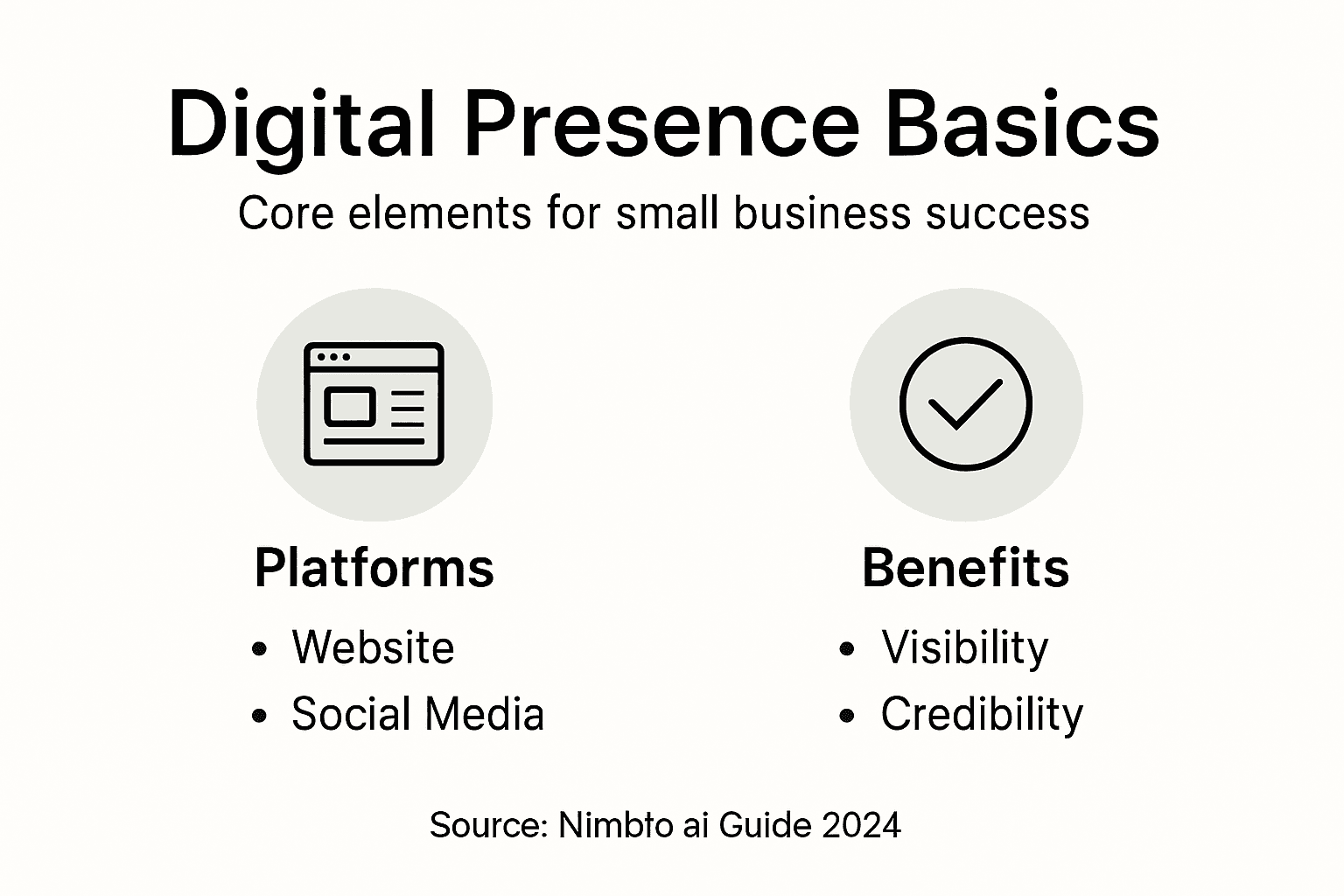
Pro tip: Start by claiming and optimizing your Google Business Profile, which serves as a foundational element of your digital presence and helps local customers find you more easily.
Core Elements: Website, SEO, and Social Media
Building a comprehensive digital presence requires mastering three critical components: website design, search engine optimization (SEO), and social media strategy. These interconnected elements work together to create a powerful online representation of a small business’s brand, capabilities, and value proposition.
A professional website serves as the foundation of digital presence. SEO fundamentals involve optimizing website structure and content to improve search rankings and user engagement. Key website elements include:
- Clean, responsive design
- Mobile-friendly interface
- Clear navigation
- Compelling content
- Fast loading speeds
- Contact information
- Strong calls-to-action
Search engine optimization transforms a basic website into a discoverable digital asset. By implementing strategic on-page and technical SEO techniques, businesses can improve their visibility in search results, attracting more potential customers. This involves carefully crafting metadata, optimizing content, and ensuring technical website performance meets search engine requirements.

Social media completes the digital presence ecosystem. A strategic social media approach builds visibility and engagement by creating targeted content that resonates with specific audience segments. Successful social media strategy requires consistent messaging, platform-specific content, and active community interaction.
Pro tip: Develop a content calendar that synchronizes your website updates, SEO efforts, and social media posts to create a cohesive and powerful digital presence strategy.
Digital Presence Types: Owned, Shared, Paid, Earned
Digital presence is not a monolithic concept, but a complex ecosystem comprising four distinct media types that work together to create a comprehensive online strategy. The PESO model categorizes these media types to help businesses understand and leverage their digital channels effectively.
Owned media represents the digital platforms directly controlled by a business, which provide the most strategic advantage:
- Company websites
- Blog platforms
- Email newsletters
- Mobile applications
- Social media business profiles
- Customer resource portals
Paid media involves direct financial investment to reach target audiences through promotional channels. These typically include:
- Social media advertisements
- Google AdWords campaigns
- Sponsored content
- Display advertising
- Influencer partnerships
- Targeted digital marketing
Digital marketing relies on balanced media strategies that integrate different channel types. Earned media emerges through third-party endorsements and organic recognition, including customer reviews, press mentions, social media shares, and word-of-mouth recommendations. These unpaid mentions carry significant credibility and can dramatically expand a business’s reach.
Shared media represents interactive platforms where businesses and audiences co-create content, such as social media comment sections, collaborative forums, and user-generated content spaces. This dynamic media type enables direct engagement and builds community around a brand.
Here’s how the four types of digital presence compare for small businesses:
| Digital Presence Type | Level of Control | Cost Profile | Best For |
|---|---|---|---|
| Owned Media | Full ownership | Lowest ongoing cost | Brand building |
| Paid Media | Limited by budget | Variable, higher cost | Fast visibility |
| Earned Media | No direct control | No direct expense | Reputation growth |
| Shared Media | Shared with users | Low to moderate cost | Community engagement |
Pro tip: Create a comprehensive digital strategy that intentionally balances owned, paid, shared, and earned media to maximize your online visibility and audience engagement.
Building and Managing a Strong Online Reputation
Online reputation has become a critical strategic asset for businesses in the digital age. Online reputation management has evolved into a proactive business priority, transforming from reactive defense to strategic engagement across digital platforms.
Key components of maintaining a strong online reputation include:
- Monitoring customer reviews and feedback
- Responding promptly to both positive and negative comments
- Maintaining consistent brand messaging
- Encouraging satisfied customers to share experiences
- Addressing negative feedback constructively
- Demonstrating transparency and accountability
Effective reputation systems require transparent interaction mechanisms that build trust with customers. This means creating platforms where customers can easily share experiences, and businesses can authentically engage with their feedback. Digital platforms now empower consumers to share experiences globally, making every interaction potentially visible to a wide audience.
Successful online reputation management goes beyond simply collecting positive reviews. It involves creating a comprehensive strategy that includes active listening, genuine response, and continuous improvement based on customer insights. Small businesses must view online reputation as a dynamic, ongoing process of building trust and demonstrating commitment to customer satisfaction.
Pro tip: Develop a systematic approach to monitoring and responding to online reviews, allocating at least 30 minutes daily to review and address customer feedback across all digital platforms.
Risks, Costs, and Common Digital Mistakes
Digital risks have become increasingly complex for small businesses navigating the online landscape. Misinformation and disinformation pose significant challenges that can dramatically impact a company’s reputation, financial stability, and stakeholder trust.
Common digital mistakes small businesses frequently encounter include:
- Inconsistent brand messaging
- Neglecting cybersecurity protocols
- Ignoring negative online reviews
- Failing to update digital content
- Using weak password systems
- Overlooking data privacy regulations
- Inconsistent social media management
Cybersecurity best practices are essential to mitigate digital risks that can be costly and potentially destructive. These risks range from data breaches to reputation damage, with potential consequences including financial losses, customer distrust, and long-term brand reputation challenges.
The financial implications of digital mistakes can be substantial. A single data breach or negative viral incident can cost small businesses thousands of dollars in recovery, lost customer trust, and potential legal complications. Proactive risk management, including regular security audits, employee training, and robust digital protocols, becomes crucial in protecting a business’s digital assets and reputation.
Key mistakes and their mitigation strategies for small businesses online:
| Common Mistake | Business Impact | Mitigation Strategy |
|---|---|---|
| Inconsistent messaging | Weakens brand trust | Set clear brand guidelines |
| Ignoring cybersecurity | Exposes to data breaches | Regular security audits |
| Not responding to reviews | Lost customer loyalty | Allocate review response time |
| Outdated web content | Hurts search rankings | Schedule regular updates |
Pro tip: Conduct a quarterly digital risk assessment, reviewing your cybersecurity measures, online reputation, and potential vulnerabilities to stay ahead of potential digital threats.
Strengthen Your Digital Presence with Nimblo.ai
Building a strong digital presence is essential for small businesses seeking visibility, credibility, and customer engagement in today’s competitive online landscape. If you find managing multiple platforms overwhelming or struggle with integrating SEO, website performance, and reputation management, you are not alone. The key to success lies in consolidating your digital tools into one seamless system that supports your unique business goals.
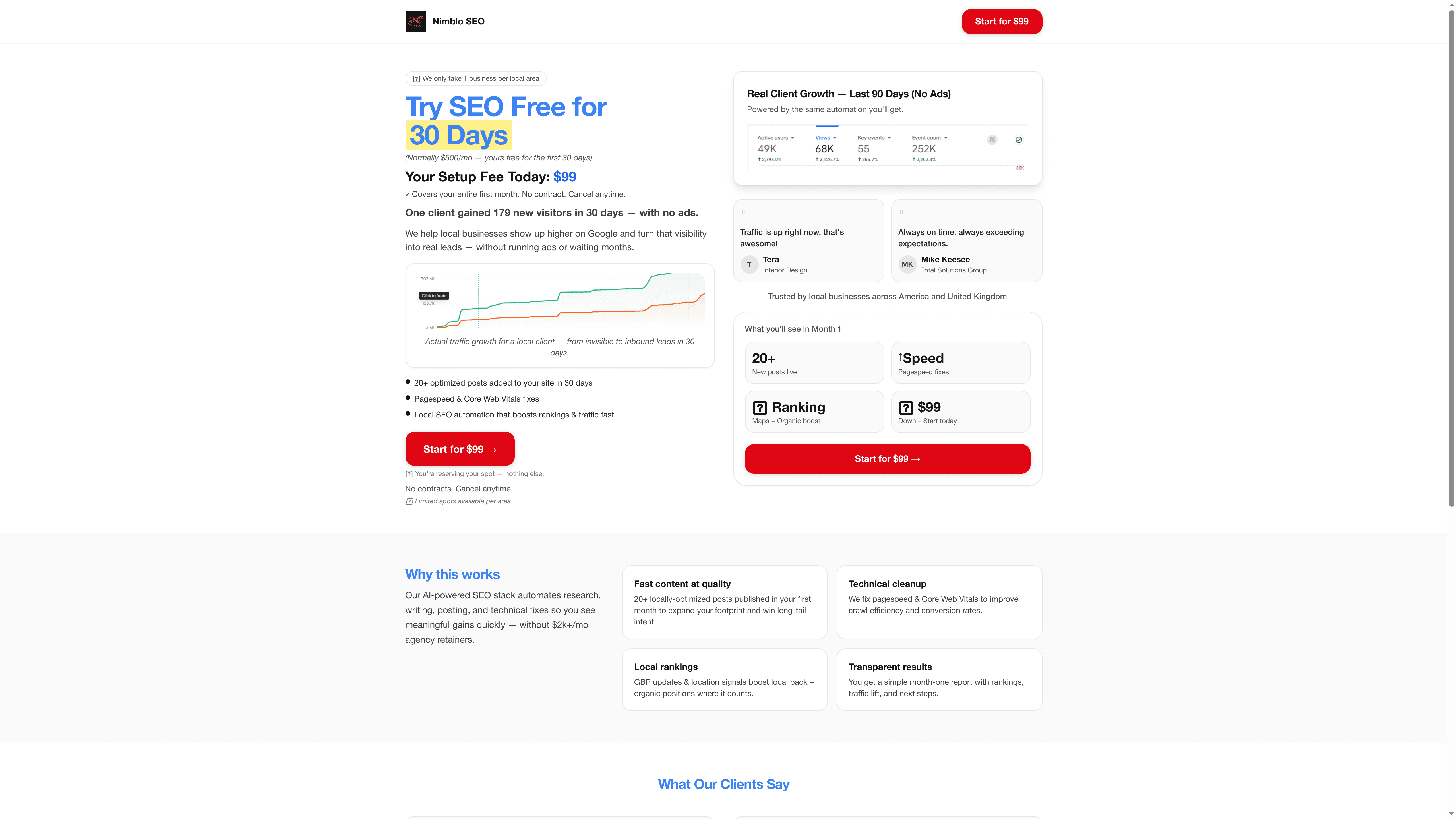
Nimblo.ai offers Florida small and medium businesses an all-in-one solution that simplifies your digital marketing and operations. With features like AI-powered local SEO, Google Business Profile optimization, automated lead generation, and conversion-optimized website design, Nimblo.ai helps you overcome common challenges such as technical complexity and time constraints. Don’t let inconsistent messaging or slow website speeds hold your business back. Take control now with Nimblo’s quick setup and affordable flat-rate plan that replaces costly agencies and fragmented tools. Discover how easy managing your entire digital presence can be by visiting Nimblo.ai’s platform today and start growing your leads with local expertise you can trust.
Frequently Asked Questions
What does digital presence mean for small businesses?
Digital presence refers to how a business represents itself online across various platforms, including a professional website, active social media profiles, and online listings. It serves as a virtual storefront and a primary mode of customer engagement in today’s digital landscape.
Why is establishing a strong digital presence important?
A strong digital presence provides 24/7 visibility, helps customers discover and research services, establishes credibility, and creates engagement opportunities beyond physical boundaries. It significantly impacts how potential customers perceive and interact with a business.
What are the key components of an effective digital presence?
An effective digital presence typically includes a well-designed website, search engine optimization (SEO) practices, and a strategic social media approach. These elements work together to enhance brand visibility and customer engagement.
How can small businesses manage their online reputation?
Small businesses can manage their online reputation by monitoring customer reviews, responding promptly to feedback, maintaining consistent messaging, encouraging satisfied customers to share their experiences, and addressing negative comments constructively.