
More than 80 percent of American consumers research local businesses online before making a purchase or booking a service. For Florida small business owners, a single missed conversion can mean the difference between thriving and just getting by. If you run a service-based company, it pays to know where your website stands and what tools can help turn more visitors into customers. This guide breaks down practical steps for streamlining your marketing and optimizing online results.
Table of Contents
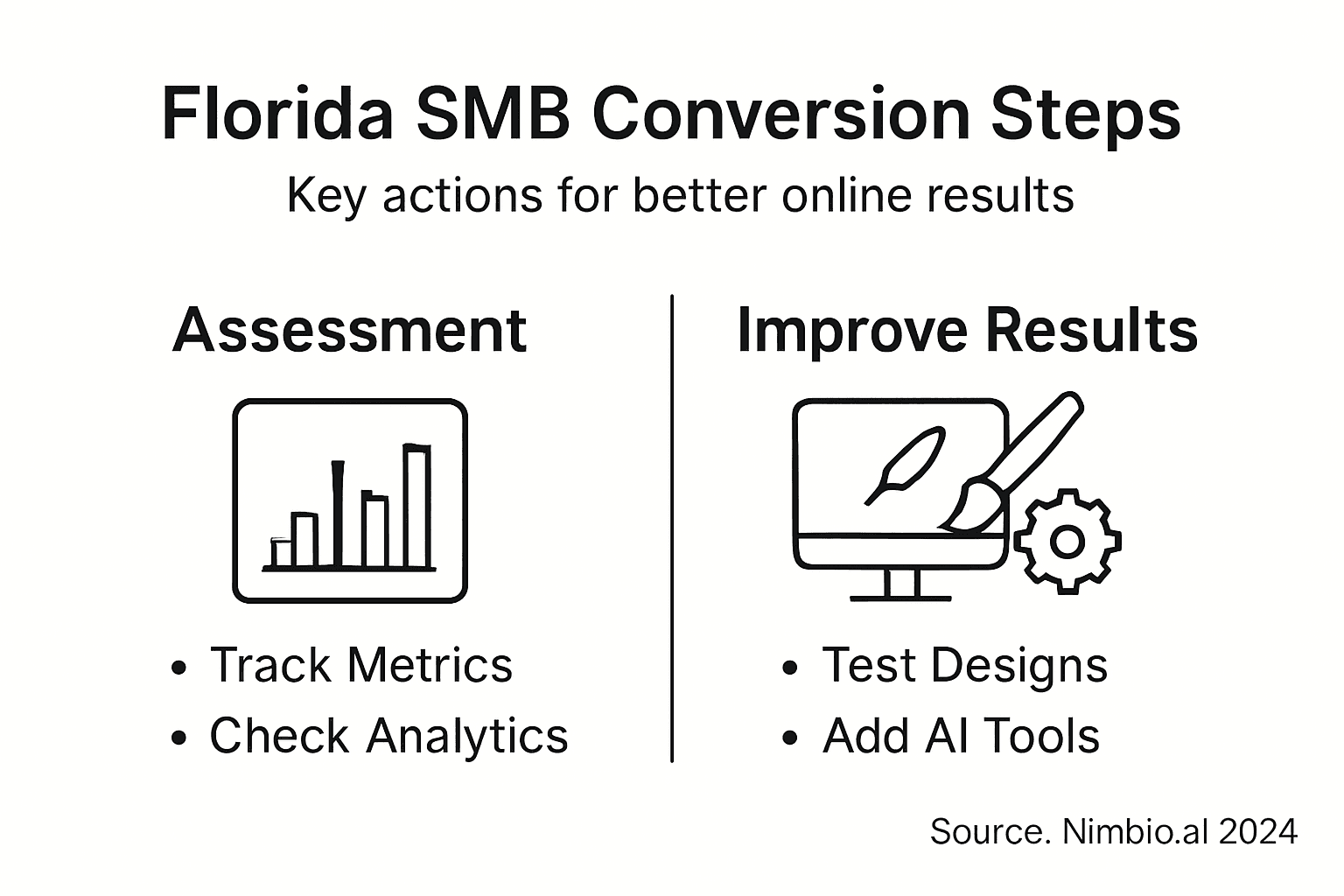
- Step 1: Assess Current Conversion Performance
- Step 2: Identify Local SEO and Audience Gaps
- Step 3: Implement Conversion-Optimized Web Design
- Step 4: Set Up AI-Powered Lead Generation Tools
- Step 5: Verify and Refine Conversion Workflow
Quick Overview
| Main Insight | Clarification |
|---|---|
| 1. Analyze Conversion Metrics | Use Google Analytics to evaluate key metrics and identify where users drop off in the conversion funnel. |
| 2. Identify Local SEO Gaps | Conduct market research to discover keywords and characteristics of your target audience in Florida. |
| 3. Optimize Web Design for Conversions | Ensure your website design facilitates easier navigation and engages users effectively to increase conversions. |
| 4. Implement AI for Lead Generation | Utilize AI tools to automate lead capture and improve engagement with potential customers 24/7. |
| 5. Regularly Review Conversion Workflows | Perform audits of your conversion processes to identify inefficiencies and make iterative improvements. |
Step 1: Assess Current Conversion Performance
Understanding your website’s conversion performance starts with gathering precise data about how visitors interact with your online presence. By analyzing key performance indicators, you can pinpoint exactly where potential customers are dropping off and why your conversion rates might be underperforming.
To kickstart your assessment, begin by connecting your website to Google Analytics and setting up conversion tracking. You’ll want to map out your current conversion funnel by identifying critical user touchpoints – from initial website visit to final purchase or contact submission. Examine metrics like bounce rate, time on page, click through rates, and actual conversion percentages. Data preparation techniques can help you clean and structure these insights for meaningful analysis. Look for patterns such as pages with high exit rates, sections where users spend less time, or forms with significant abandonment rates.
Your goal is to transform raw website data into actionable insights that reveal precise opportunities for improvement. By systematically reviewing these performance indicators, you’ll develop a clear roadmap for enhancing your online conversion strategy.
Pro tip: Create a monthly tracking spreadsheet to monitor your conversion metrics and visualize progress over time, allowing you to quickly identify trends and potential optimization areas.
Here is a summary of key web analytics metrics and their impact on conversion performance:
| Metric | What It Measures | Business Impact |
|---|---|---|
| Bounce Rate | % of visitors leaving quickly | Indicates poor engagement |
| Time on Page | Average time spent per page | Shows content effectiveness |
| Click Through Rate | % clicking desired links | Reveals user interest |
| Conversion Rate | % completing key actions | Directly affects revenue growth |
| Exit Rate | % leaving on a specific page | Pinpoints conversion drop-offs |
Step 2: Identify Local SEO and Audience Gaps
Successfully growing your Florida small business requires a strategic approach to understanding your local market and digital presence. Local search engine optimization strategies help you uncover critical insights about your target audience and online visibility.

To effectively identify audience and SEO gaps, start by conducting comprehensive market research specific to your local Florida region. Use tools like Google Analytics and Google Business Profile to analyze demographic data and search behaviors. Look closely at target audience characteristics such as age range, income levels, and specific geographic neighborhoods that represent your primary customer base. Examine which search terms potential customers are using to find businesses like yours, and compare these against your current website content and metadata.
Focus on mapping the difference between the keywords your business currently ranks for and the actual search terms your local customers are using. This process will reveal critical gaps in your online strategy where you can improve visibility and attract more targeted local traffic.
Pro tip: Create a competitive matrix comparing your local search rankings against three direct competitors to quickly identify your most significant optimization opportunities.
Step 3: Implement Conversion-Optimized Web Design
Transforming your website into a powerful conversion engine requires strategic design that guides visitors seamlessly toward taking action. Design principles for conversion optimization focus on creating intuitive user experiences that naturally encourage engagement and sales.
Begin by mapping out your website’s critical conversion paths using responsive web development techniques that ensure smooth performance across mobile and desktop platforms. Prioritize clear call to action buttons with high contrast colors, strategically placed contact forms, and streamlined navigation that reduces friction in the user journey. Analyze your current website layout and eliminate unnecessary steps between a visitor’s initial interest and final conversion. Implement trust signals such as customer testimonials, local business certifications, and transparent pricing information that reassure potential customers about your credibility.
Remember that effective conversion design is an ongoing process of testing and refinement. Continuously monitor user behavior through heat mapping tools and A/B testing to identify and eliminate potential barriers that might prevent visitors from completing desired actions.
Pro tip: Create a dedicated conversion tracking dashboard that allows you to quickly visualize user interaction metrics and identify immediate optimization opportunities.
Step 4: Set Up AI-Powered Lead Generation Tools
Transforming your Florida small business’s marketing strategy requires implementing intelligent tools that automate and streamline lead capture and engagement. AI agent systems for lead generation provide powerful mechanisms to identify and nurture potential customer interactions more efficiently than traditional methods.
Start by selecting AI-powered tools that integrate seamlessly with your existing digital infrastructure. AI marketing automation workflows enable you to create intelligent conversational interfaces that engage potential customers 24/7. Configure chatbots with industry specific language and design conversation flows that guide visitors toward specific conversion actions. Implement intelligent lead scoring algorithms that automatically rank and prioritize potential customers based on their interaction patterns, ensuring your sales team focuses on the most promising opportunities.
Successful AI lead generation requires continuous refinement. Regularly analyze your tool’s performance metrics, test different conversation scenarios, and adjust your AI’s learning models to improve response accuracy and conversion potential.
Pro tip: Create a dedicated feedback loop that allows your AI tools to learn from actual customer interactions, continuously improving their engagement strategies.
Compare traditional and AI-powered lead generation tools for Florida small businesses:
| Approach | Lead Qualification Speed | Personalization Capabilities | Implementation Complexity |
|---|---|---|---|
| Manual Lead Tracking | Slow | Limited (manual follow-up) | Low (but limited advancement) |
| Automated AI Agent Tools | Instantaneous | High (customized conversations) | Moderate (requires setup) |
Step 5: Verify and Refine Conversion Workflow
Ensuring your conversion workflow operates at peak performance requires systematic analysis and continuous improvement. Data transformation techniques enable you to identify and eliminate inefficiencies in your current conversion process, providing a clear pathway to more effective customer engagement.
Begin by conducting a comprehensive audit of your existing conversion workflow. Map out each step from initial customer contact to final conversion, carefully examining potential friction points and drop off areas. Product backlog refinement practices can help you systematically prioritize and address workflow improvements. Use analytics tools to track user interactions, measure conversion rates at each stage, and identify specific areas requiring optimization. Pay special attention to form completion rates, page load times, and user navigation patterns that might impede smooth conversion.
Remember that workflow refinement is an iterative process. Implement small incremental changes, measure their impact, and continuously adapt your approach based on real world performance data. Your goal is to create a fluid, responsive conversion system that anticipates and meets customer needs with minimal resistance.
Pro tip: Develop a quarterly workflow review schedule that allows you to proactively identify and address potential conversion bottlenecks before they significantly impact your business performance.
Supercharge Your Florida SMB Success with Expert Conversion Tools
The Conversion Optimization Guide for Florida SMB Success highlights critical challenges like low conversion rates, local SEO gaps, and inefficient lead generation workflows. If you feel overwhelmed by tracking multiple tools or frustrated by underperforming websites and disjointed marketing efforts, you are not alone. Your goal is clear—to increase engagement and capture more local leads by improving your website design and SEO with data-driven insights. The article emphasizes the power of AI and automated systems to transform visitor interactions into loyal customers.
That is why Nimblo.ai offers an all-in-one platform designed specifically for Florida small and medium businesses looking to consolidate SEO, website performance, CRM, and lead generation. Our solution delivers fast setup, conversion-optimized web design, and AI-powered local SEO that directly address the exact pain points discussed in the guide. Imagine replacing your complicated toolset and manual processes with a streamlined system that dynamically improves your conversion rates and local search rankings.
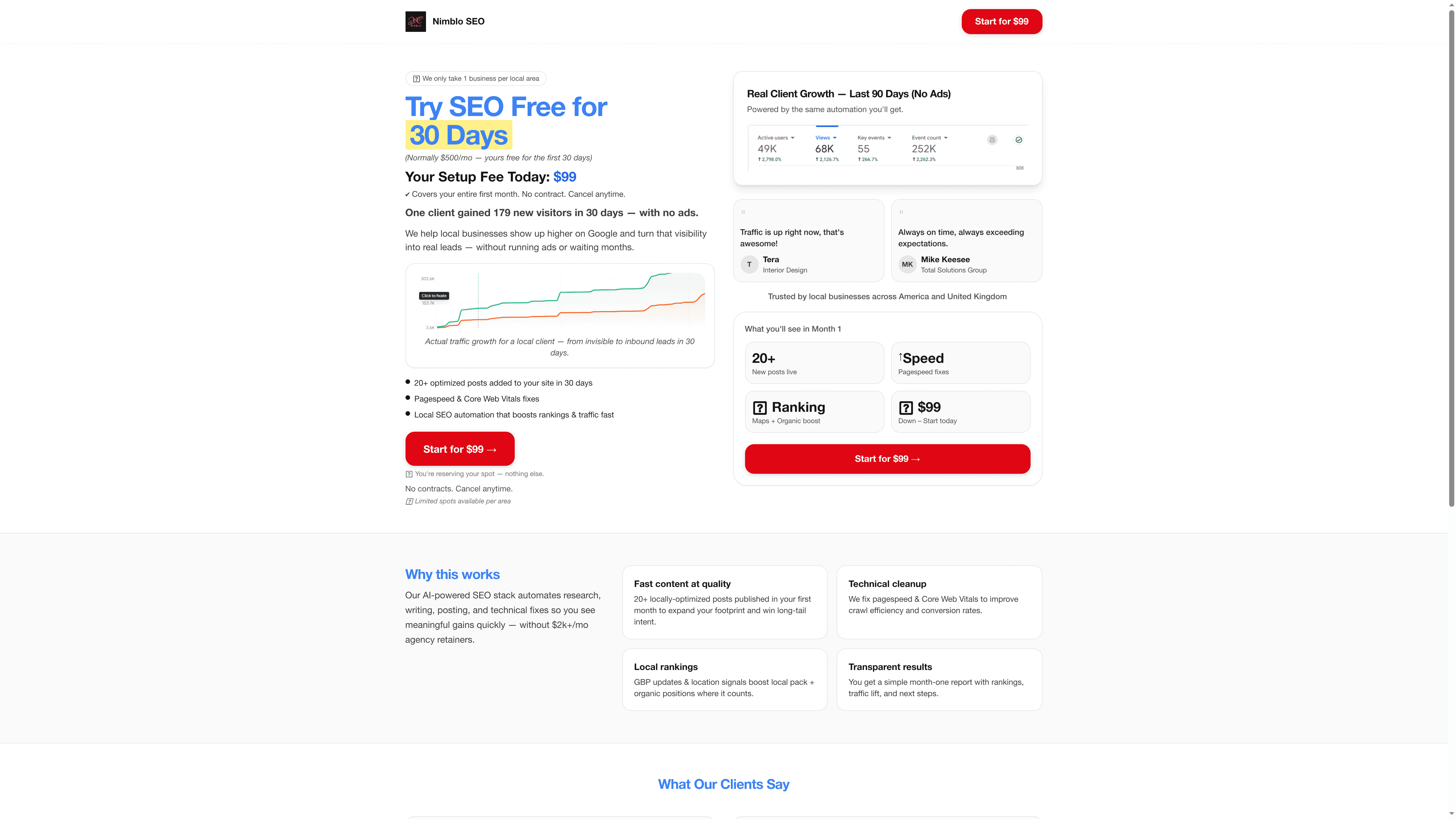
Ready to stop losing leads and start growing your Florida business with proven, cutting-edge technology and local expertise? Take the first step toward smarter marketing today with Nimblo.ai’s affordable platform that puts everything you need in one place. Empower your team to focus on what matters most while we handle your SEO, automation, and website performance seamlessly. Don’t wait—your next customer is searching for you now.
Frequently Asked Questions
How can I assess my website’s current conversion performance?
Start by connecting your website to Google Analytics and setting up conversion tracking. Analyze key metrics like bounce rate and conversion rate to identify drop-off points and opportunities for improvement.
What are the essential metrics to track for conversion optimization?
Key metrics include bounce rate, time on page, click-through rate, conversion rate, and exit rate. Regularly monitor these metrics to understand user behavior and refine your strategy accordingly.
How can I identify local SEO and audience gaps for my small business?
Conduct market research and analyze demographic data to understand your target audience. Compare the keywords potential customers use with your current website content to pinpoint SEO gaps and enhance your visibility.
What design principles should I implement for conversion-optimized web design?
Focus on creating intuitive navigation, clear call-to-action buttons, and trust signals like testimonials. Streamline the user journey to minimize unnecessary steps and encourage conversions effectively.
How can AI tools enhance my lead generation process?
Implement AI-powered lead generation tools to automate and optimize customer engagement. Configure chatbots and lead scoring systems to efficiently identify and nurture promising leads while continuously refining their performance.
What steps should I take to verify and refine my conversion workflow?
Conduct a comprehensive audit of your conversion process to identify friction points. Implement small, incremental changes and measure their impact to create a responsive conversion system that meets customer needs effectively.