
Most American small business owners in Florida face the same challenge: attracting quality leads in a crowded local market. With over 2.8 million small businesses in the state, standing out demands targeted strategies and deep insight into your ideal audience. When you clarify who you want to reach and set clear goals from the beginning, you lay the groundwork for every successful campaign. This guide helps you pinpoint your audience and design smart goals that drive measurable results for your Florida business.
Table of Contents
- Step 1: Identify Target Local Audience And Goals
- Step 2: Set Up Digital Channels And Tools
- Step 3: Automate Lead Capture And Follow-Up
- Step 4: Optimize With Local Seo Best Practices
- Step 5: Measure Lead Quality And Refine Processes
Quick Summary
| Essential Insight | Clarification |
|---|---|
| 1. Define Your Target Audience | Develop a detailed customer persona to understand demographics, challenges, and motivations for effective targeting during lead generation. |
| 2. Set Specific Goals for Lead Generation | Outline 3-5 measurable goals aligned with your business objectives, such as increasing consultations or boosting inquiries. |
| 3. Leverage Digital Platforms Effectively | Establish a strong online presence on relevant social media and business directories to connect with local customers. |
| 4. Automate Follow-Up Processes | Use a CRM system to automate lead capture and follow-up, ensuring consistent communication with potential customers. |
| 5. Monitor and Optimize Lead Quality | Implement key performance indicators to analyze and refine lead generation strategies, ensuring improvement over time. |
Step 1: Identify Target Local Audience and Goals
Successful lead generation for Florida small businesses starts with understanding exactly who you want to reach and what specific outcomes you aim to achieve. This critical initial phase sets the foundation for all your marketing efforts.
Begin by developing a detailed customer persona that represents your ideal local client. Consider demographic factors like age, income level, location within Florida, professional background, and specific challenges they face. The University of Florida Extension service recommends focusing on groups that can influence or are directly affected by the problem your business solves. This means going beyond basic demographics to understand their motivations, pain points, and decision making processes.
To refine your target audience, conduct market research specific to your local Florida region. Use tools like Google Analytics, social media insights, and local business directories to gather data about your potential customers. The Small Business Administration suggests managing your business listing in search engines to better understand and attract local customers. Pay attention to geographic nuances unique to different Florida communities, whether you are targeting professionals in Miami, retirees in Tampa, or small business owners in Orlando.
Quickly map out 3-5 specific goals for your lead generation strategy. These might include increasing monthly consultations, boosting website inquiries, growing email list subscribers, or improving conversion rates from local search traffic. Each goal should be specific, measurable, and aligned with your broader business objectives.
By investing time in precisely defining your target audience and setting clear goals, you create a strategic roadmap that transforms generic marketing into a targeted, high-conversion approach tailored to Florida’s unique business landscape.
Step 2: Set Up Digital Channels and Tools
Establishing a robust digital presence is crucial for Florida small businesses looking to generate quality leads. This step involves strategically selecting and configuring online platforms that will help you connect with potential customers and showcase your unique value proposition.

The Small Business Administration recommends utilizing social media platforms to target local audiences through engaging content and geo targeted advertising. Start by creating professional business profiles on platforms most relevant to your target market. For Florida businesses, this might include LinkedIn for professional services, Facebook for service based local businesses, and Instagram for visually oriented industries like hospitality or real estate.
The Walton County Chamber of Commerce emphasizes the importance of maintaining consistent business information across online directories and review sites. Create profiles on Google My Business, Yelp, and industry specific directories that serve Florida communities. Ensure your business name, address, phone number, and website are identical across all platforms to improve local search visibility and credibility.
Prioritize setting up lead capture tools on your website. This includes contact forms, email signup widgets, chatbots, and scheduling calendars that make it easy for potential customers to engage with your business. Choose tools that integrate smoothly and provide analytics to track interaction and conversion rates.
Remember that your digital channels are not just broadcast platforms but interactive spaces where you build relationships with potential customers. Consistent, valuable content and responsive communication will transform these tools from mere contact points into powerful lead generation engines.
Step 3: Automate Lead Capture and Follow-Up
Automating your lead capture and follow-up process transforms sporadic interactions into a systematic approach that consistently nurtures potential customers. This critical step ensures no potential lead falls through the cracks and maximizes your conversion potential.
Florida Realtors recommend implementing a 100-touch challenge, where businesses commit to connecting with 100 contacts through various channels like texts, emails, or calls. To achieve this effectively, invest in a customer relationship management (CRM) system that integrates multiple communication channels and automates follow-up sequences. Look for platforms that can schedule personalized email campaigns, track interaction history, and send automated yet personalized messages based on specific customer behaviors.
The Small Business Administration advises following up with customers post-sale by sending thank-you emails and encouraging testimonials. Design an automated workflow that segments leads based on their interactions with your business. Create tailored email sequences for different stages of the customer journey, from initial contact to post-purchase support. This approach not only captures leads but builds long-term relationships and encourages referrals.
Consider implementing chatbots on your website to provide immediate engagement and collect contact information outside of traditional business hours. These tools can qualify leads by asking pre-programmed questions, schedule consultations, and provide instant responses that keep potential customers engaged.
Remember that automation should feel personal, not robotic. Craft messages that sound genuine, use the customer’s name, and provide real value. The goal is to create a seamless, responsive system that makes potential customers feel heard and appreciated throughout their interaction with your business.
Step 4: Optimize with Local SEO Best Practices
Local SEO transforms your digital presence from invisible to irresistible, helping Florida small businesses stand out in a competitive marketplace. This step focuses on strategic techniques that will boost your visibility and attract more local customers.
The Small Business Administration highlights the importance of managing your business listing in search engines. Start by claiming and fully optimizing your Google Business Profile with accurate business information, high-quality photos, and regular updates. Include specific details about your Florida service area, operating hours, and unique services that set you apart from competitors.
The Walton County Chamber of Commerce emphasizes the need for consistent business information across online directories. Conduct a comprehensive audit of your online listings across platforms like Yelp, Yellow Pages, and industry specific directories. Ensure your business name, address, phone number, and website URL are identical everywhere, which signals credibility to search engines and helps improve local search rankings.
Create location specific content that speaks directly to your Florida audience. This means developing blog posts, service pages, and website content that reference local cities, neighborhoods, and region specific challenges your business solves. Incorporate local keywords naturally, such as “Tampa small business marketing” or “Orlando service area expert” to improve your geographic relevance.
Prioritize generating authentic customer reviews from local clients. Encourage satisfied customers to share their experiences on Google, Yelp, and industry specific platforms. Positive reviews not only boost your search rankings but provide social proof that builds trust with potential customers in your local market.
Step 5: Measure Lead Quality and Refine Processes
Successful lead generation is a continuous improvement cycle that demands strategic tracking and analysis. This critical step transforms raw data into actionable insights that will help your Florida small business optimize marketing efforts and increase conversion rates.
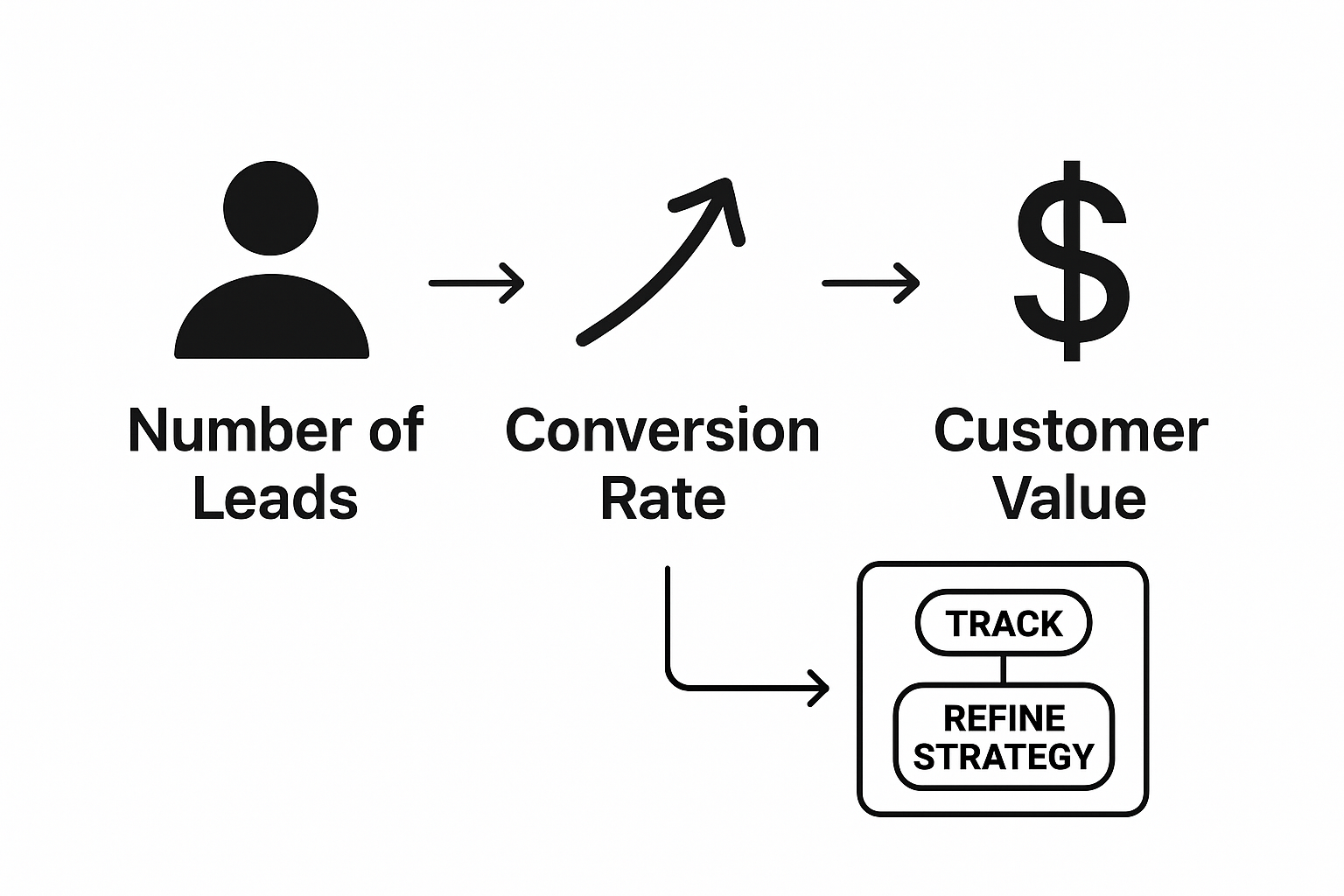
The Small Business Administration offers guidance on defining and reaching your ideal audience through data driven tools and strategies. Start by establishing clear key performance indicators (KPIs) that measure lead quality beyond simple quantity. These might include lead conversion rate, customer acquisition cost, average sales cycle length, and lifetime customer value specific to your Florida market segment.
Implement advanced tracking mechanisms in your customer relationship management system to score and categorize leads. Create a weighted scoring model that assigns points based on engagement levels, demographic alignment, and potential revenue impact. For example, a lead from a high value industry in Miami might receive more points than a generic inquiry from outside your primary service area.
Regularly conduct a detailed analysis of your lead generation funnel to identify bottlenecks and opportunities. Look for patterns in successful conversions such as common communication channels, time of day for initial contact, or specific marketing messages that resonate with your target audience. Use these insights to continuously refine your targeting strategies and communication approach.
Remember that lead quality measurement is not a one time task but an ongoing process. Set up monthly or quarterly review sessions to assess your lead generation performance, adjust your strategies, and ensure your marketing efforts remain aligned with your business growth objectives.
Elevate Your Florida SMB Lead Generation with All-in-One Automation
If you are following the step-by-step guide to lead generation for Florida small businesses, you know how crucial it is to define your target audience, streamline your digital channels, and automate lead capture and follow-up. Managing multiple tools for SEO, CRM, and marketing automation can be overwhelming and costly. Nimblo.ai simplifies this by consolidating everything into one easy-to-use platform designed specifically for Florida SMBs. With features like AI-powered local SEO, Google Business Profile management, and conversion-optimized websites, you can attract and nurture local leads more effectively while saving time and money.
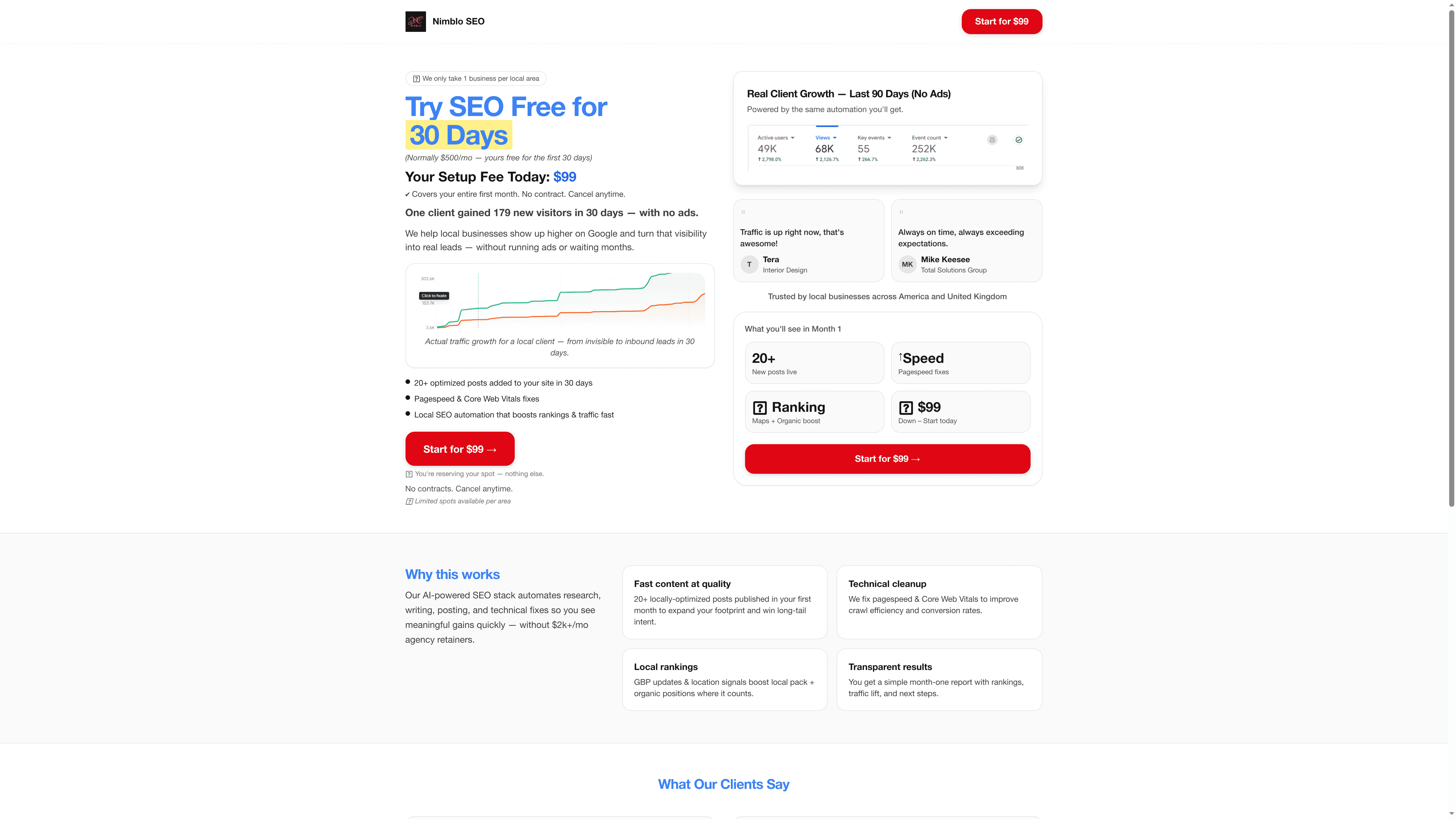
Ready to transform your lead generation strategy with a fast setup, local support, and proven results? Discover how Nimblo.ai’s comprehensive platform helps you target Florida markets, automate personalized outreach, and measure lead quality all in one place. Don’t wait to convert more prospects into loyal customers. Take control of your business growth today at Nimblo.ai and start capturing better leads without expensive agencies or fragmented tools.
Frequently Asked Questions
How can I identify my target local audience in Florida for lead generation?
To identify your target local audience, develop a detailed customer persona that includes demographic factors like age, income level, and profession. Conduct market research specific to your area, utilizing local business directories and social media insights. This allows you to tailor your marketing efforts more effectively.
What are some specific goals I should set for lead generation?
Setting specific goals for lead generation might include increasing monthly consultations or improving conversion rates from local search traffic. Aim for 3-5 measurable goals that align with your broader business objectives, such as increasing your email list subscribers by 25% within six months.
How do I establish a strong digital presence for my Florida small business?
Establishing a strong digital presence involves creating professional profiles on relevant social media platforms, such as Facebook and LinkedIn. Ensure your business information is consistent across online directories, and integrate tools on your website to capture leads, such as contact forms or chatbots, to maximize engagement.
What steps should I take to optimize my lead capture and follow-up process?
To optimize lead capture and follow-up, implement a customer relationship management (CRM) system that automates this process. Create tailored email sequences for different stages of the customer journey and consider using chatbots for immediate engagement, helping to maximize conversion potential.
How can I improve my local SEO to enhance lead generation?
Improving your local SEO involves fully optimizing your Google Business Profile with accurate business info and high-quality photos. Create location-specific content that uses local keywords, and regularly encourage satisfied customers to leave reviews to enhance your visibility in local searches.
What metrics should I track to measure lead quality effectively?
To measure lead quality, track metrics like lead conversion rate and customer acquisition cost. Establish a weighted scoring model to categorize leads based on engagement and potential revenue, and conduct regular reviews to identify trends that can help refine your lead generation strategies.