
Florida small business owners face a brutal reality: juggling multiple expensive marketing tools drains budgets while leads slip through the cracks. You are paying for separate CRM systems, email platforms, SEO tools, and website builders, yet leads still vanish before you can follow up. This guide delivers a proven, step by step workflow to consolidate your lead generation into one affordable system, automate follow-ups, optimize local SEO, and measure results that matter.
Table of Contents
- Prerequisites: What You Need Before Starting
- Step 1: Setup And Integration Of Lead Generation Workflow
- Step 2: Optimize Website And Content For Local Seo
- Step 3: Design Automated Follow-Up And Lead Nurturing Sequences
- Common Mistakes And Troubleshooting Tips
- Expected Results And Kpis To Measure Success
- Simplify Your Florida Smb Lead Generation With Nimblo’s All-In-One Platform
- Faq
Key takeaways
| Point | Details |
|---|---|
| Tool consolidation cuts costs by up to 40% | Reduce tool expenses by up to 40% by switching from multiple subscriptions to one platform. |
| Stepwise automation improves local lead capture | Systematic setup, local SEO optimization, and automated nurturing boost lead flow efficiently. |
| Neglecting follow-ups causes 60% lead loss | Poor follow-up automation results in more than 60% of leads slipping away. |
| Local SEO boosts traffic and inquiries by up to 50% | Optimizing Google Business Profile can increase local inquiries by 35% and traffic by 50%. |
| Success measurable within 1 to 2 months | Proper KPIs reveal cost reductions and lead growth quickly with consistent effort. |
Prerequisites: what you need before starting
Before you dive into building your lead generation workflow, you need the right foundation. The wrong platform locks you into expensive contracts and forces you to glue together incompatible tools. Start by choosing an affordable all-in-one platform that includes CRM, SEO tools, and automate lead generation capabilities under one roof. Consolidating digital marketing efforts into a single platform can reduce tool expenses by up to 40% compared to juggling multiple specialized services.
You also need a basic understanding of local SEO fundamentals and how lead capture works. This means knowing what schema markup does, how Google Business Profile impacts local visibility, and what makes a lead form convert. Without this knowledge, you will waste time tweaking settings blindly.
Ensure you have administrative access to your website backend and your Google Business Profile. You cannot optimize what you cannot control. If someone else manages these accounts, get login credentials now or bring them into the loop. You will also need a clear budget plan centered on flat rate solutions that eliminate surprise costs and tool fragmentation.
Finally, prepare basic content and lead forms ready for localization. This includes service descriptions, contact forms, and any landing pages you want visitors to see. You do not need perfect copy yet, but starting with placeholder content speeds up the workflow setup.
Pro Tip: Before committing to any platform, test its integration capabilities with your existing website and email. A platform that promises the world but cannot connect to your current setup creates more headaches than it solves.
Step 1: setup and integration of lead generation workflow
Connecting your website, CRM, and automation modules is where the magic starts. Begin by linking your website to your chosen platform so lead data flows automatically into your CRM. This eliminates manual data entry and ensures no lead gets lost in transition. Integrated marketing automation enables faster implementation and improved lead response times compared to fragmented tools.
Next, implement tracking tools to monitor where leads originate. Install tracking pixels, set up UTM parameters for campaigns, and enable analytics dashboards. You need to know whether leads come from Google search, social media, or direct website visits. Without this visibility, you are flying blind.
Customize your lead capture forms with a local audience focus. Ask for information that helps you serve Florida customers better, like city, service needs, and preferred contact method. Keep forms short to maximize conversions but detailed enough to qualify leads. Test forms on mobile devices since most local searches happen on phones.

Integrate Google Business Profile management directly into your workflow. This lets you update business hours, respond to reviews, and post updates without switching platforms. Your Google Business Profile is often the first impression local customers get, so keeping it fresh matters.
Set up goal tracking to measure lead conversions and identify which sources deliver the best results. Define what counts as a conversion: a form submission, phone call, or email inquiry. Tag each conversion source so you can double down on what works and cut what does not.
Pro Tip: Create a simple checklist for weekly integration audits. Check that forms still submit correctly, tracking pixels fire properly, and CRM records populate with complete data. Catching integration breaks early prevents lead losses.
For more detailed guidance on lead generation step by step processes, explore proven frameworks that Florida SMBs use successfully.
Step 2: optimize website and content for local SEO
Local SEO puts your business in front of Florida customers actively searching for your services. Start by implementing schema markup on your website. Schema tells search engines exactly what your business does, where you operate, and what services you offer. AI powered local SEO tools can automate much of this technical work, but you still need to verify it is accurate.
Regularly update and optimize your Google Business Profile. Add new photos monthly, respond to every review within 24 hours, and post updates about promotions or events. Optimizing Google Business Profile and local SEO elements can increase local lead inquiries by up to 35%, making this effort worthwhile.
Use localized, conversational keywords targeting Florida cities and neighborhoods. Instead of generic terms like “plumber,” target “emergency plumber in Tampa” or “affordable plumbing repair near Clearwater.” These local SEO ranking factors help you rank higher for searches that convert.
Create landing pages optimized for conversions and lead capture. Each major service or location should have its own page with clear calls to action, testimonials from local customers, and easy contact options. Pages that load fast and look good on mobile devices convert better.
| Local SEO Element | Impact on Lead Generation | Optimization Frequency |
|---|---|---|
| Schema Markup | Improves search visibility and click-through rates | Quarterly review |
| Google Business Profile | Drives local inquiries and map visibility | Weekly updates |
| Localized Keywords | Attracts qualified local traffic | Monthly keyword refresh |
| Mobile-Optimized Pages | Increases conversion rates from mobile searches | Continuous monitoring |
Measure the performance of your local SEO efforts by tracking local search rankings, website traffic from Florida cities, and inquiry volume from Google Business Profile. Use these metrics to refine your approach. Explore more local SEO strategies that deliver measurable results for SMBs.
Step 3: design automated follow-up and lead nurturing sequences
Automation solves the follow-up problem that kills most lead generation efforts. More than 60% of small businesses lose leads due to poor follow-up automation, so getting this right matters more than fancy marketing campaigns. Set up behavior based email sequences triggered by specific actions like form submissions, website visits, or abandoned carts.
Design personalized communication leveraging CRM data. Use the lead’s name, reference their specific inquiry, and mention their city or service interest. Generic emails get ignored, but personalized messages feel like real conversations. Your CRM should automatically populate these details without manual work.
Schedule multi-step follow-ups spaced over days or weeks to nurture leads gradually. A typical sequence might look like this:
- Immediate automated email thanking them for their inquiry and confirming next steps.
- Follow-up email 24 hours later with helpful resources or case studies relevant to their needs.
- Check-in email 3 days later offering a consultation or special promotion.
- Final touchpoint 7 days later asking if they have questions or need assistance.
Integrate SMS or other channels to diversify touchpoints. Some leads prefer texts over emails, especially for time sensitive offers or appointment reminders. Multi-channel sequences catch leads wherever they pay attention.
Monitor open rates, click rates, and conversion rates to optimize sequences continually. If emails sent at 9am get opened more than those sent at 3pm, adjust timing. If the third email in your sequence never gets opened, rewrite it or remove it.
Pro Tip: Set up automated internal alerts when high value leads take key actions. If someone visits your pricing page three times in a week, your sales team should know immediately and reach out personally.
Learn from proven marketing automation examples and apply marketing automation tips that work specifically for Florida SMBs.
Common mistakes and troubleshooting tips
The biggest mistake Florida SMBs make is setting up automation and never checking it again. Avoid missing automated follow-ups by testing your sequences monthly. Send yourself test leads and verify every email fires correctly and links work. Neglecting automated follow-ups causes 60% lead loss, while ignoring local SEO drops lead flow by 50%.
Keep your local SEO and Google Business Profile optimized regularly. Search algorithms change, competitors improve, and outdated information hurts your visibility. Schedule monthly reviews to update business hours, add fresh photos, and verify location data stays accurate.
Prevent cost and complexity by consolidating marketing tools instead of adding more. Every new tool creates integration points that can break, login credentials to manage, and subscription fees that add up. The table below shows why consolidation wins:
| Approach | Monthly Cost | Tools to Manage | Integration Complexity | Support Contacts |
|---|---|---|---|---|
| Fragmented Tools | $800+ | 5 to 8 separate platforms | High (multiple APIs, frequent breaks) | 5+ vendors |
| All-in-One Platform | $500 | 1 unified system | Low (pre-integrated modules) | 1 support team |
Regularly audit integration points to catch errors early. Check that form submissions reach your CRM, tracking pixels fire on key pages, and email sequences trigger properly. Set up automated monitoring alerts if possible.
When troubleshooting lead generation issues, start with the data flow. Trace where leads enter your system and follow their path through each step. Most problems occur at handoff points between systems. Review your lead generation troubleshooting resources and maintain a lead generation checklist to stay on track.
Expected results and KPIs to measure success
Set realistic benchmarks to evaluate your lead generation workflow performance. Automation can reduce lead acquisition costs by 30% and increase local website traffic by 50% within weeks when implemented correctly. Track these core KPIs monthly to measure progress and identify opportunities.
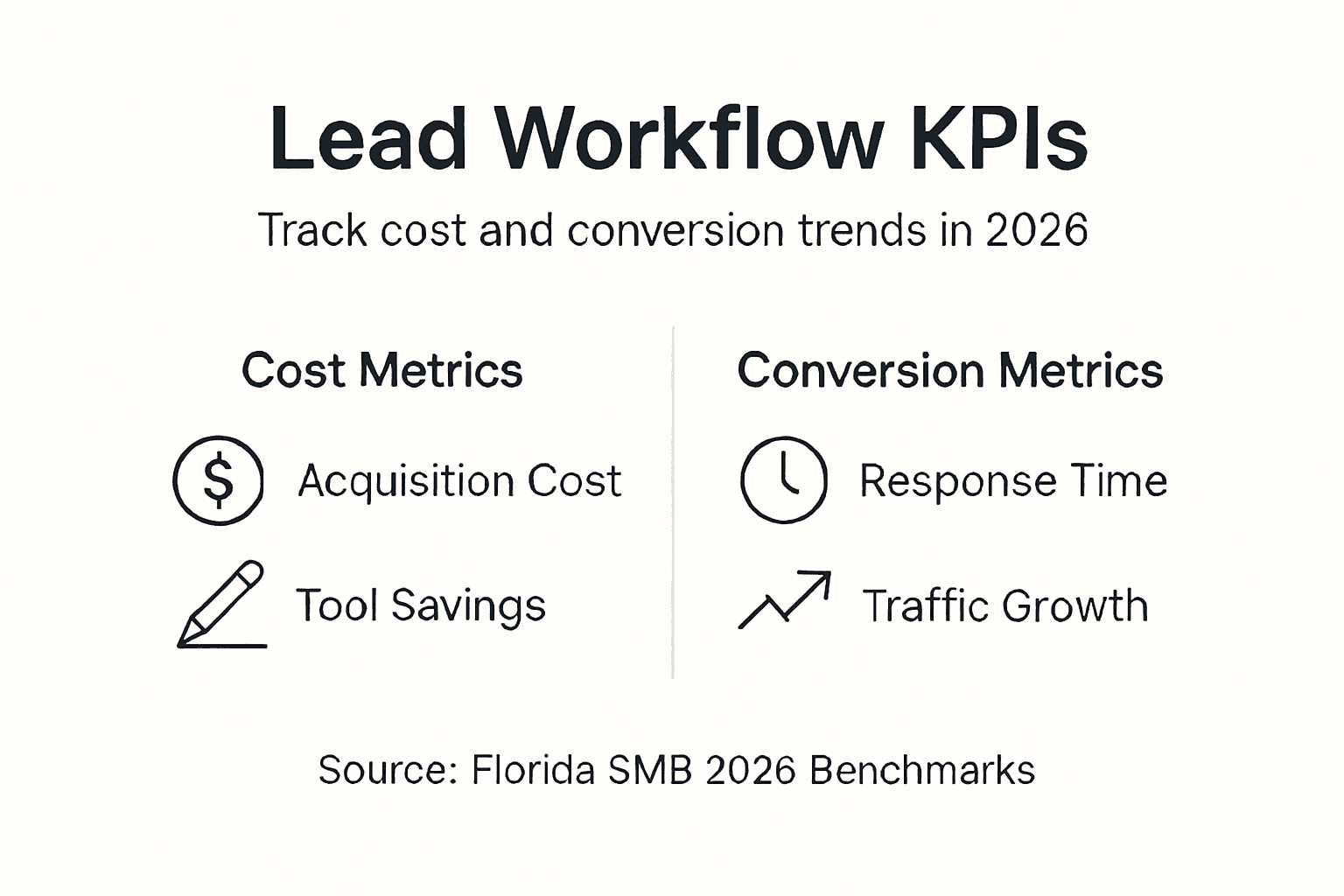
Aim for a 30% reduction in lead acquisition costs by automating manual tasks and consolidating tools. Calculate cost per lead by dividing total marketing spend by leads generated. Watch this number drop as automation efficiency improves.
Expect up to 50% increase in local website traffic within weeks as local SEO optimizations take effect. Monitor traffic from Florida cities specifically and track which pages attract the most qualified visitors.
Improve lead response times by as much as 70% with automated immediate replies and scheduled follow-ups. Measure time between initial inquiry and first response, then between subsequent touchpoints.
Increase lead inquiries from Google Business Profile by up to 35% through consistent optimization and engagement. Track phone calls, direction requests, and website clicks originating from your profile.
| KPI | Baseline | 30 Day Target | 60 Day Target | Tracking Frequency |
|---|---|---|---|---|
| Cost Per Lead | $80 | $65 | $56 | Weekly |
| Local Website Traffic | 500 visits/month | 650 visits/month | 750 visits/month | Weekly |
| Lead Response Time | 4 hours | 30 minutes | 5 minutes | Daily |
| Google Business Inquiries | 20/month | 25/month | 27/month | Weekly |
| Lead Conversion Rate | 8% | 10% | 12% | Weekly |
Track monthly lead growth and engagement metrics for ongoing improvement. Review which traffic sources, content pieces, and automation sequences deliver the best ROI. Double down on winners and cut losers. Monitor your lead generation KPIs consistently to stay ahead.
Simplify your Florida SMB lead generation with Nimblo’s all-in-one platform
Building a lead generation workflow from scratch takes time and expertise most Florida SMBs do not have. Nimblo eliminates the complexity by consolidating SEO, website, CRM, and automation into one affordable platform designed specifically for Florida small businesses.
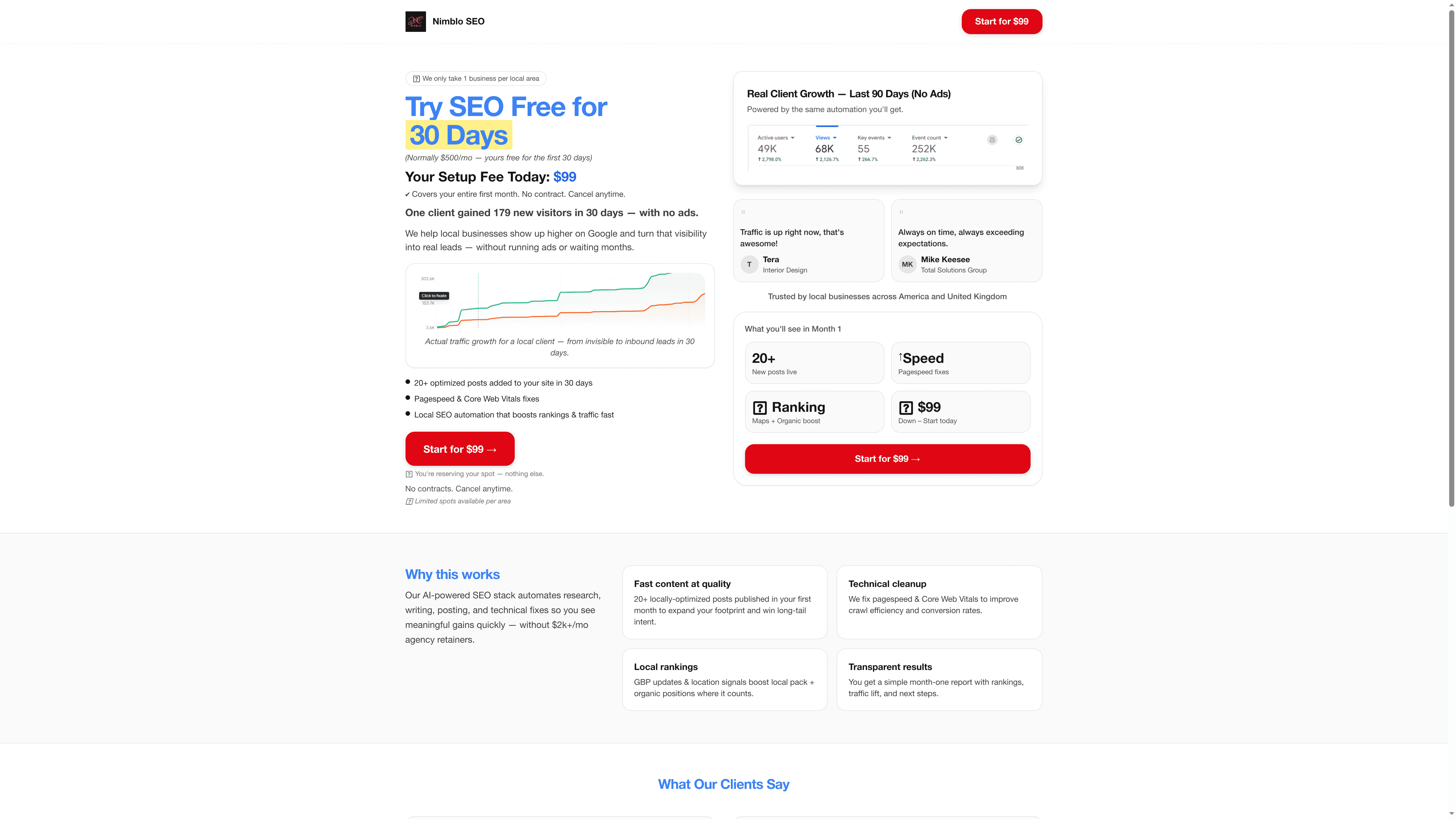
You get local SEO expertise tailored for Florida markets, automated lead capture and nurture sequences that run 24/7, and real-time analytics showing exactly which efforts generate leads. No tech headaches, no juggling multiple subscriptions, no surprise costs. Start growing your local leads rapidly with transparent pricing that replaces expensive agencies and fragmented tool stacks. Explore proven local SEO strategies, discover marketing automation for Florida SMBs, and see how the Nimblo all-in-one platform delivers measurable results within weeks.
FAQ
How long does it take to see results from automated lead generation?
Most Florida SMBs see initial results within 2 to 4 weeks after implementing automation, with measurable improvements in lead response times appearing almost immediately. Traffic and inquiry growth from local SEO typically become visible within 4 to 8 weeks as search engines index optimizations.
What local SEO tactics are most effective for Florida SMBs?
Optimizing your Google Business Profile with fresh photos, reviews, and posts delivers the fastest results, often increasing inquiries by 35%. Schema markup implementation and localized keyword targeting for specific Florida cities drive sustained traffic growth over time.
Can I switch from multiple tools to an all-in-one platform easily?
Yes, most all-in-one platforms offer migration support to import contacts, content, and settings from existing tools. The transition typically takes 1 to 2 weeks for setup and testing, after which you can cancel fragmented subscriptions and start saving costs immediately.
What budget should I allocate for marketing automation?
Florida SMBs should expect to invest $500 to $800 monthly for comprehensive all-in-one platforms that replace multiple tools. This represents significant savings compared to maintaining separate CRM, email, SEO, and website subscriptions that total $1,200 or more monthly.
How often should I audit my lead generation workflow?
Conduct lightweight audits weekly to verify forms, tracking, and automation sequences function correctly. Perform comprehensive audits monthly to review KPIs, update local SEO elements, refresh content, and optimize underperforming sequences based on data.