
Most American small business owners in Florida see over 60 percent of potential leads slip through the cracks without effective tracking. Better lead management is no longer just a nice-to-have, especially when every customer counts in a highly competitive market. This guide explains how clear, integrated lead tracking helps Florida SMBs transform scattered data into steady growth without the usual marketing headaches.
Table of Contents
- Defining Lead Tracking for Florida SMBs
- Stages and Types of Lead Tracking Tools
- How Lead Tracking Works in Practice
- Benefits for Sales, Marketing, and Operations
- Common Pitfalls and Costly Mistakes to Avoid
Key Takeaways
| Point | Details |
|---|---|
| Effective Lead Tracking is Essential | Florida SMBs should systematically capture and analyze customer interactions to optimize marketing strategies and improve sales outcomes. |
| Utilize a Variety of Tracking Tools | Implement CRM systems, form tracking software, and analytics platforms to gain a comprehensive understanding of lead behavior and engagement. |
| Integration Across Teams is Key | Cross-departmental collaboration in lead tracking allows for better alignment between sales, marketing, and operations, enhancing overall performance. |
| Avoid Common Pitfalls | Regularly audit lead tracking processes to prevent errors and ensure a refined approach to managing leads, which can significantly affect growth potential. |
Defining Lead Tracking for Florida SMBs
Lead tracking represents a strategic approach for Florida small and medium businesses to transform potential customer interactions into measurable growth opportunities. At its core, lead tracking is the systematic process of identifying, capturing, and analyzing prospective customer behaviors across multiple touchpoints in the sales journey.
By implementing strategic tracking methods, Florida SMBs can gain critical insights into how potential customers discover their business, engage with their marketing materials, and progress through the sales pipeline. This approach allows businesses to understand which marketing channels generate the most promising leads, enabling more targeted and efficient resource allocation.
Effective lead tracking for Florida businesses involves multiple key components. These typically include using lead capture forms on websites, monitoring interaction metrics, tracking lead source origins, and analyzing conversion performance. The goal is to create a comprehensive picture of potential customer behaviors that can help businesses prioritize high-potential prospects and optimize their marketing strategies.
Pro tip: Implement a consistent lead scoring system that assigns value to different interaction types, helping your team quickly identify and prioritize the most promising potential customers.
Stages and Types of Lead Tracking Tools
Lead tracking tools represent a sophisticated ecosystem of technologies designed to help Florida small businesses transform potential customer interactions into measurable growth opportunities. These tools are strategically crafted to capture, analyze, and nurture leads across multiple digital and traditional marketing channels.
Lead management platforms encompass several critical tracking technologies that Florida SMBs can leverage. These typically include form tracking software, customer relationship management (CRM) systems, marketing analytics platforms, and call tracking solutions. Each tool serves a unique purpose in capturing and understanding potential customer behaviors and interactions.
Here is a summary of key lead tracking tools and their major business impact for Florida SMBs:
| Tool Type | Primary Function | Business Impact |
|---|---|---|
| CRM systems | Centralize lead data | Improve sales follow-up |
| Form tracking software | Capture web leads | Grow customer database |
| Call tracking solutions | Monitor phone inquiries | Attribute sales to marketing |
| Marketing analytics platforms | Analyze campaign performance | Optimize marketing spend |
The lead tracking process typically involves several strategic stages. Initial lead capture occurs through website forms, social media interactions, email engagements, and direct contact points. Subsequent stages involve lead qualification, where businesses assess potential customer interest and likelihood of conversion through behavioral and demographic analysis. Advanced tracking tools enable businesses to score leads, prioritize high-potential prospects, and create personalized communication strategies that increase conversion probabilities.
Pro tip: Integrate multiple lead tracking tools to create a comprehensive view of your customer journey, ensuring no potential lead falls through the communication gaps.
How Lead Tracking Works in Practice
Lead tracking transforms raw customer interaction data into actionable strategic insights for Florida small businesses. By systematically capturing and analyzing every digital and interpersonal touchpoint, businesses can create a comprehensive understanding of potential customer journeys and behaviors.
Real-time data collection enables businesses to track leads across multiple channels including website interactions, social media engagements, email communications, and direct sales conversations. This integrated approach allows companies to assign precise status markers to each lead, understanding their position in the sales funnel and potential conversion likelihood.

The practical implementation of lead tracking involves several sophisticated mechanisms. Businesses utilize advanced customer relationship management (CRM) systems to centralize lead information, creating detailed profiles that capture demographic data, interaction history, and engagement patterns. Advanced segmentation techniques enable businesses to personalize communication strategies, tailoring outreach efforts to match specific lead characteristics and demonstrated interests.
Pro tip: Implement a consistent lead scoring system that automatically ranks leads based on their interaction frequency, engagement depth, and demonstrated purchase intent to prioritize your sales team’s efforts.
Benefits for Sales, Marketing, and Operations
Lead tracking transforms business operations by creating a unified approach to understanding and engaging potential customers across multiple organizational departments. By breaking down traditional silos, Florida small businesses can achieve unprecedented alignment between sales, marketing, and operational teams.
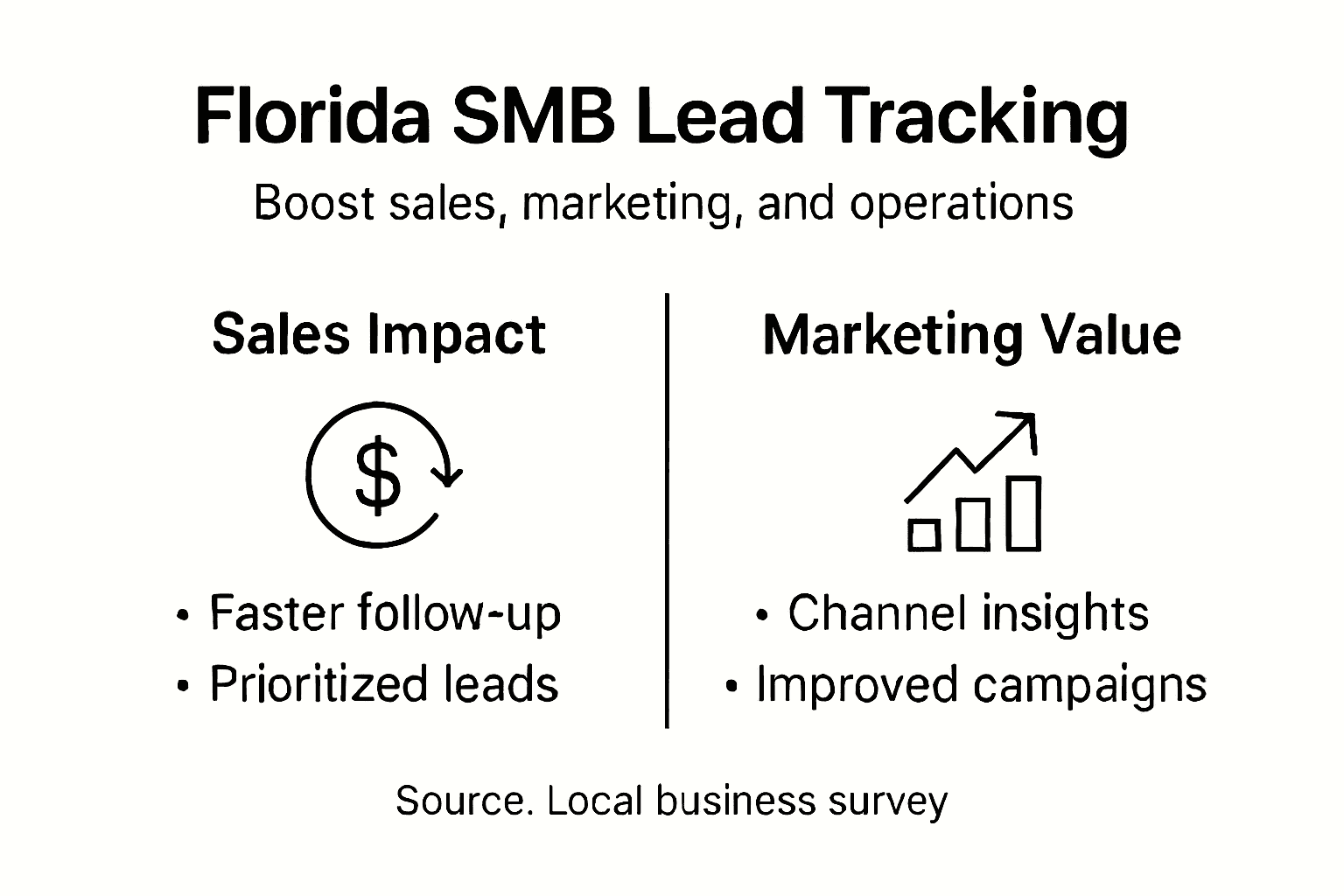
For sales teams, CRM integration strategies enable more targeted and efficient lead pursuit. Sales representatives gain comprehensive insights into lead behaviors, allowing them to prioritize high-potential prospects, understand customer pain points, and develop personalized engagement strategies that dramatically improve conversion rates.
Marketing departments benefit from lead tracking by gaining granular visibility into campaign performance and audience engagement. These insights allow for real-time optimization of marketing strategies, precise audience segmentation, and data-driven resource allocation. Operational teams can leverage these insights to streamline internal processes, reduce wasted efforts, and create more responsive customer interaction workflows that adapt to changing market dynamics.
Examine differences between sales, marketing, and operations benefits from lead tracking:
| Department | Lead Tracking Benefit | Resulting Advantage |
|---|---|---|
| Sales | Prioritize high-potential leads | Higher conversion rates |
| Marketing | Segment audience by engagement | More effective campaigns |
| Operations | Streamline internal workflows | Faster response and reduced waste |
Pro tip: Implement a cross-departmental lead tracking dashboard that provides real-time insights visible to sales, marketing, and operations teams, ensuring unified understanding and collaborative decision-making.
Common Pitfalls and Costly Mistakes to Avoid
Lead tracking represents a complex ecosystem where seemingly minor errors can dramatically undermine a Florida small business’s growth potential. Understanding and proactively addressing these potential pitfalls is crucial for maintaining an effective and reliable lead management strategy.
Data tracking mistakes can emerge from multiple sources, with the most critical errors involving inadequate data validation, poorly defined tracking objectives, and incomplete marketing channel integration. Businesses often fall into the trap of collecting vast amounts of data without establishing clear parameters for what constitutes a qualified lead or how to effectively interpret complex analytic insights.
The most dangerous mistakes typically involve neglecting critical aspects of lead tracking methodology. These include failing to establish robust qualification criteria, overlooking mobile-specific tracking requirements, ignoring buyer intent signals, and creating misalignment between sales and marketing teams. Florida small businesses must develop comprehensive strategies that account for nuanced customer interaction patterns, ensuring that lead tracking becomes a precision instrument for growth rather than a source of organizational confusion.
Pro tip: Conduct quarterly comprehensive audits of your lead tracking processes, systematically reviewing data collection methods, integration strategies, and cross-departmental communication protocols to identify and eliminate potential tracking inefficiencies.
Unlock Powerful Lead Tracking with Nimblo.ai to Grow Your Florida SMB
The challenge for Florida small and medium businesses lies in effectively tracking and nurturing leads across multiple channels while avoiding costly mistakes and fragmented tools. This article highlights critical pain points like poor data integration, lack of automated follow-ups, and difficulty prioritizing high-potential prospects. Imagine turning every lead interaction into a strategic advantage with tools designed to simplify lead capture, scoring, and personalized engagement. With Nimblo.ai, you gain an all-in-one platform that combines CRM, SEO, marketing automation, and website performance tailored specifically for Florida SMBs.
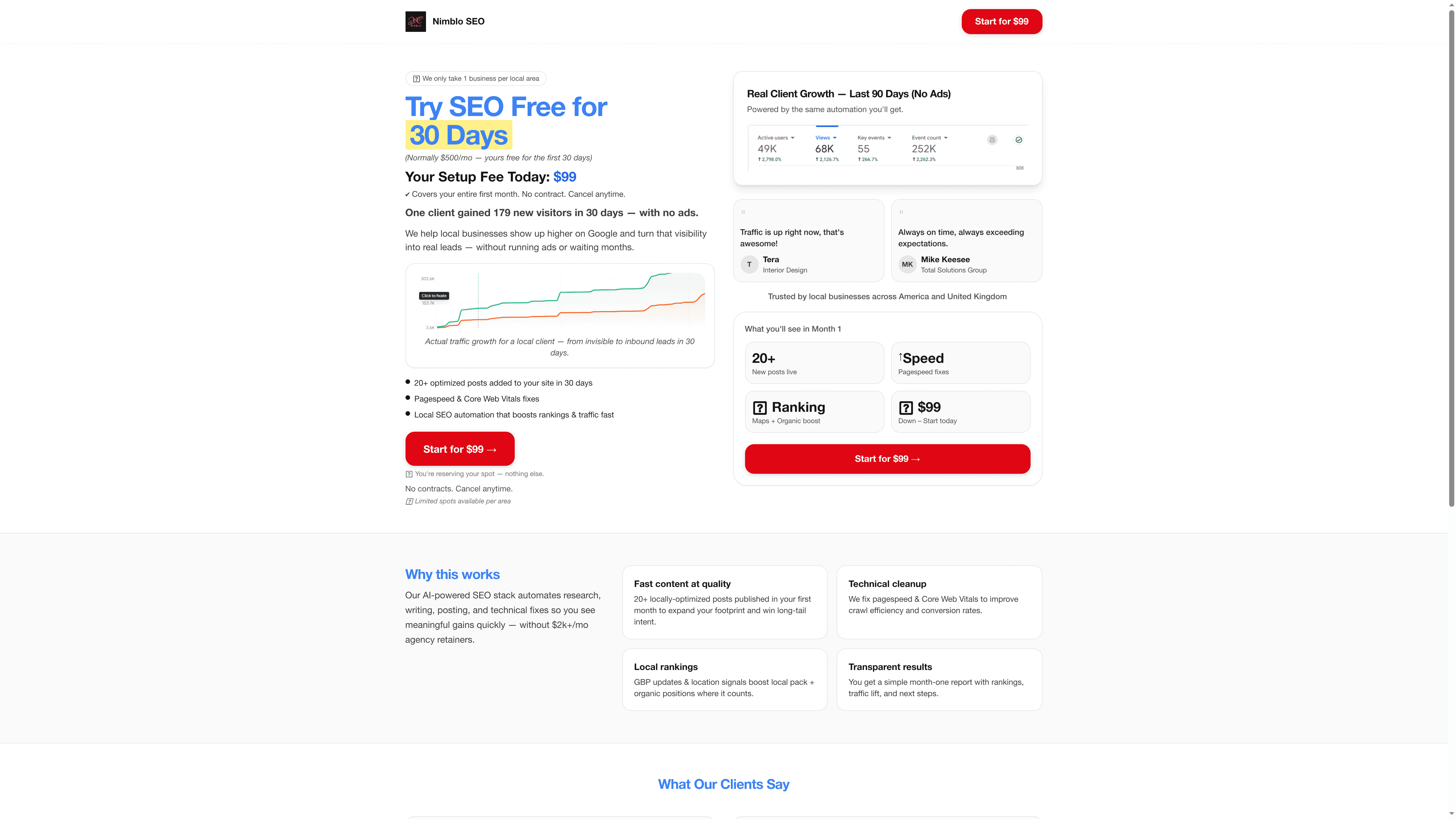
Take advantage of Nimblo.ai’s fast setup and AI-powered local SEO to dominate your local market while seamlessly automating lead generation and follow-ups. Stop juggling multiple expensive tools and agencies that drain time and budget. Explore how Nimblo.ai’s comprehensive service package can help you streamline operations, increase conversions, and boost sales. Don’t wait for leads to slip through the cracks. Visit Nimblo.ai now to transform your lead tracking strategy into a powerful growth engine tailored for Florida businesses.
Frequently Asked Questions
What is lead tracking?
Lead tracking is the systematic process of identifying, capturing, and analyzing prospective customer behaviors throughout their sales journey, helping businesses transform interactions into measurable growth opportunities.
How do lead tracking tools benefit small businesses?
Lead tracking tools allow small businesses to understand which marketing channels generate promising leads, thereby optimizing resource allocation, improving conversion rates, and enhancing communication strategies.
What are the key components of effective lead tracking?
Key components include lead capture forms on websites, monitoring interaction metrics, tracking lead source origins, analyzing conversion performance, and implementing a lead scoring system for prioritizing prospects.
What common mistakes should businesses avoid in lead tracking?
Common mistakes include inadequate data validation, poorly defined tracking objectives, failing to establish robust qualification criteria, and neglecting integration among sales and marketing efforts.