
More than 85 percent of american shoppers use online directories to find local businesses, but even small mistakes in your listings can cost you customers and visibility. Navigating business directories often feels confusing with so many platforms and rules. This guide breaks down practical steps to help you audit, update, and manage your local citations so your american business stands out clearly in every search.
Table of Contents
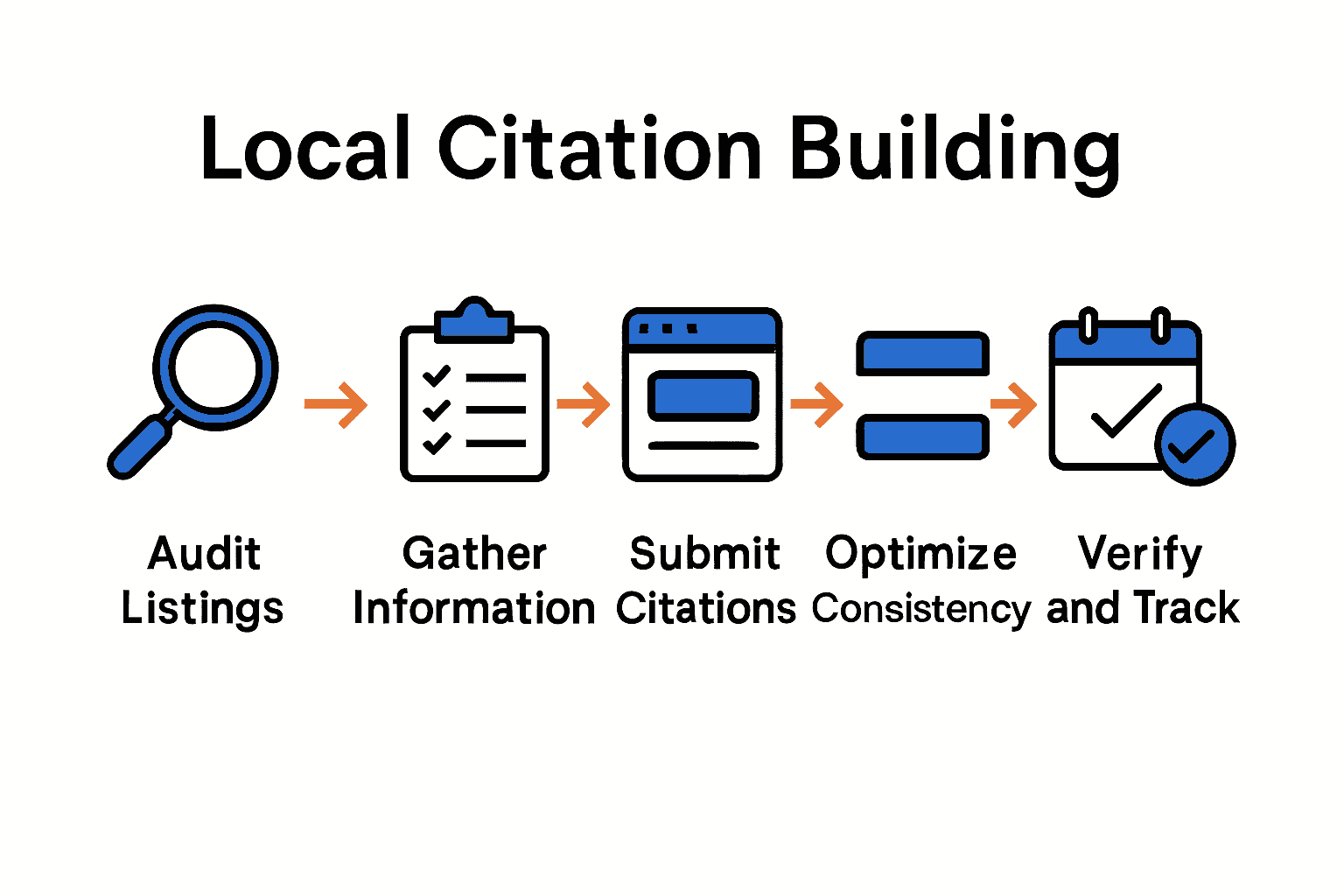
- Step 1: Audit Existing Business Listings
- Step 2: Gather Accurate Business Information
- Step 3: Submit Citations to Local Directories
- Step 4: Optimize Listings for Consistency
- Step 5: Verify Citations and Track Results
Quick Summary
| Key Insight | Explanation |
|---|---|
| 1. Conduct a thorough audit first | Review existing listings to find inaccuracies or duplicates that can harm local search visibility. |
| 2. Gather accurate business info | Compile a master document with precise details of your business for consistency across all platforms. |
| 3. Submit to key online directories | Prioritize submissions to directories like Google Business and Yelp to strengthen your online presence. |
| 4. Maintain consistent listings | Ensure NAP (Name, Address, Phone) details are uniform across all listings to avoid confusion for search engines. |
| 5. Monitor and verify citations | Regularly check that your listings are live and accurate to maintain your business’s visibility and credibility online. |
 |
|
Step 1: Audit Existing Business Listings
Before creating new local citations, you need to thoroughly examine your current online business listings. According to ClickIntelligence, it’s essential to audit existing listings to identify and correct potential inaccuracies or duplicates that could harm your local search visibility.
Starting your audit requires a systematic search across multiple platforms. OnTopList recommends searching for your exact business name, address, and phone number to uncover existing citations. Professional tools like BrightLocal or Moz Local can streamline this process by automatically detecting inconsistencies or duplicate listings that need immediate correction.
As you review your listings, pay close attention to these critical details: business name spelling, physical address format, phone number, website URL, and operating hours. Any variations or discrepancies can confuse potential customers and negatively impact your local search rankings. Pro tip: Create a spreadsheet to track all discovered listings, noting their current status and required updates.
This meticulous audit sets the foundation for your local citation strategy. By cleaning up existing listings, you’ll ensure accurate and consistent business information across the web, which signals credibility to both search engines and potential customers. Check out our guide to Google Business Profile to learn more about optimizing your primary local business listing.
Step 2: Gather Accurate Business Information
Your next mission is to compile a comprehensive and precise collection of your business details. ClickIntelligence emphasizes that maintaining accurate and consistent business information across all listings is crucial for building trust with search engines and potential customers.
Start by assembling a master document that includes your business name exactly as it appears in legal documents, your complete physical address, primary phone number, website URL, business category, operating hours, and a concise business description. CitationVA notes that accurate local citations are foundational for a strong local SEO strategy, enhancing trust and improving search rankings.
To ensure maximum accuracy, cross reference your information with official documents like your business license, tax registration, and utility bills. Verify each detail multiple times and create a standard format you will use consistently across all platforms. Pro tip: Have another person review your information to catch any potential errors or inconsistencies.
Once you have your verified business information, you are ready to proceed with building and managing your local citations strategically. Check out our guide to Google Business Profile for the next steps in optimizing your local online presence.

Step 3: Submit Citations to Local Directories
OnTopList reveals that building local citations requires strategic submission of your business information to key online directories. Your goal is to establish a comprehensive and authoritative online presence across multiple platforms that potential customers frequently use to find local businesses.
Prioritize submissions to critical directories such as Google Business Profile, Apple Maps, Bing Places, Yelp, and the Better Business Bureau. Search Engine Journal notes that developing a strong citation profile is a cost effective method to enhance your local SEO performance. Create accounts on each platform and ensure you complete every available field with your verified business information from the previous step.
As you submit your citations, maintain absolute consistency in how you present your business name, address, and phone number. Small variations can confuse search engines and potentially harm your local search rankings. Pro tip: Use a spreadsheet to track which directories you have submitted to and the status of each submission.
After completing your directory submissions, you will have laid a solid foundation for your local online visibility. Check out our guide to Google Business Profile to optimize your most critical local business listing and maximize your local search potential.
Step 4: Optimize Listings for Consistency
Your mission in this step is to create a uniform digital footprint that reinforces your business credibility across online platforms. ClickIntelligence emphasizes the critical importance of maintaining consistent business information across all listings to support your local SEO strategy.
Focus meticulously on your business Name, Address, and Phone number NAP details. Best Law Marketing recommends precise attention to these key information points, ensuring zero variations in how your business details appear. This means using identical formatting everywhere word for word such as spelling out Street or using St., including or excluding suite numbers, and maintaining a consistent phone number format with or without parentheses and area codes.
Create a standardized template for your business information that you will use universally. Pro tip: Take screenshots of your verified listings and compare them side by side to catch even subtle inconsistencies that could potentially confuse search engine algorithms. Track any changes systematically and update all platforms simultaneously when your business details shift.
Check out our guide to Google Business Profile to ensure your primary local listing meets the highest standards of accuracy and optimization.
Step 5: Verify Citations and Track Results
OnTopList emphasizes the critical importance of verifying and monitoring your local citations after submission. Your goal in this step is to confirm that all your carefully crafted business listings are live, accurate, and functioning correctly across various online platforms.
Begin by systematically reviewing each directory where you submitted your business information. Check that your business name, address, phone number, and other details appear exactly as you intended. Use specialized local citation tracking tools or manually visit each platform to confirm your listings are visible and displaying consistently. Create a comprehensive tracking spreadsheet that includes the directory name, submission date, verification status, and any notes about potential discrepancies.
Set up regular monitoring intervals to ensure long term accuracy. Pro tip: Configure calendar reminders every 90 days to conduct a thorough review of your citations. During these reviews, look for any changes in your business details, new potential listing opportunities, and verify that previously submitted citations remain active and unaltered.
Check out our guide to Google Business Profile to learn advanced techniques for maintaining and optimizing your most critical local business listing.
Simplify Your Local Citation Strategy with Nimblo.ai
Building and maintaining consistent local citations is crucial for Florida SMBs aiming to boost local SEO and attract more customers. This article highlights the challenges of auditing existing listings, ensuring NAP consistency, and verifying citations across multiple platforms. These tasks are often time-consuming and complex for small business owners juggling many responsibilities.
Imagine having a single platform that streamlines this entire process for you. Nimblo.ai offers AI-powered local SEO tools, Google Business Profile management, and automated follow-ups designed specifically to help Florida SMBs address these exact pain points. No more manual tracking spreadsheets or scattered submissions. With Nimblo.ai, you get rapid setup, seamless optimization, and continuous citation monitoring all in one affordable solution.
Take control of your local search presence today with an all-in-one digital marketing platform tailored for your needs.
Start growing your local leads faster by visiting Nimblo.ai Local SEO Solutions. Explore how easy it can be to keep your business details accurate and consistent across every critical directory. Don’t let citation inconsistencies hold your business back. Get started now and see measurable results in lead generation and cost savings.
Frequently Asked Questions
How do I start auditing my existing business listings for local citations?
To begin auditing your existing business listings, search for your exact business name, address, and phone number across multiple platforms. Create a spreadsheet to track all discovered listings, noting any inaccuracies or duplicates that need correction.
What critical information should I gather for accurate local citations?
For accurate local citations, compile your business name, complete address, primary phone number, website URL, business category, operating hours, and a concise business description. Ensure that this information is consistent and verified with official documents like your business license.
Which directories should I focus on when submitting local citations?
Prioritize submitting your business information to key online directories such as Google Business Profile, Yelp, Bing Places, and Apple Maps. Completing submissions on these platforms helps establish your online presence and improve local search visibility.
How can I ensure consistency across all my local citations?
To ensure consistency, create a standardized template for your business information and use it universally across all directories. Carefully track any changes, and compare your listings side by side to catch any variations that could confuse search engines.
What steps should I take to verify my citations after submission?
After submission, systematically review each directory to confirm that your business name, address, and phone number appear accurately. Use a comprehensive tracking spreadsheet to monitor the verification status and set calendar reminders for regular reviews every 90 days.
How often should I review my local citations for accuracy?
It’s essential to review your local citations regularly to maintain accuracy and visibility. Set reminders to conduct a thorough review every 90 days, checking for any changes or discrepancies in your business details.
Recommended
- What Is SMB SEO? Complete Guide for Florida Businesses – Nimblo
- 7 Practical Examples of Local SEO Strategies for SMBs – Nimblo
- Local Search Ranking Explained: Complete Florida Guide – Nimblo
- Local SEO Optimization Workflow for Florida SMBs – Nimblo
- Building a Strong Online Presence: A Step-by-Step Guide for Small Businesses – Digital Marketing Agency – Market Link Solutions
- Why SEO for Small Businesses: Complete Guide – Digital Marketing Agency – Market Link Solutions