
Most business leaders expect AI agents to work like magic, autonomously solving complex problems without human input. Reality tells a different story. Production agents are simple: 68% execute ≤10 steps with human intervention, and reliability remains the top challenge. Agentic AI offers powerful automation capabilities, but only when you integrate human oversight strategically. This guide walks you through what agentic AI actually is, how to implement it effectively, the benefits and risks you’ll face, and why hybrid human-AI models deliver better ROI than pure autonomy. You’ll learn actionable strategies to maximize operational efficiency while avoiding costly pitfalls that derail many enterprise deployments.
Table of Contents
- Key takeaways
- Understanding agentic AI: capabilities, challenges, and enterprise potential
- Implementing agentic AI in your enterprise: phased roadmaps and success factors
- Hybrid human-AI collaboration versus pure agentic AI: balancing autonomy and oversight
- Overcoming risks and scaling agentic AI: governance, safety, and economic modeling
- Discover Nimblo’s AI solutions for effective automation
- Frequently asked questions about agentic AI in enterprises
Key Takeaways
| Point | Details |
|---|---|
| Hybrid human AI teams | Hybrid human AI teams outperform fully autonomous agents in complex enterprises by combining oversight with automation to improve ROI and reduce risk. |
| Phased roadmaps essential | Implementing agentic AI with phased roadmaps helps prioritize use cases, validate value, and reduce deployment risk. |
| Reliability and safety risks | Reliability remains the top challenge as edge cases and unexpected inputs create failure points requiring human oversight. |
| Governance and cost modeling | Scaling requires governance maturity and economic modeling to manage token costs and ROI before broad deployment. |
Understanding agentic AI: capabilities, challenges, and enterprise potential
Agentic AI refers to systems that can perceive their environment, make decisions, and take actions to achieve specific goals with varying degrees of autonomy. Unlike simple chatbots that respond to queries, agentic AI actively pursues objectives through multi-step workflows. However, it’s not the fully autonomous solution many executives imagine.

Most production agents are simple: 68% execute ≤10 steps with human intervention, 70% use off-the-shelf models via prompting, 74% rely on human evaluation. This data reveals a critical truth about current agentic AI deployments. They work best on bounded, repetitive tasks where you can define clear success criteria and safety rails. Supply chain optimization, customer service routing, and operational task automation represent common enterprise applications where agentic AI delivers measurable value.
Reliability and safety emerge as the main challenges requiring human oversight. Complex workflows introduce multiple failure points. Agents struggle with edge cases, adversarial inputs, and scenarios outside their training data. You’ll also face steep operational costs. Token consumption in multi-step agent workflows can run 10 to 50 times higher than single prompt interactions, demanding careful economic modeling before scaling.
“Production agents are simple: 68% execute ≤10 steps with human intervention, 70% use off-the-shelf models via prompting, 74% rely on human evaluation; reliability is top challenge.”
Here’s what agentic AI can and cannot do:
- Execute repetitive workflows with high accuracy when properly bounded
- Process large volumes of structured data faster than human teams
- Learn from feedback to improve performance on defined tasks
- Integrate with existing systems through APIs and workflow tools
- Scale processing capacity without proportional headcount increases
- Handle ambiguous instructions or unprecedented situations reliably
- Navigate complex ethical dilemmas without human judgment
- Adapt to rapidly changing business contexts autonomously
- Guarantee zero errors in high-stakes decision making
Understanding these capabilities and limitations shapes realistic expectations. AI in marketing cuts costs when you deploy it strategically, not when you expect magic. The same principle applies across all enterprise functions.
Implementing agentic AI in your enterprise: phased roadmaps and success factors
Successful agentic AI implementation follows a structured, phased approach that minimizes risk while maximizing learning. Enterprise implementation methodologies include phased roadmaps: assess capabilities, prioritize use cases by impact/complexity, ensure data readiness/governance, pilot high-value cases, iterate with agile cycles. This framework helps you avoid the common trap of attempting full-scale deployment before validating value.
Follow these implementation phases:
- Assess your current automation capabilities and identify gaps where agentic AI could deliver value
- Map potential use cases across departments, documenting workflow complexity and data requirements
- Prioritize opportunities using an impact versus complexity matrix to find quick wins
- Establish data governance and quality standards before piloting any agents
- Launch controlled pilots on high-value use cases with clear success metrics
- Iterate rapidly based on feedback, refining prompts, workflows, and oversight mechanisms
- Scale proven use cases while maintaining governance and economic discipline
Data readiness and governance form the foundation for scaling. Without clean, accessible data and clear policies on AI use, your agents will produce unreliable outputs. Establish these prerequisites before moving beyond initial pilots.
Pro Tip: Build governance frameworks early, not as an afterthought. Clear policies on data access, decision authority, and human oversight reduce risks and support confident scaling decisions when pilots succeed.
Use this prioritization matrix to evaluate potential use cases:
| Use Case | Business Impact | Implementation Complexity | Priority |
|---|---|---|---|
| Invoice processing automation | High (20% cost reduction) | Low (structured data, clear rules) | Immediate pilot |
| Customer service routing | High (30% faster resolution) | Medium (requires integration) | Phase 2 |
| Procurement optimization | Medium (10% savings) | High (multi-system, complex logic) | Phase 3 |
| Compliance monitoring | High (risk reduction) | Medium (data quality critical) | Phase 2 |
Success factors include executive sponsorship, cross-functional teams, and realistic timelines. The role of AI in digital marketing shows how focused pilots with clear metrics outperform ambitious but vague initiatives. Apply the same discipline to your operational automation projects.
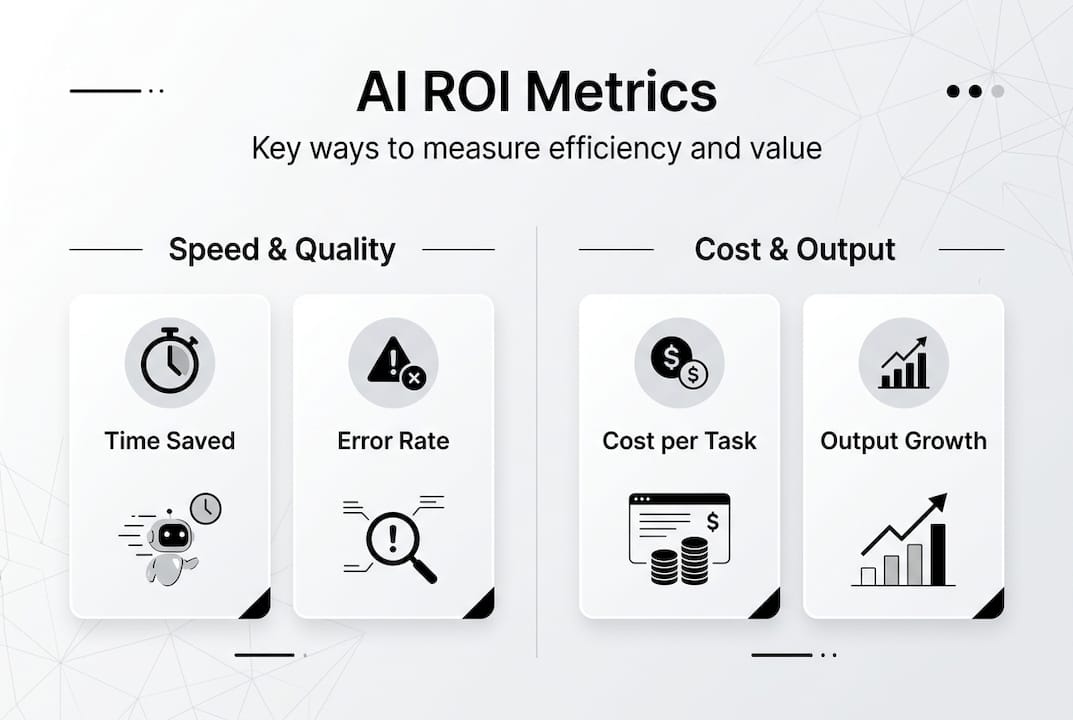
Measure ROI through specific metrics tied to business outcomes. Track processing time reduction, error rate improvements, cost per transaction, and employee time freed for higher-value work. Set gating criteria for each phase: pilots must demonstrate 3x ROI potential before moving to broader deployment.
AI local SEO strategies demonstrate the value of iteration and refinement. Your agentic AI implementations will improve through continuous learning cycles, not one-time deployments.
Hybrid human-AI collaboration versus pure agentic AI: balancing autonomy and oversight
The debate between fully autonomous agentic AI and hybrid human-AI collaboration models shapes enterprise deployment strategies. Pure autonomous systems promise maximum efficiency gains, but hybrid human-AI teams outperform pure agents; manage via delegation to leverage AI speed/scale on isolated tasks, with human empathy for oversight.
Hybrid models assign bounded tasks to AI agents while reserving complex judgment calls, edge cases, and high-stakes decisions for human team members. This approach delivers better reliability and safety than attempting full autonomy too early. You get the speed and scale benefits of AI without sacrificing the contextual understanding and ethical judgment humans provide.
| Dimension | Pure Autonomous AI | Hybrid Human-AI Model |
|---|---|---|
| Scalability | Highest potential | High with human capacity constraints |
| Reliability | 50-90% failure on complex benchmarks | Significantly higher through human oversight |
| Cost per transaction | Lower at scale (if reliable) | Moderate (human time + AI costs) |
| Oversight requirements | Minimal (in theory) | Structured human checkpoints |
| Safety and compliance | High risk without safeguards | Lower risk through layered review |
| Adaptability to edge cases | Poor without retraining | Excellent through human judgment |
Hybrid approaches excel in complex, adversarial, or rapidly changing environments. Financial services, healthcare, and legal operations benefit from this model because stakes are high and edge cases are common. AI handles repetitive analysis and data processing while humans make final determinations on sensitive matters.
Best practices for managing hybrid teams:
- Delegate clearly bounded tasks to AI agents with explicit success criteria
- Establish human review checkpoints at critical decision points
- Minimize dependencies between agents to reduce cascading failures
- Create feedback loops so human corrections improve agent performance
- Document when and why humans override AI recommendations
- Train team members on effective AI collaboration techniques
- Monitor for automation bias where humans defer too much to AI outputs
Pro Tip: Don’t attempt full autonomy on complex workflows until you’ve run hybrid models successfully for at least six months. Early autonomy attempts often fail spectacularly, damaging stakeholder trust and delaying valuable automation.
Marketing automation for agencies illustrates how combining human creativity with AI execution delivers superior results. Marketing automation workflows function best when you assign repetitive tasks to automation while preserving human oversight on strategy and messaging.
The economic case for hybrid models remains strong. While pure autonomy promises lower long-term costs, the reliability and safety benefits of human oversight typically deliver better ROI in the first 18 to 24 months of deployment. Marketing automation tips emphasize starting with high-value, low-risk use cases, a principle that applies equally to operational automation.
Overcoming risks and scaling agentic AI: governance, safety, and economic modeling
Scaling agentic AI introduces significant risks that derail unprepared enterprises. Agents fail 50-90% on benchmarks due to errors; safety risks include over-permissiveness and prompt injections. These failure rates reflect the complexity of real-world environments where training data doesn’t cover every scenario.
Safety risks manifest in multiple ways. Over-permissive agents access systems or data beyond their intended scope, creating security vulnerabilities. Prompt injection attacks manipulate agent behavior through carefully crafted inputs, causing unauthorized actions. Without robust safeguards, a single compromised agent can cascade failures across interconnected workflows.
Economic modeling becomes critical as you scale. High token costs (10-50x single prompts) in complex workflows demand careful ROI analysis before broad deployment. A workflow that costs pennies in development can consume thousands of dollars monthly at production scale. Model your expected transaction volumes, average workflow complexity, and token consumption patterns to avoid budget surprises.
Only 23% of enterprises successfully scale agentic AI beyond initial pilots, underscoring the need for mature evaluation frameworks and governance before expansion. Establish clear maturity gates that assess technical performance, safety compliance, economic viability, and organizational readiness.
“Edge cases: Agents fail 50-90% on benchmarks due to errors; safety risks include over-permissiveness and prompt injections.”
Risk mitigation practices:
- Implement layered human oversight with escalation protocols for uncertain decisions
- Establish maturity gates requiring demonstrated reliability before scaling
- Conduct regular security audits focused on prompt injection and access control
- Monitor agent behavior for drift or unexpected patterns indicating problems
- Maintain kill switches to disable problematic agents immediately
- Document failure modes and build safeguards against repeat issues
- Create economic models that account for token costs at projected scale
- Develop governance frameworks covering data access, decision authority, and compliance
Governance frameworks ensure data and operational safety throughout the scaling process. Define who can deploy agents, what data they can access, and what actions they can take autonomously versus with human approval. Marketing attribution strategies require similar governance around data usage and privacy, principles that extend to operational automation.
Your governance model should address:
- Data classification and access controls for agent workflows
- Approval processes for deploying new agents or modifying existing ones
- Monitoring and alerting for anomalous agent behavior
- Compliance requirements specific to your industry and geography
- Incident response procedures when agents malfunction or cause harm
- Regular audits of agent performance, costs, and business value
Economic sustainability requires ongoing optimization. Best AI SEO tools demonstrate how feature-rich solutions can become cost-prohibitive at scale without careful management. Apply the same cost discipline to your agentic AI deployments, continuously refining workflows to reduce token consumption while maintaining output quality.
Building enterprise trust requires transparency about both capabilities and limitations. Communicate clearly with stakeholders about what agents can and cannot do reliably. Share performance metrics, failure rates, and improvement trends. This transparency builds confidence and supports informed decisions about where to expand automation.
Discover Nimblo’s AI solutions for effective automation
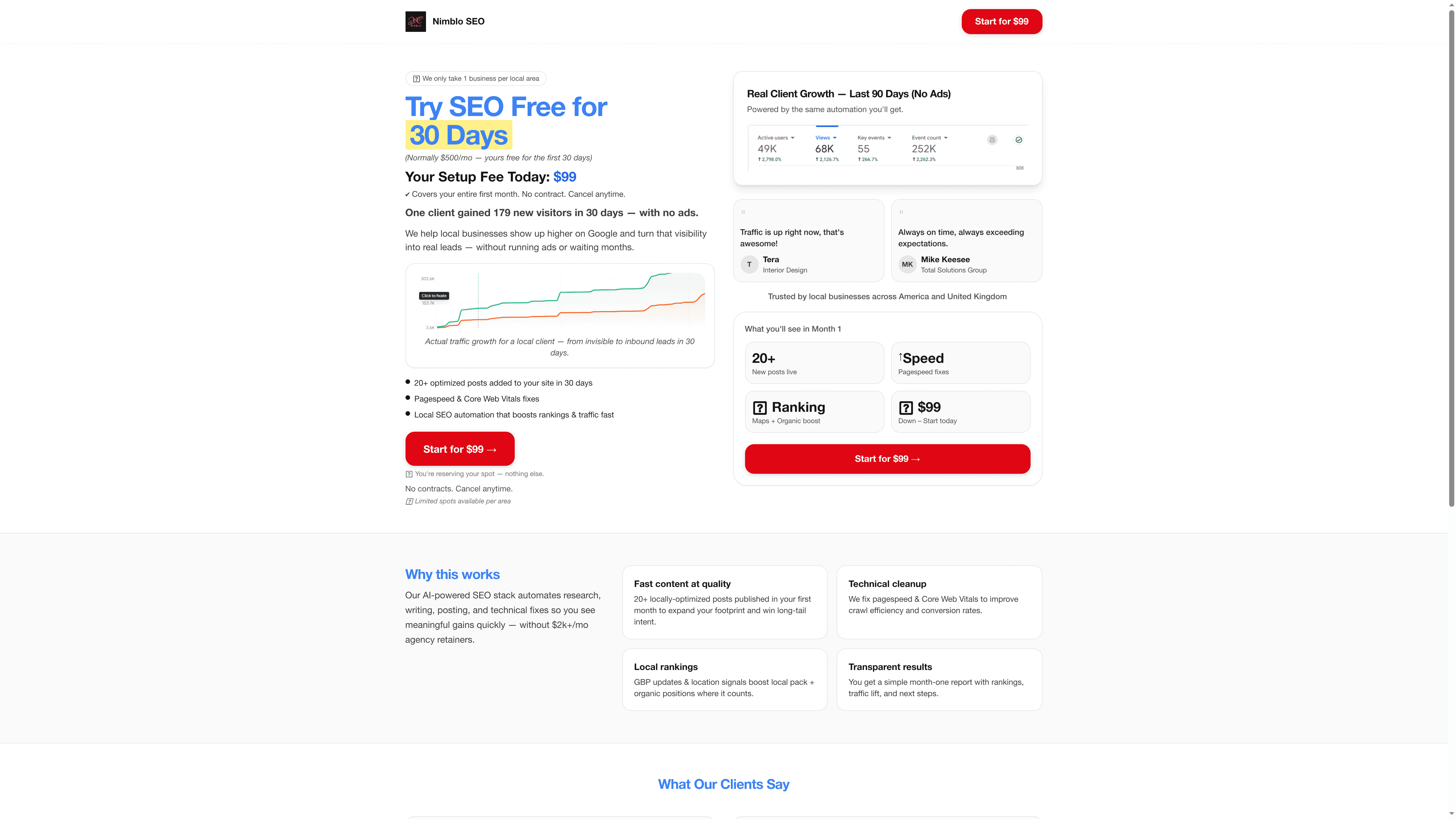
Implementing agentic AI successfully requires more than understanding the technology. You need experienced partners who can embed automation expertise directly into your operations. Nimblo specializes in deploying cross-functional automation teams that combine AI engineers, workflow architects, and domain experts to transform your processes over structured 120-day engagement cycles.
Our platform addresses the exact challenges this guide covered: governance frameworks that ensure safe scaling, hybrid human-AI workflows that balance autonomy with oversight, and economic modeling that validates ROI before broad deployment. We’ve helped enterprises across healthcare, finance, manufacturing, and field services eliminate manual bottlenecks, increase operational visibility, and implement scalable AI-powered automation aligned with specific business workflows and regulatory standards.
“Nimblo’s automation pods deliver measurable ROI through practical AI-driven solutions, embedding directly into client operations to ensure rapid value realization and responsible AI practices.”
Explore how Nimblo’s automation solutions can help you implement agentic AI effectively, avoiding the pitfalls that derail 77% of enterprise scaling attempts while capturing the efficiency and cost benefits that make AI automation worthwhile.
Frequently asked questions about agentic AI in enterprises
What are the main benefits of agentic AI for enterprise operations?
Agentic AI delivers faster processing of repetitive workflows, reduced operational costs through automation, and improved accuracy on bounded tasks with clear success criteria. It scales processing capacity without proportional headcount increases, freeing employees for higher-value strategic work.
How do hybrid human-AI teams improve agentic AI performance?
Hybrid models combine AI speed and scale on routine tasks with human judgment on complex decisions and edge cases. This approach achieves significantly higher reliability than pure autonomous systems while maintaining safety and compliance through layered oversight.
What are key risks when scaling agentic AI solutions?
Major risks include 50-90% failure rates on complex benchmarks, safety vulnerabilities from over-permissive access or prompt injections, and steep token costs that can run 10-50x single prompt interactions. Economic modeling and governance frameworks mitigate these risks.
How do I measure ROI before broadly deploying agentic AI?
Track processing time reduction, error rate improvements, cost per transaction, and employee hours freed during pilot phases. Set gating criteria requiring at least 3x ROI potential before scaling, and model token costs at projected production volumes to ensure economic sustainability.
What governance practices ensure safe agentic AI use?
Establish data classification and access controls, approval processes for agent deployment, monitoring for anomalous behavior, industry-specific compliance requirements, incident response procedures, and regular performance audits. Build these frameworks before scaling beyond initial pilots.