
Most American small business owners in Florida waste thousands every year juggling scattered marketing tools that barely communicate. Growing your business does not require endless logins or expensive subscriptions. When you consolidate everything into a single platform, you unlock clearer lead insights, fewer missed opportunities, and dramatic cost savings. This guide offers practical steps to help you automate your lead generation process and finally bring order to your sales pipeline.
Table of Contents
- Step 1: Assess Your Current Lead Pipeline
- Step 2: Consolidate Tools Into One Platform
- Step 3: Set Up Automation Workflows For Lead Capture
- Step 4: Enable Automated Follow-Ups And Nurturing
- Step 5: Monitor Performance And Optimize Results
Quick Summary
| Key Point | Explanation |
|---|---|
| 1. Analyze your lead pipeline | Review and categorize leads to improve conversion rates and uncover bottlenecks. |
| 2. Consolidate software tools | Reduce complexity by integrating multiple tools into one platform for efficiency. |
| 3. Automate lead capture workflows | Streamline your lead capture by automating repetitive tasks and enhancing efficiency. |
| 4. Implement automated follow-ups | Keep leads engaged through personalized and timely automated communication. |
| 5. Monitor and optimize performance | Regularly review metrics to identify areas for improvement and refine strategies. |
Step 1: Assess your current lead pipeline
Most Florida small business owners struggle with understanding their actual lead generation performance. This step will help you map out your current lead pipeline and identify opportunities for significant improvement.
Start by gathering all your existing lead data from various sources such as your CRM, email marketing platforms, website analytics, and social media tracking tools. Regularly pruning dead leads is essential to maintain an accurate sales pipeline. Create a comprehensive spreadsheet that tracks key metrics including lead source, contact information, interaction history, and current status.
As you review your pipeline, categorize leads into clear segments like hot leads, warm prospects, and cold contacts. Look for patterns in lead behavior tracking which sources generate the most qualified opportunities. Pay special attention to conversion rates and the average time leads spend in each pipeline stage. This analysis will reveal bottlenecks and help you understand where potential customers are getting stuck in your current process.
Here’s how different stages of a typical lead pipeline compare in focus and key metrics:
| Pipeline Stage | Main Focus | Typical Metrics Tracked |
|---|---|---|
| Hot Leads | Immediate contact and closing | Response time, close rates |
| Warm Prospects | Relationship building, nurture | Engagement level, conversion % |
| Cold Contacts | Initial qualification, re-engage | Open rates, follow-up attempts |
Automating alerts and follow-ups can significantly enhance your pipeline management. Consider implementing tools that can automatically track lead interactions, trigger notifications for stagnating deals, and help you maintain consistent communication.
Pro tip: Create a monthly pipeline review ritual where you critically examine your lead data, remove unresponsive contacts, and refine your lead qualification criteria to focus your energy on the most promising opportunities.
Step 2: Consolidate tools into one platform
Reducing your marketing and sales technology stack can dramatically simplify operations and improve overall business efficiency. This section will guide you through strategically combining multiple software tools into a single comprehensive platform.
Consolidating CRM tools into a single platform can eliminate redundant systems and centralize customer data. Start by conducting a comprehensive audit of your current software tools tracking lead generation, customer management, marketing automation, and communication. List out every platform you currently use and evaluate their individual costs, functionality, and integration capabilities.
Look for platforms that offer integrated solutions covering multiple business needs. By consolidating multiple prospecting tools into a unified platform, sales teams can reduce complexity while maintaining personalized outreach. Prioritize solutions that can seamlessly replace multiple existing tools and provide robust automation features. Focus on platforms that offer comprehensive dashboards, automated workflows, and easy data synchronization across different business functions.
When selecting your consolidated platform, consider factors like scalability, user interface, customer support, and pricing structures. Ensure the new platform can accommodate your current business size while providing room for future growth. Pay close attention to data migration capabilities and integration potential with your existing systems.
When evaluating platforms to consolidate your business tools, consider these critical comparison points:
| Factor | Why It Matters | What to Look For |
|---|---|---|
| Scalability | Grows with business needs | Flexible user and data limits |
| Integration | Simplifies data flow | Pre-built and custom options |
| Usability | Encourages team adoption | Intuitive interface, tutorials |
| Support | Reduces downtime, confusion | Responsive, multi-channel help |
Pro tip: Schedule a free trial or demo with potential all-in-one platforms and involve your team in the evaluation process to ensure the new system meets everyone’s operational needs and workflow preferences.
Step 3: Set up automation workflows for lead capture
Automating your lead capture process can dramatically reduce manual work and ensure no potential customer slips through the cracks. This step will help you create efficient workflows that capture leads seamlessly and move them quickly through your sales pipeline.

Automation tools like Zapier can connect web applications to streamline lead generation workflows without requiring complex coding skills. Start by mapping out your current lead capture process and identifying repetitive tasks that can be automated. This might include automatically adding form submissions to your CRM, sending welcome emails, or triggering specific follow-up sequences based on lead characteristics.
Lead generation platforms offer robust form tools that can transform website visitors into potential customers. Choose automation tools with drag-and-drop interfaces that allow you to create custom workflows without extensive technical knowledge. Look for features like onsite retargeting, segmentation capabilities, and integration potential with your existing marketing and sales platforms. Configure triggers that activate specific actions such as sending personalized follow-up emails, scheduling sales team notifications, or updating contact records based on user interactions.
Test your automation workflows thoroughly, monitoring performance and making incremental improvements. Track key metrics like conversion rates, response times, and lead quality to ensure your automated systems are delivering the desired results.
Pro tip: Create a staged implementation approach where you automate one workflow at a time, carefully measuring its impact before expanding to additional processes.
Step 4: Enable automated follow-ups and nurturing
Automated follow-ups are the secret weapon for transforming potential leads into committed customers. This step will help you create intelligent nurturing sequences that keep your prospects engaged without consuming endless hours of manual outreach.
Intelligent automation platforms can integrate multichannel communication and provide actionable insights for efficient lead nurturing. Design a strategic follow-up sequence that adapts to different lead behaviors and interaction levels. Start by segmenting your leads based on their initial engagement source, industry, and demonstrated interests. Create personalized email sequences, SMS messages, and targeted content that speak directly to each segment’s unique needs and pain points.
Implement a systematic approach to tracking lead interactions and automatically adjusting your communication strategy. Configure triggers that respond to specific actions like website visits, content downloads, or webinar attendance. Establish clear criteria for identifying and managing inactive leads to maintain a high-quality sales pipeline. This means setting up automatic tagging and scoring mechanisms that help you distinguish between promising prospects and leads that require re-engagement or removal.
Pay special attention to the timing and frequency of your automated communications. Space out your follow-ups strategically to avoid appearing desperate or overwhelming. Use progressive profiling techniques that gradually collect more information about each lead while providing increasing value through targeted content and resources.
Pro tip: Create a quarterly review process where you analyze the performance of your automated nurturing workflows and refine your segmentation and messaging based on actual conversion data.
Step 5: Monitor performance and optimize results
Measuring and refining your lead generation strategy is crucial for sustainable business growth. This step will help you transform raw data into actionable insights that continuously improve your marketing and sales performance.
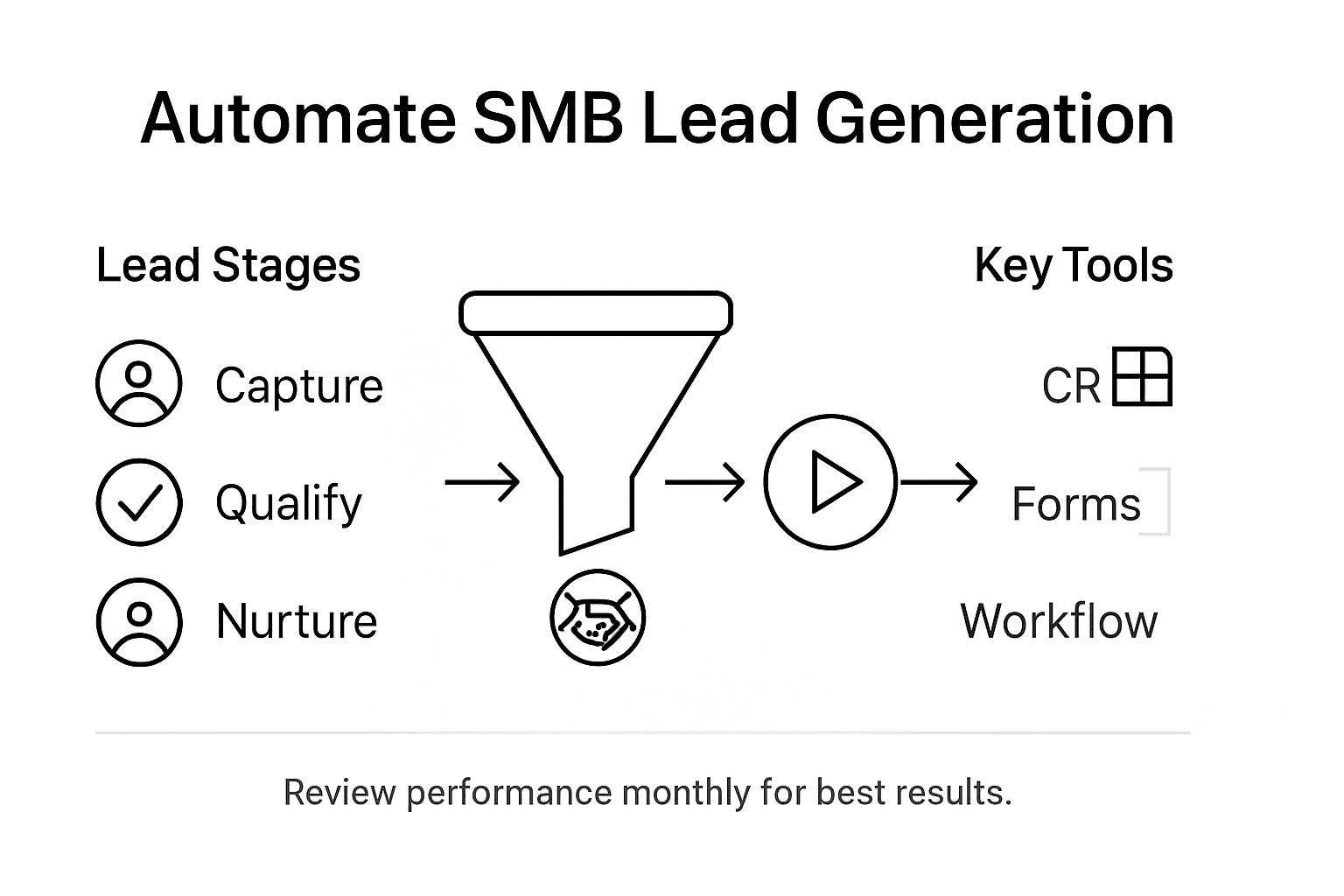
An effective lead scoring model prioritizes quality interactions that demonstrate high prospect interest and delivers hot leads to the sales team. Design a comprehensive dashboard that tracks key performance indicators such as conversion rates, lead quality scores, engagement levels, and revenue generated from different marketing channels. Use these metrics to understand which strategies are working and where you need to make strategic adjustments.
Implement a systematic approach to analyzing your lead generation performance. Break down your data by lead source, demographic segments, and interaction types to uncover nuanced insights. Regularly pruning inactive leads helps maintain an accurate sales pipeline and ensures resources are focused on viable opportunities. Set up automated reports that highlight underperforming channels, track lead aging, and identify potential bottlenecks in your conversion funnel.
Establish a continuous improvement cycle where you experiment with different approaches, measure their impact, and quickly iterate. Use A/B testing for your marketing messages, lead capture forms, and follow-up sequences. Create a culture of data driven decision making that allows your team to be agile and responsive to changing market dynamics.
Pro tip: Schedule monthly performance review meetings where you deep dive into your lead generation metrics, celebrate wins, and collaboratively brainstorm optimization strategies.
Streamline Your Lead Automation with One Powerful Solution
Many Florida small business owners face the challenge of managing a scattered lead generation process that drains time and resources. This article highlights the struggle to consolidate tools, automate workflows, and maintain consistent follow-ups that nurture prospects effectively. If you are feeling overwhelmed trying to track leads, juggle multiple platforms, or optimize your sales pipeline, you are not alone.
Nimblo.ai transforms these common pain points into growth opportunities. Our all-in-one platform combines local SEO, CRM, marketing automation, and high-speed website performance into one easy-to-use system. With features like AI-powered local optimization, automated lead capture, and intelligent follow-ups, Nimblo.ai helps you reduce complexity, save money, and accelerate results—no technical headaches required.
Ready to stop wasting time and start closing more local customers now?
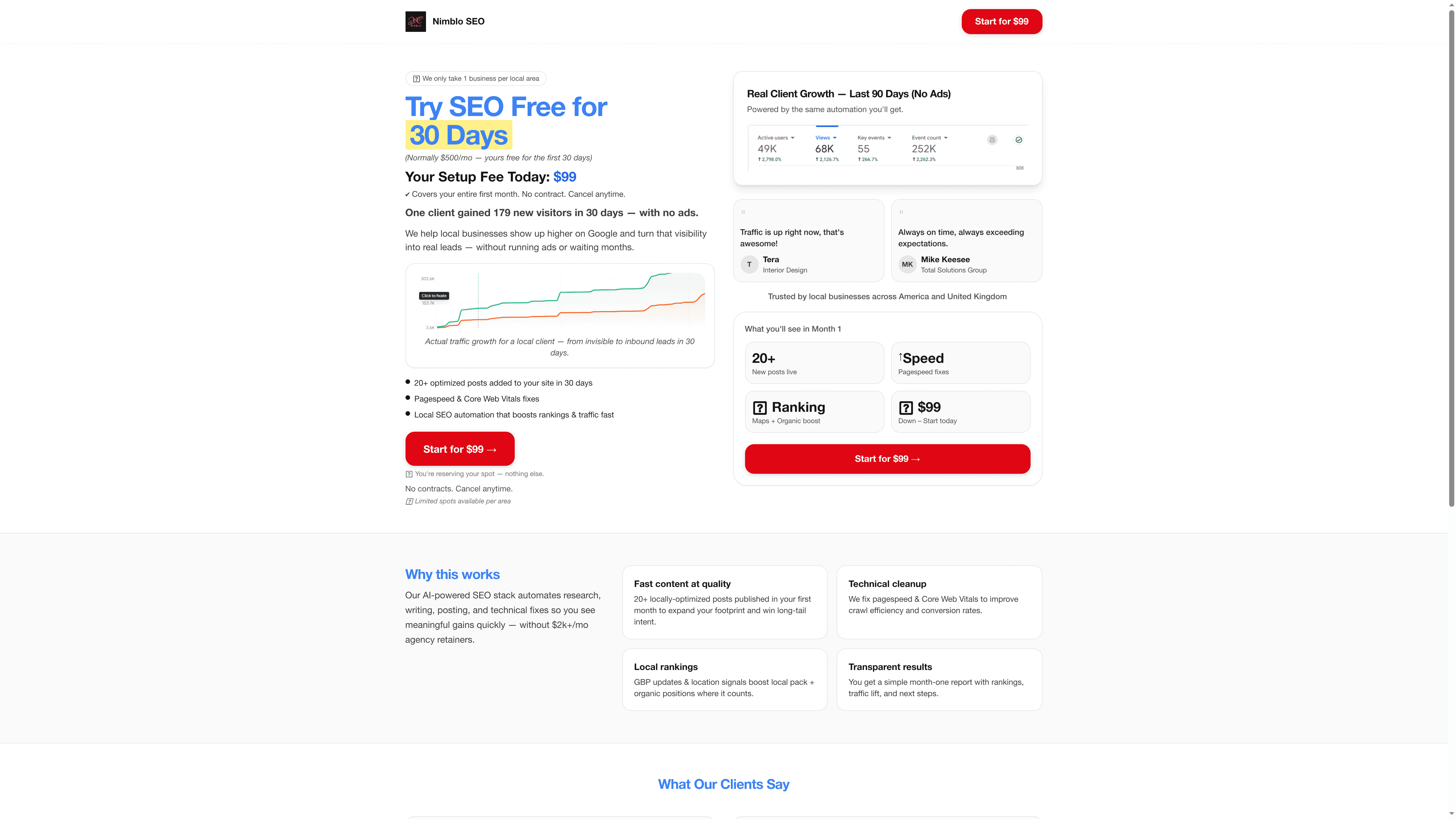
Discover how your Florida SMB can automate lead generation with Nimblo today by visiting our platform. Experience rapid setup, local support, and a flat rate that replaces costly agencies and fragmented tools. Take control of your pipeline, optimize your workflows, and watch your leads grow with Nimblo.ai’s automated sales pipeline management combined with our seamless tool consolidation. Don’t wait to simplify your marketing—start transforming your lead funnel for real results now.
Frequently Asked Questions
How can I assess my current lead pipeline for automation?
Start by gathering all your lead data from sources like your CRM and email marketing platforms. Create a comprehensive spreadsheet that tracks key metrics, segment your leads, and analyze their behavior to identify automation opportunities.
What tools can I consolidate for lead generation automation?
Look for an all-in-one platform that integrates CRM, marketing automation, and communication tools. Conduct a thorough audit of your current software to identify redundant systems, aiming to reduce complexity and improve efficiency by centralizing your data.
How do I set up automated workflows for lead capture?
Automate your lead capture by mapping out your current processes and identifying tasks that can be streamlined. Use tools that allow you to create custom automation workflows, such as adding form submissions directly to your CRM and sending welcome emails, to enhance efficiency.
What should I include in my automated follow-up sequences?
Design personalized follow-up sequences tailored to different lead segments based on their engagement and interests. Create a systematic approach that adapts your communication strategy based on lead interactions, ensuring timely and relevant follow-ups.
How can I monitor and optimize my lead generation performance?
Measure performance by tracking key indicators like conversion rates and lead quality scores on a comprehensive dashboard. Regularly analyze your data, set up automated reports, and implement A/B testing to identify areas for improvement, optimizing your lead generation strategy effectively.
Recommended
- Lead Generation Step by Step for Florida SMBs – Nimblo
- 7 Practical Examples of Lead Generation for Florida SMBs – Nimblo
- How SEO Drives Lead Generation for Florida SMBs – Nimblo
- 7 Lead Generation Strategies for Florida SMB Success – Nimblo
- 5 Amazing Tips to Generate Email Leads
- 7 Practical Lead Generation Ideas for US Business Owners – seo analytic