
Over 60 percent of American small businesses say automating their marketing saves both time and money. Choosing the right strategy matters more than ever with so many digital tools available. This guide unpacks practical steps for turning complex marketing chaos into a results-driven system that matches your business needs and speaks directly to your ideal audience.
Table of Contents
- Step 1: Assess Business Needs And Marketing Goals
- Step 2: Integrate Key Tools Into One Platform
- Step 3: Configure Automated Lead Capture And Follow-Ups
- Step 4: Personalize Communication With Targeted Messaging
- Step 5: Monitor Results And Optimize Workflow Performance
Quick Summary
| Key Insight | Explanation |
|---|---|
| 1. Assess Business Needs Thoroughly | Conduct a comprehensive analysis to shape your marketing strategy and establish clear, measurable goals for success. |
| 2. Integrate Tools into One Platform | Streamline your marketing tech stack by consolidating tools to enhance data synchronization and workflow efficiency. |
| 3. Automate Lead Capture Processes | Set up automated systems that ensure timely engagement and follow-ups with leads to maximize conversion potential. |
| 4. Personalize Communications Effectively | Utilize AI-driven analytics to create tailored messaging that resonates with distinct customer segments, enhancing engagement. |
| 5. Monitor and Optimize Regularly | Implement a system for tracking performance metrics, allowing for continuous refinement of your marketing automation strategy. |
Step 1: Assess Business Needs and Marketing Goals
Successful marketing automation begins with a strategic assessment of your unique business landscape and objectives. This critical first step helps you design a targeted workflow that genuinely drives growth and generates meaningful results.
Start by conducting a comprehensive analysis of your current marketing efforts and business goals. Develop a clear marketing plan that identifies your target market, competitive advantages, and specific measurable outcomes. Break down your assessment into key components: understanding your ideal customer profile, evaluating existing marketing channels, and pinpointing precise revenue or engagement targets. A structured SWOT analysis can provide deeper insights by examining your strengths, weaknesses, opportunities, and potential threats.
Map out your specific marketing objectives using the 4 Ps framework: product positioning, pricing strategy, distribution channels (place), and promotional tactics. Translate these insights into quantifiable goals like lead generation numbers, conversion rates, or customer acquisition targets. The more specific and data-driven your initial assessment, the more effectively you can configure your marketing automation workflow to deliver predictable, scalable results.
Pro tip: Create a living document that tracks your marketing goals and automation performance, updating it quarterly to ensure continuous alignment with your evolving business strategy.
Step 2: Integrate Key Tools into One Platform
Streamlining your marketing technology stack is crucial for efficient workflow management and maximizing productivity. The goal is to consolidate multiple disparate tools into a unified platform that simplifies operations and provides comprehensive insights.
Begin by conducting a thorough audit of your current marketing tools and identifying redundant or inefficient systems. Explore an all-in-one business software solution that can replace multiple standalone applications. Look for platforms that offer integrated capabilities across critical areas like customer relationship management (CRM), email marketing, social media management, analytics, and lead generation. Prioritize solutions that provide seamless data synchronization, reducing manual data entry and minimizing the potential for errors.
When selecting an integrated platform, evaluate its compatibility with your existing tech ecosystem and scalability for future growth. Consider factors such as user interface intuitiveness, integration capabilities with third-party tools, and the platform’s ability to automate complex marketing workflows. Successful tool integration means creating a centralized system that provides real-time data insights, streamlines communication, and enables more agile marketing strategies.
Pro tip: Schedule a comprehensive onboarding and training session with your team to ensure everyone understands how to leverage the new integrated platform effectively and maximize its potential capabilities.
Here’s how integrated marketing platforms can transform your workflow impact:
| Platform Feature | Traditional Tools Approach | Integrated Platform Impact |
|---|---|---|
| Data Management | Siloed, manual entry | Centralized, automated synchronization |
| User Experience | Disjointed interfaces | Unified, intuitive dashboard |
| Reporting & Analytics | Limited, separate reports | Real-time, all-in-one insights |
| Workflow Automation | Redundant, manual processes | Seamless, efficient automation |
Step 3: Configure Automated Lead Capture and Follow-Ups
Automated lead capture and follow-up systems transform how small businesses engage potential customers, creating a seamless and responsive marketing workflow that maximizes conversion opportunities. By implementing strategic automation, you can ensure no potential lead falls through the cracks.

Optimize your marketing workflows using integration tools that connect different applications and automate critical lead management processes. Design your lead capture system to include multiple touchpoints such as website contact forms, landing page opt-ins, chatbots, and social media lead generation channels. Configure automated triggers that instantly respond to new lead submissions with personalized welcome emails, schedule follow-up sequences, and segment contacts based on specific interaction criteria. This approach ensures rapid initial engagement and nurtures leads through a consistent, targeted communication strategy.
When setting up your automated follow-up system, focus on creating a logical progression of communications that provide value at each stage of the customer journey. Develop email sequences that gradually introduce your services, share relevant content, and include clear calls to action. Implement lead scoring mechanisms that help prioritize high potential prospects and trigger more personalized outreach. Advanced automation allows you to track engagement metrics, automatically adjust communication frequency, and seamlessly move leads through your sales funnel without manual intervention.
Pro tip: Regularly review and refine your automated lead capture workflows by analyzing conversion rates, testing different email sequences, and updating your messaging to maintain optimal performance and relevance.
Compare popular lead capture channels for their reach and interactivity:
| Channel | Audience Reach | Level of Interactivity |
|---|---|---|
| Website Contact Form | Broad website users | Low |
| Landing Page Opt-In | Targeted visitors | Medium |
| Chatbot | Real-time engagement | High |
| Social Media Lead Gen | Active social users | Moderate |
Step 4: Personalize Communication with Targeted Messaging
Personalized marketing communication is the cornerstone of modern customer engagement, enabling small businesses to create meaningful connections that resonate with individual prospects. By leveraging advanced targeting strategies, you can transform generic interactions into compelling, tailored experiences that drive conversion and loyalty.
Integrate AI driven analytics into your communication strategy to unlock deeper insights into customer behavior and preferences. Develop detailed customer personas that go beyond basic demographic information, incorporating behavioral data, interaction history, and specific pain points. Segment your audience into granular groups based on characteristics like purchasing behavior, engagement level, and content interactions. This approach allows you to craft highly specific messaging that speaks directly to each customer segment’s unique needs and motivations.
Utilize multi-channel communication platforms that enable dynamic content personalization across email, SMS, social media, and automated chatbot interactions. Design communication workflows that automatically adjust messaging based on real-time customer interactions and preferences. Implement progressive profiling techniques that gradually collect more detailed information with each customer touchpoint, allowing you to refine and enhance your personalization strategies continuously. By creating adaptive communication systems that respond intelligently to individual customer signals, you can dramatically improve engagement rates and build stronger, more authentic relationships.
Pro tip: Conduct periodic A/B testing on your personalized messaging to understand which communication approaches generate the highest engagement and conversion rates, and use those insights to continuously optimize your targeting strategy.
Step 5: Monitor Results and Optimize Workflow Performance
Successful marketing automation requires continuous monitoring and strategic refinement to ensure your workflow delivers consistent, measurable results. By establishing robust performance tracking mechanisms, you can transform raw data into actionable insights that drive business growth.
Develop a comprehensive marketing performance measurement strategy that goes beyond surface-level metrics. Implement key performance indicators (KPIs) that track critical aspects of your marketing automation workflow such as lead conversion rates, engagement percentages, customer acquisition costs, and revenue generated. Utilize advanced analytics tools that provide real-time dashboards, enabling you to quickly identify trends, strengths, and potential areas for improvement. Break down your performance metrics into granular segments that reveal precise insights about different customer groups, communication channels, and marketing campaign effectiveness.
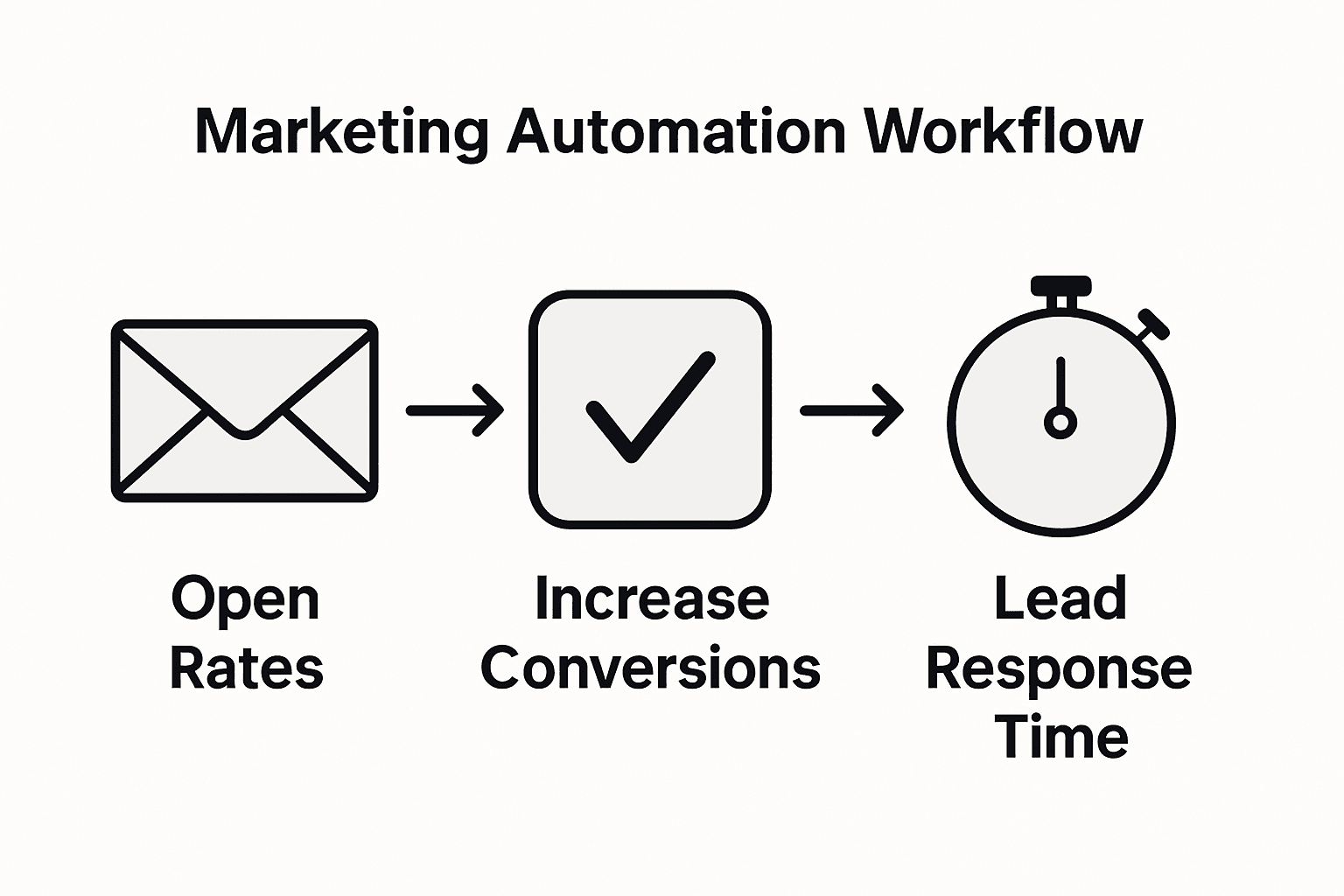
The landscape of marketing technology is rapidly evolving, with businesses increasingly embracing intelligent automation tools. Advanced AI-powered platforms can help you automatically analyze complex performance data, suggesting optimization strategies that would be difficult to identify manually. Create a systematic approach to workflow refinement by scheduling regular performance reviews, conducting A/B tests on different messaging and communication strategies, and remaining adaptable to emerging technological capabilities. By maintaining a data-driven, iterative approach to your marketing automation, you can continuously enhance your system’s efficiency and effectiveness.
Pro tip: Set up automated performance reports that are delivered directly to your email, ensuring you can quickly review key metrics without manually logging into multiple systems.
Simplify Your Marketing Automation Workflow with Nimblo.ai
The article highlights the complexity small and medium businesses face when setting up effective marketing automation workflows that integrate lead capture, personalized messaging, and performance monitoring. If you find yourself overwhelmed by managing multiple marketing tools or struggle to align your automation strategy with your business goals, Nimblo.ai offers the perfect solution designed specifically for Florida SMBs. Our all-in-one platform consolidates SEO, CRM, website management, and automated lead generation into one affordable, easy-to-use system. This eliminates the frustration of disjointed software and manual data entry, saving you time and reducing costs.
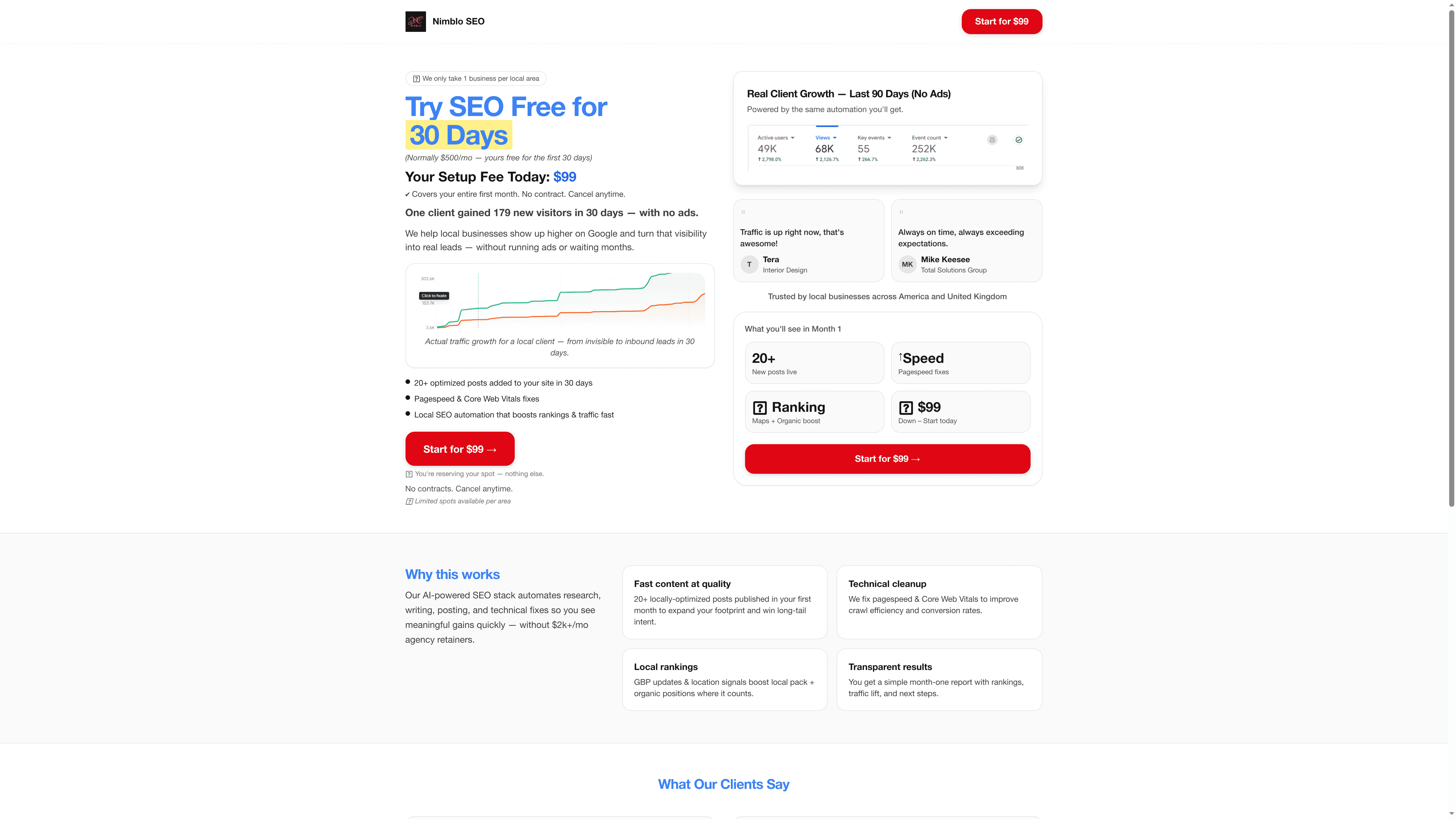
Ready to transform your marketing automation into a streamlined engine for growth? Discover how our AI-powered local SEO, fast website performance, and automated follow-ups deliver measurable lead growth right in your local market. Take control of your marketing workflow today and experience rapid setup with expert local support. Visit Nimblo.ai Marketing Automation Solution to get started now. Learn more about all-in-one business software that fits your needs and see how automation can work smarter for your business with our marketing automation tools.
Frequently Asked Questions
What are the key steps to set up a marketing automation workflow for my small business?
To set up a marketing automation workflow, start by assessing your business needs and marketing goals. Next, integrate key tools into one platform, configure automated lead capture and follow-ups, personalize communication, and finally, monitor results to optimize performance.
How do I conduct a comprehensive analysis of my current marketing efforts?
Begin by evaluating your existing marketing channels, understanding your ideal customer profile, and identifying your specific measurable outcomes. Break this down further using a SWOT analysis to uncover strengths, weaknesses, opportunities, and threats in your marketing approach.
What tools should I consider integrating into my marketing automation platform?
Look for an all-in-one business software solution that combines customer relationship management (CRM), email marketing, social media management, and analytics. Prioritize platforms that offer seamless data synchronization and efficient workflow management to maximize productivity.
How can I ensure my automated lead capture system is effective?
Design your lead capture system to utilize multiple touchpoints like website forms, landing page opt-ins, and chatbots. Configure automated responses for new leads, ensuring quick engagement and follow-up tailored to their specific interaction criteria.
How can I personalize my marketing communication effectively?
Utilize audience segmentation to group customers based on behaviors and preferences, allowing you to tailor messaging to each segment’s needs. Implement dynamic content that adjusts based on real-time interactions to enhance engagement and drive conversions.
What metrics should I track to monitor the performance of my marketing automation workflow?
Focus on key performance indicators (KPIs) such as lead conversion rates, customer acquisition costs, and revenue generated. Regularly analyze these metrics to identify trends and areas for improvement in your marketing strategies.
Recommended
- Marketing Automation for Agencies: Streamlining Growth and Client Impact – Nimblo
- Lead Generation Step by Step for Florida SMBs – Nimblo
- Website Essentials for Florida SMBs: Beyond Basics – Nimblo
- 7 Practical Examples of Lead Generation for Florida SMBs – Nimblo
- Marketing Automation Explained: Complete Guide for U.S. Businesses – seo analytic
- Effective Sales Manager Workflow for Predictable B2B Growth