
Over half of American small business owners say keeping their websites up to date is one of their toughest digital challenges. The right approach to website management can decide whether a business grows or gets lost online. With so many platforms, technical updates, and optimization trends to follow, understanding what matters most can save time and money. This guide breaks down the key steps so American organizations of all sizes can turn their websites into powerful assets.
Table of Contents
- Defining Website Management For SMBs
- Core Elements Of Effective Website Management
- Automation And All-In-One Platform Benefits
- Local SEO And Digital Presence In Florida
- Cost, Risks, And Common Missteps To Avoid
Key Takeaways
| Point | Details |
|---|---|
| Effective Website Management | SMBs must integrate technical, content, and user experience strategies to enhance their online presence and drive growth. |
| Importance of Local SEO | Florida businesses should focus on hyperlocal strategies and maintain accurate online listings to improve visibility and reach local customers. |
| Automation Benefits | Utilizing all-in-one platforms can streamline operations, reduce costs, and enhance scalability for SMBs. |
| Risks and Missteps | SMBs need to be cautious of improper budget allocation and technological complexities, which can hinder their digital success. |
Defining Website Management for SMBs
Website management is a strategic approach that enables Small and Medium Businesses (SMBs) to maintain, optimize, and leverage their online presence effectively. Unlike traditional marketing methods, modern website management integrates technical maintenance, content strategy, performance tracking, and digital optimization into a cohesive system designed to drive business growth.
At its core, website management encompasses several critical components that directly impact a business’s digital success. These include technical infrastructure, content development, search engine optimization (SEO), user experience design, security monitoring, and performance analytics. Decision support systems for website feature selection play a crucial role in helping SMBs strategically choose digital tools that enhance consumer engagement and meet specific business objectives.
For Florida SMBs, effective website management means more than just having an online presence. It requires understanding local market dynamics, implementing responsive design, ensuring mobile compatibility, and creating content that resonates with regional audiences. Website optimization becomes a dynamic process of continuous improvement, where businesses regularly update their digital platforms to reflect changing customer preferences, technological advancements, and legal and ethical considerations in e-business operations.
Pro Tip for Website Success: Conduct a quarterly digital audit of your website, analyzing performance metrics, user engagement, and conversion rates to identify areas for strategic improvement and maintain a competitive online edge.
Core Elements of Effective Website Management
Effective website management for Small and Medium Businesses (SMBs) requires a multifaceted approach that goes beyond simple online presence. The digital landscape demands strategic integration of technical, creative, and analytical components to create a powerful online platform that drives business growth and engagement. Strategic website evaluation frameworks highlight the critical importance of understanding each core element’s role in digital success.

The fundamental elements of robust website management include technical infrastructure, content strategy, user experience design, performance optimization, and security management. Technical infrastructure involves maintaining a reliable, fast-loading website with responsive design that adapts seamlessly across different devices. Content strategy focuses on creating valuable, relevant information that speaks directly to the target audience, incorporating search engine optimization (SEO) techniques to improve visibility and attract potential customers.
User experience design plays a pivotal role in converting website visitors into potential clients. This involves creating intuitive navigation, compelling visual design, clear call-to-action buttons, and ensuring accessibility across various platforms and devices. Performance optimization requires continuous monitoring of website speed, analyzing user interaction metrics, and making data-driven improvements. For Florida SMBs, this means creating a digital platform that not only looks professional but also provides a smooth, engaging experience that reflects the local business ecosystem.
Pro Tip for Strategic Management: Implement monthly website performance audits, tracking key metrics like page load speed, user engagement rates, and conversion percentages to identify and address potential optimization opportunities proactively.
Here is a summary of core website management components and their roles:
| Component | Purpose | Business Impact |
|---|---|---|
| Technical Infrastructure | Ensures stability and site reliability | Better uptime, fewer disruptions |
| Content Strategy | Guides creation of relevant, valuable information | Attracts and retains target audiences |
| User Experience Design | Improves site usability and accessibility | Higher engagement, more conversions |
| Performance Optimization | Elevates speed and responsiveness | Reduced bounce rates, enhanced SEO |
| Security Management | Safeguards data and user privacy | Builds trust, prevents data breaches |
Automation and All-in-One Platform Benefits
Automation represents a critical technological breakthrough for Small and Medium Businesses (SMBs) seeking to optimize their digital operations and maximize efficiency. Advanced usability testing frameworks demonstrate how automated systems can dramatically improve digital platform performance, reducing manual workload and increasing overall productivity for businesses.
The primary advantages of all-in-one platforms include consolidated workflow management, reduced operational complexity, and enhanced scalability. These integrated solutions eliminate the need for multiple disconnected software tools, allowing businesses to centralize critical functions like customer relationship management, marketing automation, website management, and performance tracking. By consolidating these processes, SMBs can significantly reduce software expenses, minimize technical complexity, and allocate more resources toward core business growth strategies.
For Florida small businesses, automation platforms offer unique benefits tailored to regional market dynamics. They provide localized features such as automated lead generation, region-specific SEO optimization, and streamlined customer engagement tools that understand the nuanced needs of the Florida business ecosystem. Intelligent automation enables businesses to respond faster to customer inquiries, track performance metrics in real-time, and make data-driven decisions without requiring extensive technical expertise.
Pro Tip for Automation Success: Conduct a comprehensive audit of your current software tools and identify potential overlap, then gradually transition to an integrated platform that can replace multiple disparate systems, minimizing disruption and maximizing operational efficiency.
The table below compares standalone tools with all-in-one website management platforms:
| Factor | Standalone Tools | All-in-One Platforms |
|---|---|---|
| Software Costs | Multiple, often higher | Consolidated, usually lower |
| Integration Complexity | Frequent compatibility issues | Seamless, single-system workflow |
| Ease of Management | Requires frequent oversight | Centrally managed, simplified |
| Scalability | Challenging to expand | Easily adapts to business growth |
Local SEO and Digital Presence in Florida
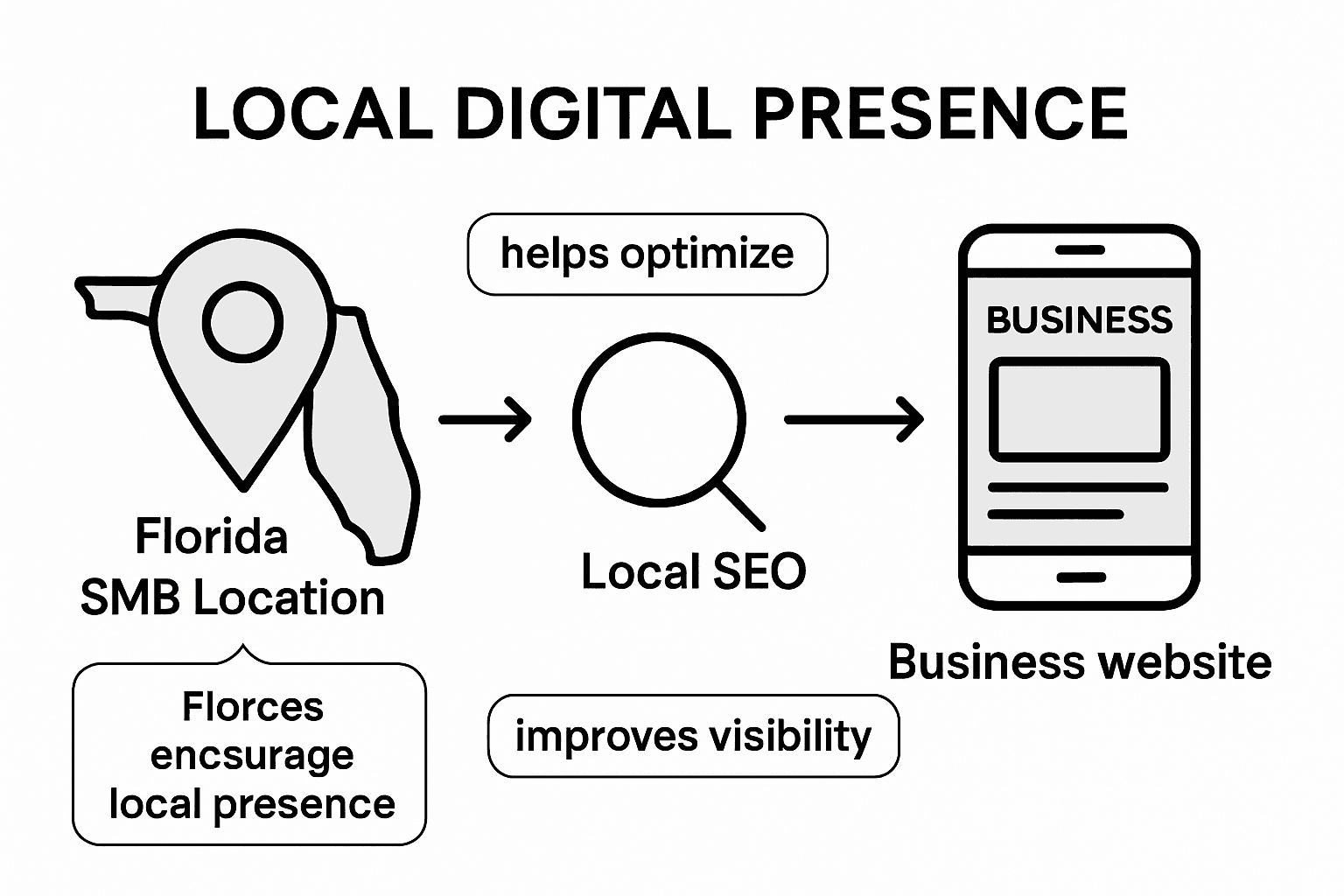
Local Search Engine Optimization (SEO) represents a critical strategy for Small and Medium Businesses (SMBs) in Florida seeking to establish a strong digital footprint in their regional market. Effective website development principles emphasize the importance of creating a targeted, well-structured online presence that communicates directly with local customers and search algorithms.
For Florida businesses, local SEO goes beyond traditional optimization strategies by focusing on hyperlocal targeting. Geographically specific optimization involves multiple strategic elements, including precise Google Business Profile management, location-based keyword targeting, creating locally relevant content, and generating region-specific citations. Businesses must optimize their digital platforms to appear in local search results, which means incorporating Florida-specific terms, highlighting local service areas, and demonstrating regional expertise through carefully crafted website content.
The technical aspects of local SEO require businesses to implement structured data markup, ensure mobile responsiveness, and maintain consistent contact information across all digital platforms. Local search ranking strategies play a crucial role in helping Florida SMBs improve their visibility in location-based search results. Key ranking factors include proximity to search location, relevance of business information, prominence of online reviews, and the overall quality of digital business profiles. Businesses that successfully optimize these elements can significantly increase their chances of appearing in Google’s coveted local pack and map listings.
Pro Tip for Local Digital Success: Conduct monthly audits of your local online listings, ensuring 100% accuracy in business name, address, phone number, and website URL across all digital platforms to maintain strong local search performance.
Cost, Risks, and Common Missteps to Avoid
Website management for Small and Medium Businesses (SMBs) involves navigating a complex landscape of potential financial risks and operational challenges. Legal and ethical considerations in e-business underscore the importance of understanding potential pitfalls before investing significant resources into digital platforms. These risks extend beyond mere financial investments, encompassing compliance, security, and strategic implementation.
The most common missteps for Florida SMBs typically involve improper budget allocation, technological complexity, and inadequate strategic planning. Many businesses fall into the trap of overspending on fragmented tools or underinvesting in critical digital infrastructure. Decision support systems for website feature selection highlight that strategic technology choices can significantly mitigate financial risks. Businesses should prioritize platforms offering comprehensive solutions that reduce overall technology expenses while providing scalable, integrated services.
Risk mitigation requires a holistic approach to website management. Critical areas of focus include protecting customer data, ensuring website security, maintaining regulatory compliance, and developing a flexible digital strategy that can adapt to changing market conditions. Florida businesses must be particularly attentive to industry-specific regulations, local market dynamics, and technological trends that could impact their digital presence. Potential risks include data breaches, inconsistent brand messaging, poor user experience, and inefficient resource allocation that can quickly erode competitive advantages.
Pro Tip for Risk Management: Conduct quarterly comprehensive digital audits that assess your technology stack, cybersecurity protocols, and alignment with business objectives, allowing for proactive adjustments and cost-effective strategic realignment.
Unlock Seamless Website Management with Nimblo.ai for Florida SMBs
Managing a website that drives growth requires addressing complex challenges like technical infrastructure, local SEO, and automation. This article highlights common pain points such as fragmented tools, rising costs, and the need for continuous optimization tailored to Florida markets. If you’re seeking to reduce operational complexity while boosting your local digital presence, Nimblo.ai offers a comprehensive solution designed specifically for Florida-based SMBs.
Nimblo.ai consolidates SEO, website management, CRM, and marketing automation into a single platform that delivers fast setup, AI-powered local SEO optimization, and high-speed, conversion-focused web design. By replacing multiple costly tools and agencies, you save money and gain powerful features like Google Business Profile management and automated follow-ups to increase leads with less effort.
Take control of your digital growth with Nimblo.ai today and discover how simple website management and local SEO can transform your Florida business.
Enhance your website management strategy now and connect with the all-in-one platform trusted by local SMBs:
Explore the all-in-one platform
Improve local SEO and automation
Get started with Nimblo.ai
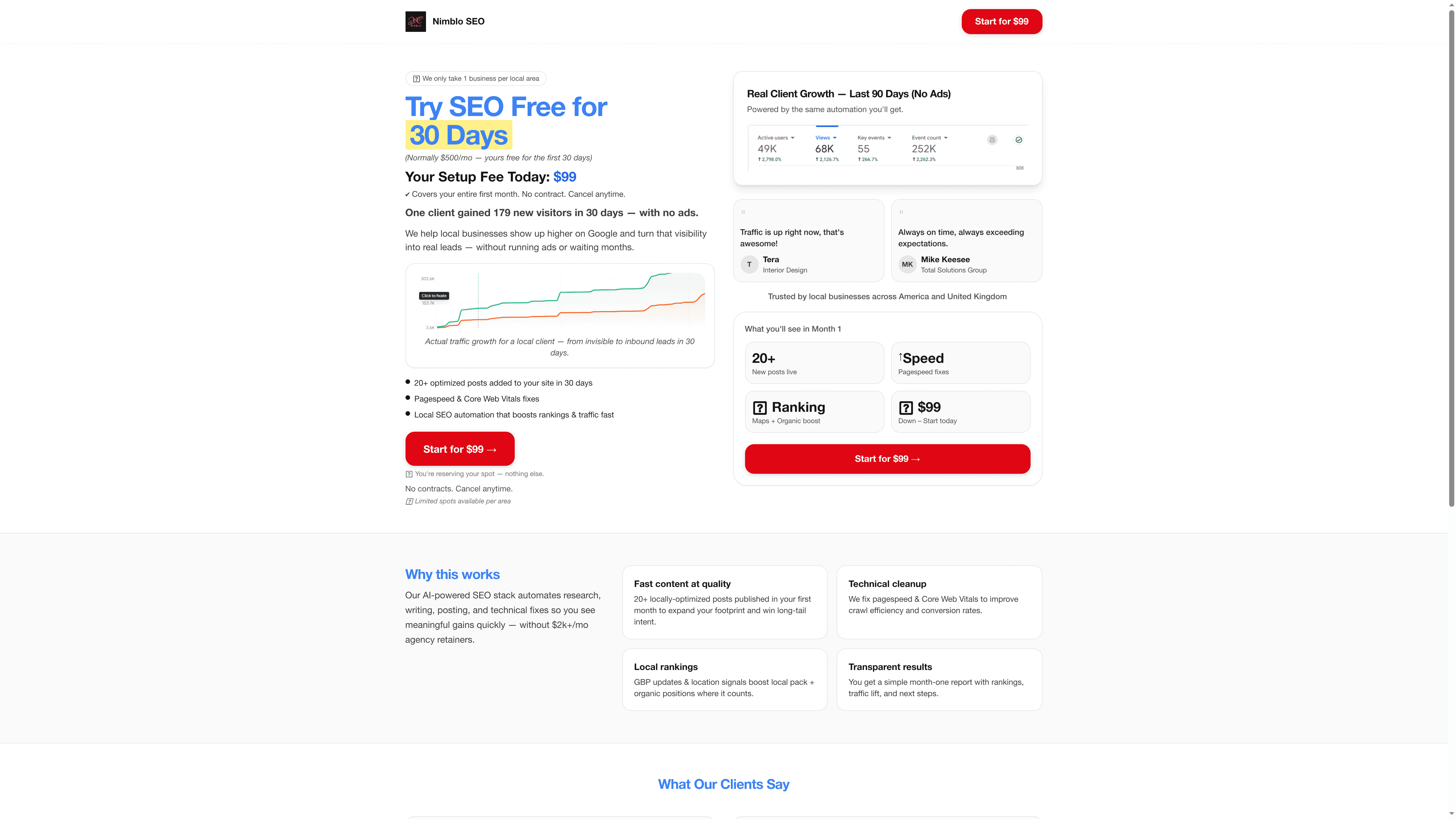
Ready to streamline your website management and accelerate local growth? Visit Nimblo.ai to start simplifying your digital operations while boosting your online presence today.
Frequently Asked Questions
What are the core elements of effective website management for SMBs?
Effective website management includes technical infrastructure, content strategy, user experience design, performance optimization, and security management. Each of these components plays a crucial role in ensuring a successful online presence.
How can SMBs optimize their website for better performance?
SMBs can optimize their website by conducting regular performance audits, tracking metrics like page load speed and conversion rates, and making data-driven improvements based on user behavior and analytics.
What are the benefits of using an all-in-one platform for website management?
All-in-one platforms streamline workflow management, reduce operational complexity, and enhance scalability by integrating multiple functions such as website management, customer relationship management, and marketing automation into a single system.
How does local SEO impact the online visibility of SMBs?
Local SEO improves the online visibility of SMBs by optimizing their digital presence for location-based searches, ensuring accurate business information, and targeting region-specific keywords, which can help them appear in important local search results.