
Most American business owners are surprised to learn that nearly 75 percent of search engine users never look past the first page of results. For Florida companies, mastering both SEO and SEM can mean the difference between steady growth and missed opportunities. Understanding how these two approaches shape online visibility will help small and medium businesses make smarter marketing choices and reach more potential customers every day.
Table of Contents
- SEO and SEM Explained Simply
- Core Differences Between SEO and SEM
- When to Use SEO, SEM, or Both
- Cost, Results, and Time Comparison
- Common Mistakes Florida Businesses Make
Key Takeaways
| Point | Details |
|---|---|
| Understanding SEO and SEM | SEO focuses on organic strategies for long-term growth, while SEM combines both organic and paid tactics for immediate visibility. |
| Choosing the Right Strategy | Use SEO for cost-effective, sustainable growth, and SEM for quick market entry and targeted campaigns in competitive fields. |
| Common Pitfalls | Avoid broad keywords and ineffective ad strategies; instead, focus on local, long-tail keywords and segmented audience targeting for better results. |
| Regular Strategy Evaluation | Conduct monthly audits to analyze performance metrics and adjust strategies for optimized outcomes in digital marketing. |
SEO and SEM Explained Simply
For Florida Small and Medium Businesses (SMBs), understanding Search Engine Optimization (SEO) and Search Engine Marketing (SEM) is crucial for digital marketing success. Search marketing strategies offer distinct approaches to increasing online visibility and attracting potential customers.
SEO focuses on organic search strategies that help websites rank higher in search engine results without paying for direct advertising. This method involves optimizing website content, improving site structure, building quality backlinks, and ensuring technical performance meets search engine requirements. By strategically using relevant keywords, creating high-quality content, and enhancing website user experience, businesses can attract more targeted traffic naturally.
SEM encompasses a broader approach that includes both organic SEO tactics and paid advertising strategies. Paid search advertisements like Google AdWords allow businesses to purchase sponsored listings that appear alongside organic search results. These paid placements can provide immediate visibility, enabling SMBs to reach potential customers quickly while simultaneously building long-term organic search presence.
Pro Tip: Strategic Approach: Start with a balanced digital marketing strategy that combines both SEO and SEM techniques, allocating budget and resources to build sustainable online visibility while generating immediate traffic through targeted paid advertisements.
Core Differences Between SEO and SEM
Understanding the core differences between Search Engine Optimization (SEO) and Search Engine Marketing (SEM) is critical for Florida Small and Medium Businesses (SMBs) looking to maximize their digital marketing effectiveness. Marketing strategy variations reveal distinct approaches to online visibility and customer acquisition.

The primary distinction lies in their approach to search engine results. SEO focuses exclusively on organic search strategies, aiming to improve website rankings through content optimization, technical improvements, and quality backlink development. This method requires significant time and effort but provides sustainable, long-term visibility without direct advertising costs. Businesses invest in creating high-quality, relevant content that naturally attracts search engine algorithms and potential customers.
SEM, by contrast, incorporates both organic strategies and paid advertising techniques. Search marketing approaches enable businesses to purchase sponsored listings that appear immediately in search results, offering instant visibility. While more expensive, SEM provides quick market entry and precise targeting options, allowing SMBs to reach specific customer segments rapidly.
Pro Tip: Strategic Balance: Develop a comprehensive digital marketing approach that strategically combines SEO’s long-term organic growth with SEM’s immediate visibility, allocating resources to build sustainable online presence while generating quick customer engagement.
Here is a comparison of how SEO and SEM affect key digital marketing outcomes for Florida SMBs:
| Outcome | SEO Impact | SEM Impact |
|---|---|---|
| Traffic Growth | Increases steadily over months | Immediate spikes with ad campaigns |
| Cost Structure | Mostly time and expertise investment | Ongoing ad spend required |
| Brand Credibility | Builds trust with organic ranking | Boosts presence with sponsored listings |
| Measurability | Gradual improvements tracked monthly | Real-time performance metrics |
| Lead Quality | Attracts interested, informed users | Reaches selected, targeted audiences |
When to Use SEO, SEM, or Both
Florida Small and Medium Businesses (SMBs) face critical decisions when determining the most effective digital marketing strategy. Marketing strategy selection requires understanding the unique strengths and appropriate scenarios for SEO, SEM, and integrated approaches.
For businesses with limited marketing budgets and long-term growth objectives, SEO emerges as the most cost-effective strategy. Startups, local service providers, and professional practices can build sustainable online visibility by creating high-quality content, optimizing website structure, and developing authoritative backlink profiles. This approach works exceptionally well for businesses with specialized services or niche markets where organic search traffic represents a significant customer acquisition channel.
SEM becomes the preferred option when businesses need immediate market visibility, have time-sensitive promotional campaigns, or operate in highly competitive industries. Search marketing tactics provide rapid market entry through paid advertisements, allowing precise audience targeting and quick performance measurement. Technology startups, seasonal businesses, and companies launching new products can leverage SEM to generate immediate website traffic and leads.
Pro Tip: Strategic Hybrid Approach: Develop a comprehensive digital marketing strategy that blends SEO’s long-term organic growth with SEM’s immediate visibility, allocating resources to build sustainable online presence while generating quick customer engagement and market insights.
Cost, Results, and Time Comparison
Understanding the financial and temporal dynamics of Search Engine Optimization (SEO) and Search Engine Marketing (SEM) is crucial for Florida Small and Medium Businesses (SMBs) planning their digital marketing strategies. Marketing investment analysis reveals nuanced differences in cost structures, result timelines, and long-term effectiveness.
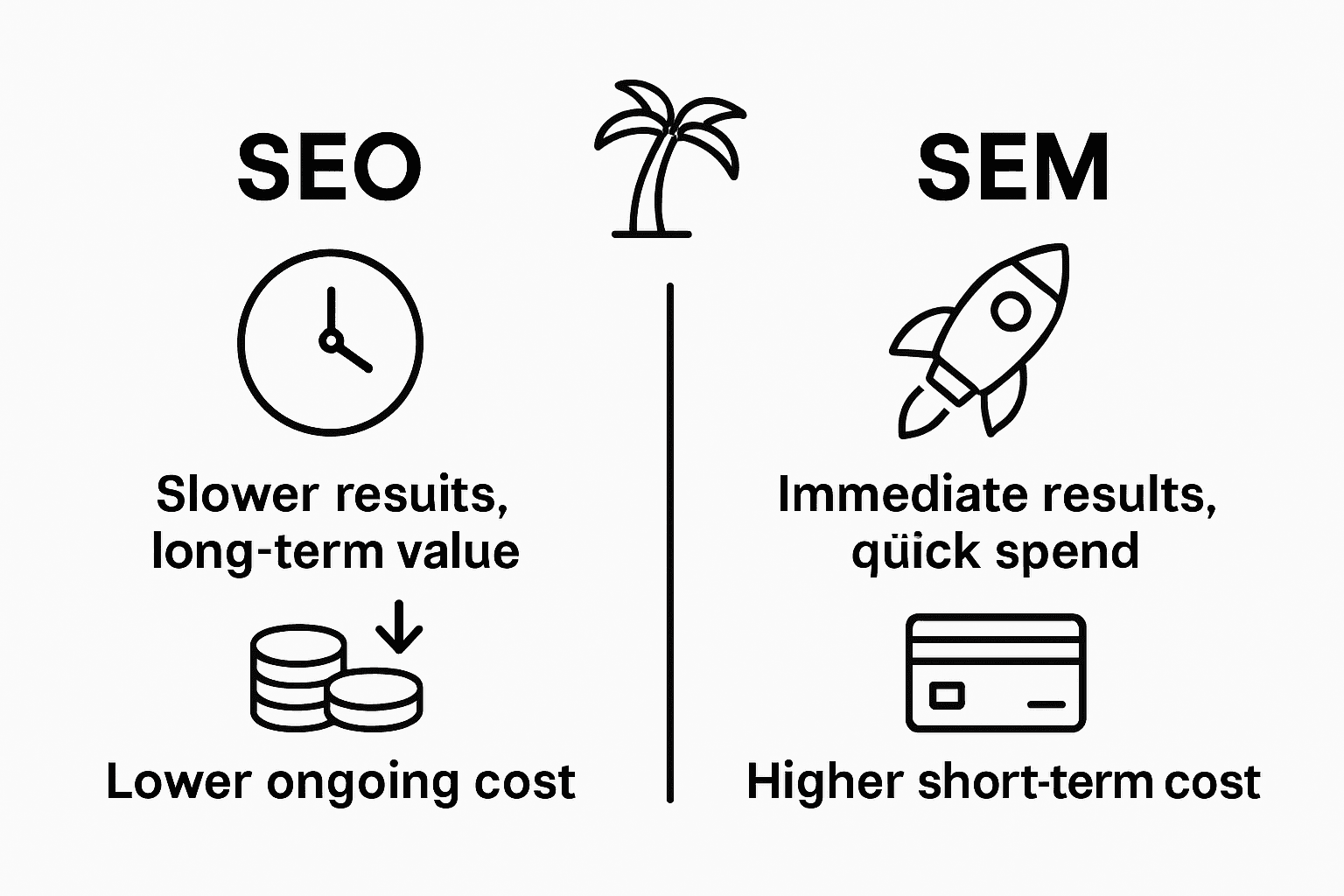
SEO represents a more budget-friendly approach with significant upfront time investment. Businesses typically spend 3-6 months developing high-quality content, optimizing website structure, and building authoritative backlinks before seeing substantial organic traffic improvements. While initial costs are lower, the process requires consistent effort, technical expertise, and patience. The long-term benefits include sustainable website visibility, reduced per-lead acquisition costs, and compounding returns as content gains search engine credibility.
SEM, by contrast, provides immediate marketing results through paid advertising channels. Companies can launch targeted campaigns within days, generating instant website traffic and leads. However, this immediacy comes with higher direct costs, as businesses pay for each click or impression. SEM requires continuous financial investment to maintain visibility, with average cost-per-click ranging from $1 to $20 depending on industry competitiveness. Small businesses must carefully budget and monitor campaign performance to ensure positive return on investment.
Pro Tip: Budget Optimization: Develop a hybrid digital marketing strategy that allocates 60-70% of resources to long-term SEO development and 30-40% to strategic SEM campaigns, balancing sustainable growth with immediate market engagement.
Common Mistakes Florida Businesses Make
Florida Small and Medium Businesses (SMBs) frequently encounter critical pitfalls when developing digital marketing strategies, potentially undermining their online visibility and growth potential. Digital marketing strategy errors can significantly impact a company’s ability to attract and convert potential customers.
One prevalent mistake is keyword misalignment, where businesses either stuff content with irrelevant keywords or fail to understand their target audience’s search behavior. Many Florida SMBs choose generic, high-competition keywords instead of focusing on specific, localized long-tail keywords that reflect local customer intent. This approach leads to poor search engine rankings and wasted marketing resources. Successful digital marketing requires deep understanding of local market nuances, including region-specific search terms and customer preferences unique to Florida’s diverse business landscape.
Paid search campaigns often suffer from fundamental strategic errors. Targeted advertising techniques demand precise audience segmentation and keyword selection. Many businesses create broad, unfocused advertisements that fail to connect with specific customer segments. Small businesses frequently make the mistake of setting unrealistic budgets, not tracking conversion rates, or neglecting to optimize landing pages that directly correspond to their paid search advertisements. Effective SEM requires continuous monitoring, A/B testing, and willingness to refine targeting parameters based on real-time performance data.
Here is a summary of common pitfalls and recommended solutions for Florida SMBs in digital marketing:
| Common Mistake | Business Risk | Recommended Solution |
|---|---|---|
| Choosing broad keywords | Low ranking, lost investment | Target local, long-tail keywords |
| Unfocused ad campaigns | Poor ROI, low conversions | Segment audience and test ads |
| Neglecting landing pages | Wasted traffic, low lead rate | Optimize pages for each campaign |
| Ignoring conversion data | Missed growth opportunities | Track, analyze, refine monthly |
Pro Tip: Strategic Refinement: Conduct monthly audits of your digital marketing strategies, carefully analyzing keyword performance, audience engagement metrics, and conversion rates to systematically eliminate ineffective tactics and double down on successful approaches.
Unlock the Power of SEO and SEM for Your Florida SMB with Nimblo.ai
Choosing between SEO and SEM can feel overwhelming with all the variables involved. This article highlights how balancing long-term organic growth through SEO and quick visibility with SEM is key for Florida Small and Medium Businesses. If you struggle to manage multiple marketing tools or need a simple way to improve your local SEO, automate lead generation, and get measurable results, Nimblo.ai offers exactly that. Our platform consolidates SEO, CRM, automated follow-ups, and conversion-optimized web design into one affordable, easy-to-use solution designed specifically for Florida SMBs.
Experience rapid setup, high-speed website performance, and AI-powered local SEO tailored to your community right now. Don’t waste your time juggling costly agencies or fragmented tools. Let Nimblo.ai help you build a strong digital presence that grows steadily while driving immediate customer engagement. Learn more about how we help Florida businesses like yours achieve measurable lead growth and cost savings at Nimblo.ai’s 99down landing page.
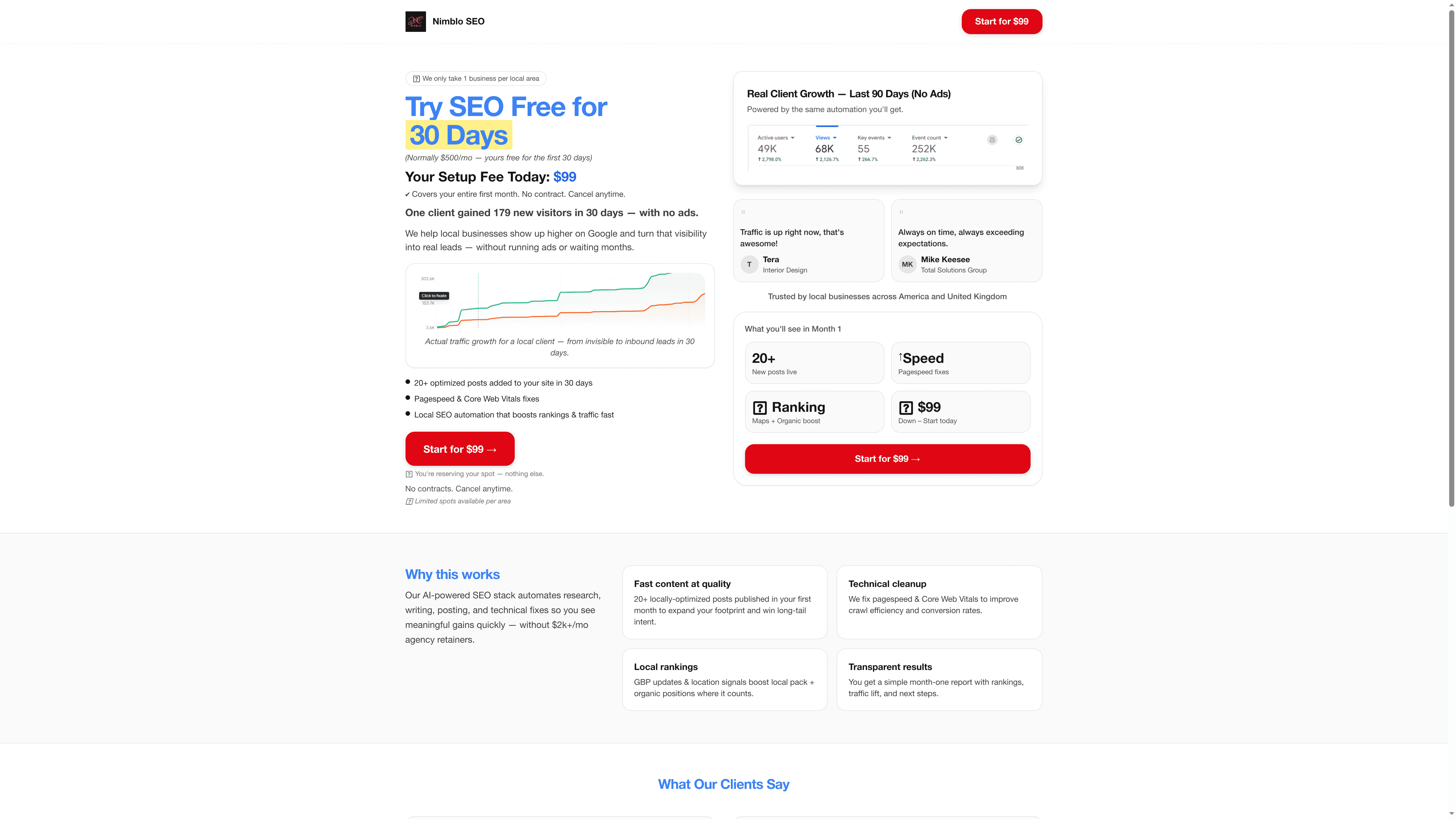
Ready to stop guessing and start growing your Florida business today Yes Discover how our all-in-one platform combines SEO and SEM strategies to deliver fast results and sustainable growth Visit Nimblo.ai and take your first step toward smarter digital marketing.
Frequently Asked Questions
What is the main difference between SEO and SEM?
SEO focuses on organic search strategies to improve website rankings without paying for ads, while SEM includes both organic SEO tactics and paid advertising techniques for immediate visibility.
When should a business prioritize SEO over SEM?
Businesses should prioritize SEO when they have limited marketing budgets and long-term growth objectives, as it offers sustainable online visibility through high-quality content and strategic optimization.
How long does it typically take to see results from SEO?
It usually takes 3-6 months to see substantial organic traffic improvements from SEO due to the need for high-quality content development and authoritative backlink building.
What are common mistakes businesses make with SEM campaigns?
Common mistakes include using broad keywords, creating unfocused ad campaigns, neglecting landing page optimization, and ignoring conversion data, all of which can hinder campaign performance and ROI.