
Most American consumers will abandon a website if it takes more than three seconds to load. For Florida small businesses, this means slow site speed can quietly sabotage your chances of being discovered online. In a digital world where first impressions count, understanding the link between website speed and search engine optimization arms you with the knowledge to outperform competitors and attract more local customers.
Table of Contents
- Website Speed And SEO Basics Explained
- How Loading Times Impact Search Rankings
- User Experience And Local SEO Success
- Common Causes Of Slow Website Performance
- Practical Steps To Boost Site Speed
Key Takeaways
| Point | Details |
|---|---|
| Understand Website Speed’s Importance | Website loading speed is a critical ranking factor for SEO, affecting visibility and user experience. |
| Optimize for Mobile Performance | With Google’s mobile-first indexing, optimizing for mobile is essential for maintaining search rankings. |
| Regularly Audit and Optimize | Conduct regular performance audits to identify bottlenecks and improve loading times and search rankings. |
| Focus on User Experience | Prioritize website navigation and speed, as positive user engagement signals higher quality to search engines. |
Website Speed and SEO Basics Explained
Understanding the connection between website speed and search engine optimization is crucial for Florida small businesses looking to improve their online visibility. When search engines like Google evaluate websites, page loading speed becomes a critical ranking factor that directly impacts your digital presence. Websites that load quickly provide a better user experience, which signals to search algorithms that your site is high-quality and deserving of higher search rankings.
The technical mechanics behind website speed and SEO are straightforward. Search engines use sophisticated algorithms that measure how quickly your web pages load across different devices and internet connections. Slower websites typically experience higher bounce rates, meaning visitors leave before the page fully renders. This user behavior tells search engines that your site might not offer the most relevant or user-friendly content. Website optimization strategies can help Florida SMBs dramatically improve their site performance and search rankings.
Several key factors influence website speed and SEO performance. These include server response time, image compression, minimizing code complexity, leveraging browser caching, and using content delivery networks. Mobile optimization is especially critical, as most search traffic now comes from smartphones. Google’s mobile-first indexing means your site’s performance on mobile devices directly impacts your search rankings. By focusing on these technical elements, Florida businesses can create faster, more responsive websites that not only please search engines but also provide an exceptional experience for potential customers.
Pro Tip for Speed Optimization: Regularly audit your website’s loading speed using free tools like Google PageSpeed Insights. This will help you identify specific performance bottlenecks and prioritize technical improvements that can boost both user experience and search engine rankings.
Here’s a quick comparison of key technical factors that shape website speed and their impact on SEO for Florida businesses:
| Technical Factor | What It Does | Impact on SEO |
|---|---|---|
| Server Response Time | Speed of server processing requests | Faster ranking signal to Google |
| Image Compression | Reduces file size for quicker load | Improves user experience scores |
| Code Optimization | Minimizes and streamlines scripts | Lowers bounce rates, boosts rank |
| Content Delivery Network | Distributes content globally | Enhances speed for all locations |
| Mobile Optimization | Ensures fast loads on smartphones | Essential for mobile-first indexing |
How Loading Times Impact Search Rankings
Search engine rankings are deeply intertwined with website loading times, creating a direct relationship that Florida small businesses cannot afford to ignore. Google and other search engines use page speed as a critical ranking factor, understanding that users demand fast, responsive websites. Loading times serve as a key performance indicator that search algorithms use to determine a site’s overall quality and user experience.

The mechanics of how loading times affect search rankings are complex but measurable. Websites that load in under three seconds typically receive preferential treatment in search results, while slower sites are pushed down in rankings. Search engine rankings for Florida SMBs depend significantly on these technical performance metrics. When visitors encounter slow-loading pages, they quickly abandon the site, increasing bounce rates and sending negative signals to search algorithms about the website’s relevance and quality.
Multiple technical elements contribute to loading time performance. Server response speed, image optimization, code efficiency, browser caching, and content delivery network utilization all play critical roles. Mobile performance is especially crucial, as Google’s mobile-first indexing means your site’s speed on smartphones directly impacts overall search visibility. Florida businesses must recognize that every millisecond of loading time can potentially influence their digital visibility and customer engagement.
Pro Tip for Ranking Performance: Conduct monthly speed audits using professional tools to track and improve your website’s loading times. Regular monitoring allows you to identify and address performance bottlenecks before they significantly impact your search engine rankings.
User Experience and Local SEO Success
User experience is the critical bridge connecting website performance and local search engine optimization for Florida small businesses. Search engines like Google have sophisticated algorithms that measure how users interact with websites, transforming user engagement into a direct ranking signal. When potential customers find a website easy to navigate, quick to load, and responsive across devices, they send positive behavioral signals that dramatically improve local search visibility.
Local SEO success hinges on creating meaningful interactions that keep visitors engaged and interested. Role of SEO for local businesses demonstrates that websites which prioritize user experience tend to achieve higher conversion rates and lower bounce rates. For Florida small businesses, this means designing websites that are not just visually appealing, but also intuitive, fast, and mobile-friendly. Search algorithms reward sites that provide seamless navigation, clear information, and quick access to critical business details like contact information, service offerings, and location.
Mobile responsiveness plays a particularly crucial role in local user experience and SEO performance. With over 60% of local searches now happening on smartphones, Google’s algorithms heavily prioritize mobile-friendly websites. This means Florida businesses must ensure their websites load quickly, display correctly on smaller screens, and provide easy-to-tap buttons and readable text. Technical elements like responsive design, compressed images, and streamlined code directly contribute to creating a superior user experience that search engines recognize and reward.
Pro Tip for User Experience Optimization: Regularly test your website from a user’s perspective by conducting monthly usability audits and gathering direct feedback from customers about their online interaction with your digital platform.
Common Causes of Slow Website Performance
Website performance issues plague many Florida small businesses, creating significant challenges for digital visibility and customer engagement. Unoptimized resources represent the most common culprits behind sluggish website speeds, with several technical factors dramatically impacting loading times. Large image files, complex scripts, and inefficient code structures can transform what should be a lightning-fast digital experience into a frustratingly slow crawl.
Multimedia and graphics often create substantial performance bottlenecks for local businesses. High-resolution images, uncompressed video files, and poorly configured graphic elements can exponentially increase page load times. Website optimization tips for Florida SMBs highlight the critical importance of strategic image compression, using appropriate file formats, and implementing responsive design techniques that automatically adjust visual content for different device screen sizes.
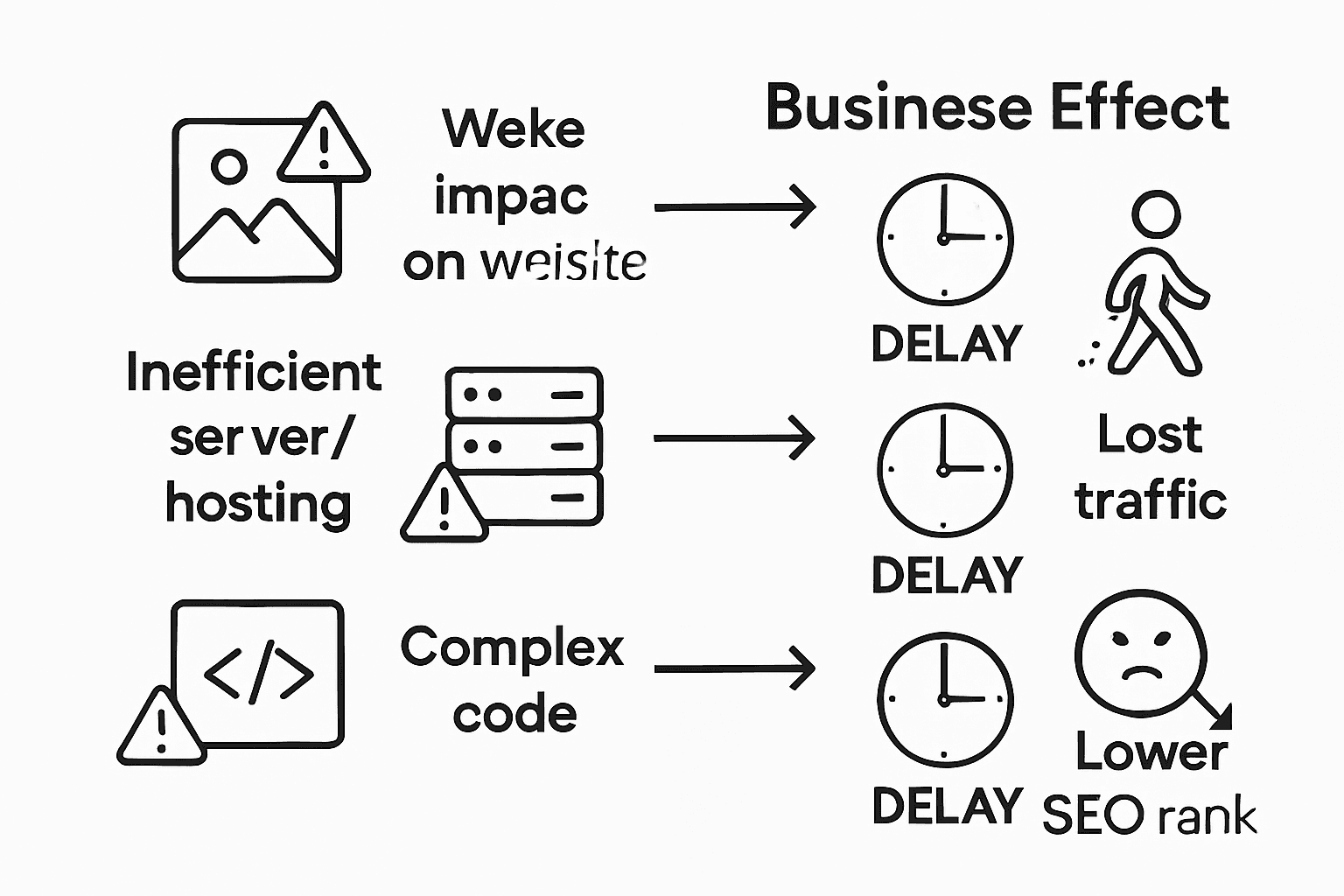
Server-side configurations and hosting environments play equally significant roles in website performance degradation. Shared hosting plans with limited resources, outdated server hardware, inadequate caching mechanisms, and complex database queries can create substantial delays in content delivery. For Florida small businesses, understanding these technical nuances means recognizing that website speed is not just about frontend design, but also involves sophisticated backend optimization strategies that ensure rapid, consistent performance across different devices and network conditions.
Pro Tip for Performance Diagnosis: Conduct quarterly comprehensive website performance audits using professional tools that simulate real-world loading conditions and provide detailed insights into potential speed impediments.
Below is a summary of the most common website performance issues and their direct business effects:
| Performance Issue | Typical Cause | Business Effect |
|---|---|---|
| Large Image Files | Uncompressed graphics/photos | Slow loads, frustrated visitors |
| Inefficient Code | Bloated scripts or stylesheets | Increased bounce rates |
| Poor Hosting Setup | Shared/underpowered servers | Downtime, erratic performance |
| No Browser Caching | Missing or outdated cache rules | Repeat load times stay high |
| Heavy Multimedia | Videos or animations unoptimized | Lower search rankings, high exits |
Practical Steps to Boost Site Speed
Improving website performance requires a strategic approach that addresses multiple technical elements simultaneously. Performance optimization is not a one-time task but an ongoing process for Florida small businesses seeking to maintain competitive digital presence. Implementing targeted technical interventions can significantly reduce loading times and enhance overall user experience, directly impacting search engine rankings and customer engagement.
Image and multimedia optimization represent critical first steps in accelerating website performance. Large, uncompressed images can dramatically slow page loading, so businesses must prioritize strategic image management. Website optimization tips for Florida SMBs recommend techniques like selecting appropriate file formats, utilizing next-generation image compression algorithms, and implementing responsive image delivery that automatically serves correctly sized images based on device specifications. Strategic compression can reduce image file sizes by up to 70% without compromising visual quality.
Code and server-side optimizations provide additional performance acceleration opportunities. Techniques like minifying JavaScript and CSS files, reducing unnecessary code, implementing browser caching, and leveraging content delivery networks can dramatically improve loading speeds. Florida businesses should focus on streamlining their website’s backend infrastructure, eliminating render-blocking resources, and ensuring efficient server response times. This holistic approach addresses both frontend and backend performance bottlenecks, creating a seamless, rapid digital experience for potential customers.
Pro Tip for Speed Enhancement: Conduct monthly performance audits using professional tools that simulate real-world loading conditions and provide actionable recommendations for continuous website optimization.
Unlock Faster Website Speed and Higher SEO Rankings for Your Florida SMB Today
The challenge of slow website loading times directly affects your search rankings and user experience as highlighted in the article. If you are struggling with delays caused by large images, inefficient code, or poor mobile optimization your Florida business could be losing valuable leads and local visibility. Key pain points like bounce rates and mobile-first indexing demand a solution that combines high-speed performance with local SEO expertise to fuel real growth.
Nimblo.ai offers an all-in-one platform designed specifically for Florida SMBs to overcome these hurdles. With AI-powered local SEO, conversion-optimized web design, and rapid website setup you get a cost-effective way to slash loading times and boost your SEO results without juggling multiple tools. Our solution automates follow-ups and manages Google Business Profile details while delivering lightning-fast site speed so your customers never leave frustrated.
Start transforming your website speed and SEO now with Nimblo.ai and experience comprehensive local marketing support you can trust.
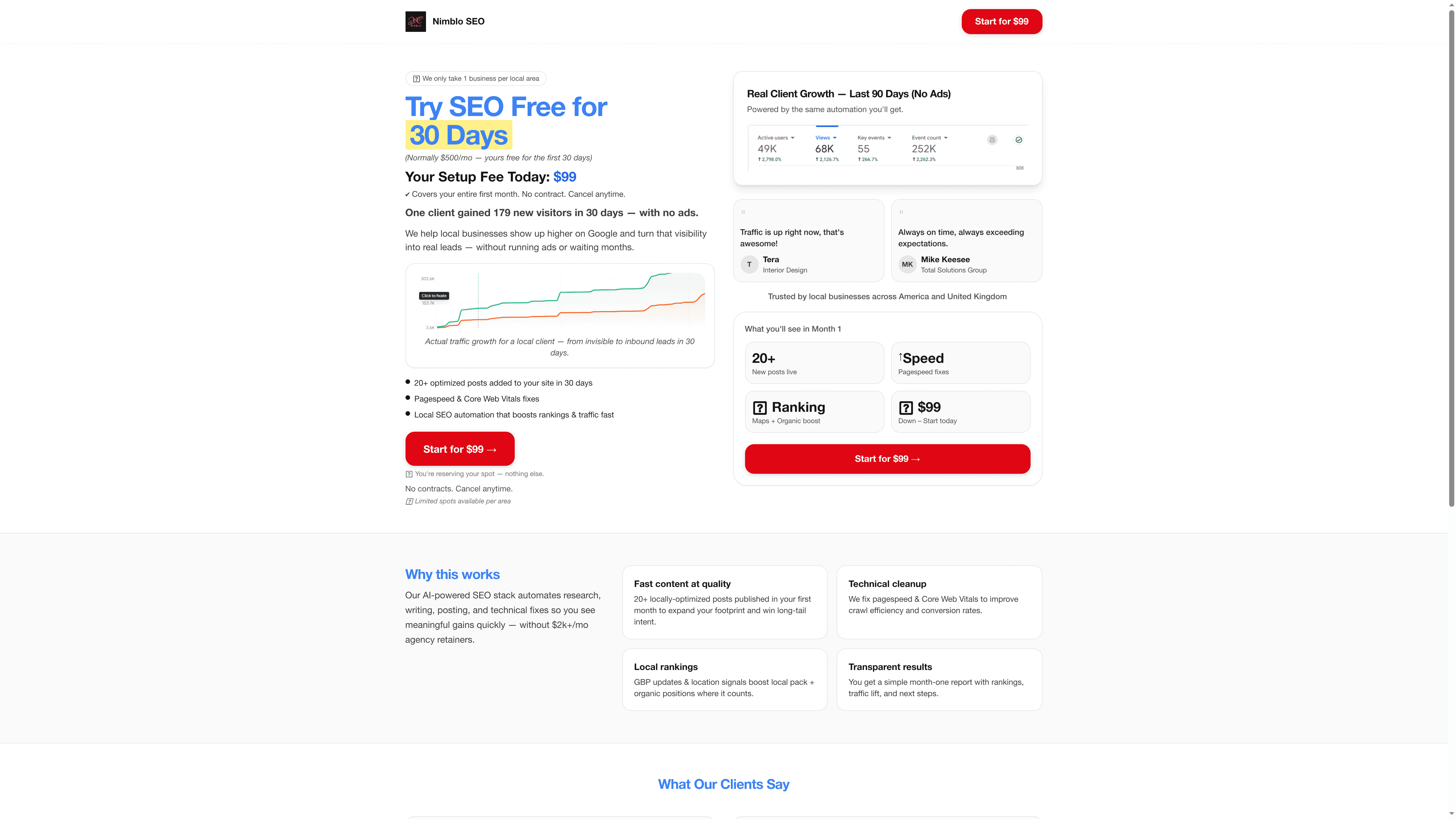
Don’t let slow loading times hurt your local search rankings or customer engagement any longer. Visit https://nimblo.ai/99down to get started with a flat-rate, no-contract platform that saves you money and amplifies your Florida SMB’s digital presence today. Discover how accelerating your website speed can power up your SEO and drive more leads with Website Optimization Tips for Florida SMBs and leverage proven Search Engine Rankings for Florida SMBs strategies in one unified solution.
Frequently Asked Questions
How does website speed impact SEO?
Website speed affects SEO by influencing bounce rates and user engagement. Faster loading times lead to better user experience, which search engines recognize and reward with higher rankings.
What are the common causes of slow website performance?
Common causes include large image files, inefficient code, poor hosting setups, lack of browser caching, and heavy multimedia content. These factors can significantly slow down page loading times.
What are effective strategies for improving website speed?
Effective strategies include optimizing images, minifying code, utilizing browser caching, employing content delivery networks, and ensuring mobile responsiveness to enhance loading times.
How can I monitor my website’s loading speed?
You can monitor your website’s loading speed using tools like Google PageSpeed Insights or other website performance audit tools. These resources provide insights into loading times and suggest areas for improvement.