
Keeping up with potential customers can feel overwhelming for Florida small business owners juggling tight budgets and countless daily demands. Effective lead nurturing matters now more than ever as pricey marketing tools often deliver disappointing results. By focusing on strategic lead capture and personalized communication, your business can replace costly solutions with smart tactics tailored for the Florida market and start building stronger connections with local clients.
Table of Contents
- Step 1: Set Up Your Lead Capture System
- Step 2: Organize and Segment Incoming Leads
- Step 3: Automate Personalized Follow-Up Messages
- Step 4: Engage Leads with Localized Content
- Step 5: Track Lead Engagement and Optimize
Quick Summary
| Key Insight | Explanation |
|---|---|
| 1. Implement Effective Lead Capture | Use web forms to gather essential contact details and place them strategically on your site for higher engagement. |
| 2. Organize and Segment Leads | Categorize leads based on characteristics like industry and location to allow targeted communication strategies. |
| 3. Automate Personalized Follow-Ups | Create intelligent automation workflows that tailor messages based on lead behavior to enhance engagement. |
| 4. Create Localized Content | Develop marketing materials that reflect local challenges and opportunities to connect with your audience. |
| 5. Track and Optimize Engagement | Monitor key metrics to understand lead behavior and continually refine your marketing approach for better results. |
Step 1: Set Up Your Lead Capture System
Creating an effective lead capture system is the foundation for converting potential customers into paying clients. When designing your system, focus on gathering essential contact information while providing value to potential leads through strategic data collection methods.
Start by implementing web forms that collect critical details like name, email address, phone number, and business type. Make these forms concise and appealing on your website landing pages, ensuring they are user friendly and mobile responsive. Consider using lead generation techniques that guide prospects through a smooth data submission process. Strategically place these forms in high traffic areas such as your homepage, service pages, and blog posts where potential clients are most likely to engage.

Connect your lead capture forms directly to a customer relationship management (CRM) system that automatically segments and tracks incoming leads. This allows you to quickly respond to inquiries and begin personalized communication workflows that nurture potential clients through their buying journey.
Pro tip: Design lead capture forms with minimal required fields to increase submission rates and use progressive profiling to collect additional information over time.
Step 2: Organize and Segment Incoming Leads
Successfully organizing and segmenting your incoming leads is crucial for targeted marketing and efficient customer conversion. By implementing strategic customer segmentation approaches, you can transform raw contact information into actionable insights that drive business growth.
Start by categorizing leads based on key characteristics such as industry type, business size, geographic location, and previous interaction history with your company. Create distinct segments that allow for personalized communication strategies tailored to each group’s specific needs and interests. For Florida small businesses, this might mean separating leads into categories like local service industries, retail establishments, professional services, and emerging startups. Utilize your customer relationship management (CRM) system to automatically tag and track these segments, enabling more precise targeting and follow up.
Each lead segment requires a unique nurturing approach. Develop specific communication workflows that speak directly to the challenges and opportunities within each group. This might involve creating different email templates, content offerings, and engagement timelines that resonate with each segment’s particular business context and pain points.
Here’s how different Florida business segments benefit from lead organization and segmentation:
| Business Segment | Key Segmentation Factor | Example Targeted Message |
|---|---|---|
| Local Service Industry | Service type | Tips for attracting local clients |
| Retail Establishment | Store size | Inventory management suggestions |
| Professional Services | Previous engagement | Industry-specific case studies |
| Emerging Startups | Business maturity | Startup growth resources |
Pro tip: Regularly review and refine your lead segmentation criteria to ensure your categorization remains relevant and reflects the evolving landscape of your target market.
Step 3: Automate Personalized Follow-Up Messages
Streamlining your lead nurturing process requires creating intelligent automated follow-up systems that feel personal and responsive. By implementing email personalization strategies, you can transform generic communications into targeted interactions that significantly boost engagement and conversion rates.
Develop a comprehensive automation workflow that triggers specific message sequences based on lead behaviors and segment characteristics. For Florida small businesses, this means crafting unique communication paths for different industries such as hospitality, real estate, professional services, and retail. Configure your marketing automation platform to send tailored emails that address specific pain points, showcase relevant case studies, and provide valuable industry specific content. Include dynamic elements like the lead’s name, company details, and previous interaction history to create a sense of individualized attention.
Ensure your automated messages maintain a conversational tone and provide clear value in each communication. Set up progressive email sequences that gradually introduce your services, share educational content, and strategically guide leads through your sales funnel. Implement smart triggers that adjust message frequency and content based on lead responsiveness, preventing communication fatigue while maintaining consistent engagement.
Pro tip: Test and rotate multiple message variations to discover which automated follow-up sequences generate the highest open and conversion rates for each lead segment.
Step 4: Engage Leads with Localized Content
Connecting with potential customers requires creating content that speaks directly to the unique Florida small business landscape. By implementing localized content strategies, you can craft marketing materials that resonate deeply with your target audience and build genuine community connections.
Tailor your content to reflect the specific challenges and opportunities facing Florida small businesses across different industries. This means developing materials that showcase local success stories, address regional economic trends, and highlight community specific pain points. For instance, a landscaping business in Tampa might create content about sustainable irrigation techniques relevant to Florida climate, while a Miami retail shop could develop marketing materials addressing hurricane season preparedness for small businesses. Incorporate local imagery, language nuances, and references that demonstrate your understanding of the Florida business ecosystem.
Engage with local influencers and community leaders who can help amplify your message and provide authentic insights into your target market. Consider creating content series that showcase local business success stories, provide region specific advice, and demonstrate your commitment to the Florida small business community. Use testimonials from local entrepreneurs, reference local events, and develop case studies that highlight how your solutions solve real problems for businesses in specific Florida cities.
Pro tip: Create a content calendar that rotates between different Florida regions and industries to ensure your localized approach remains fresh and comprehensive.
Step 5: Track Lead Engagement and Optimize
Successfully nurturing leads requires a strategic approach to measuring engagement metrics, enabling Florida small businesses to understand and improve their marketing performance. By implementing robust tracking systems, you can gain critical insights into how potential customers interact with your content and sales processes.
Develop a comprehensive tracking dashboard that monitors key performance indicators specific to your business segments. This includes tracking metrics like email open rates, click through rates, website interaction time, content download frequency, and conversion progression for different lead categories. Pay special attention to interaction patterns within specific Florida industry verticals such as tourism, real estate, professional services, and hospitality. Configure your analytics tools to provide granular insights into lead behavior, allowing you to identify which communication strategies generate the most meaningful engagement and which require refinement.
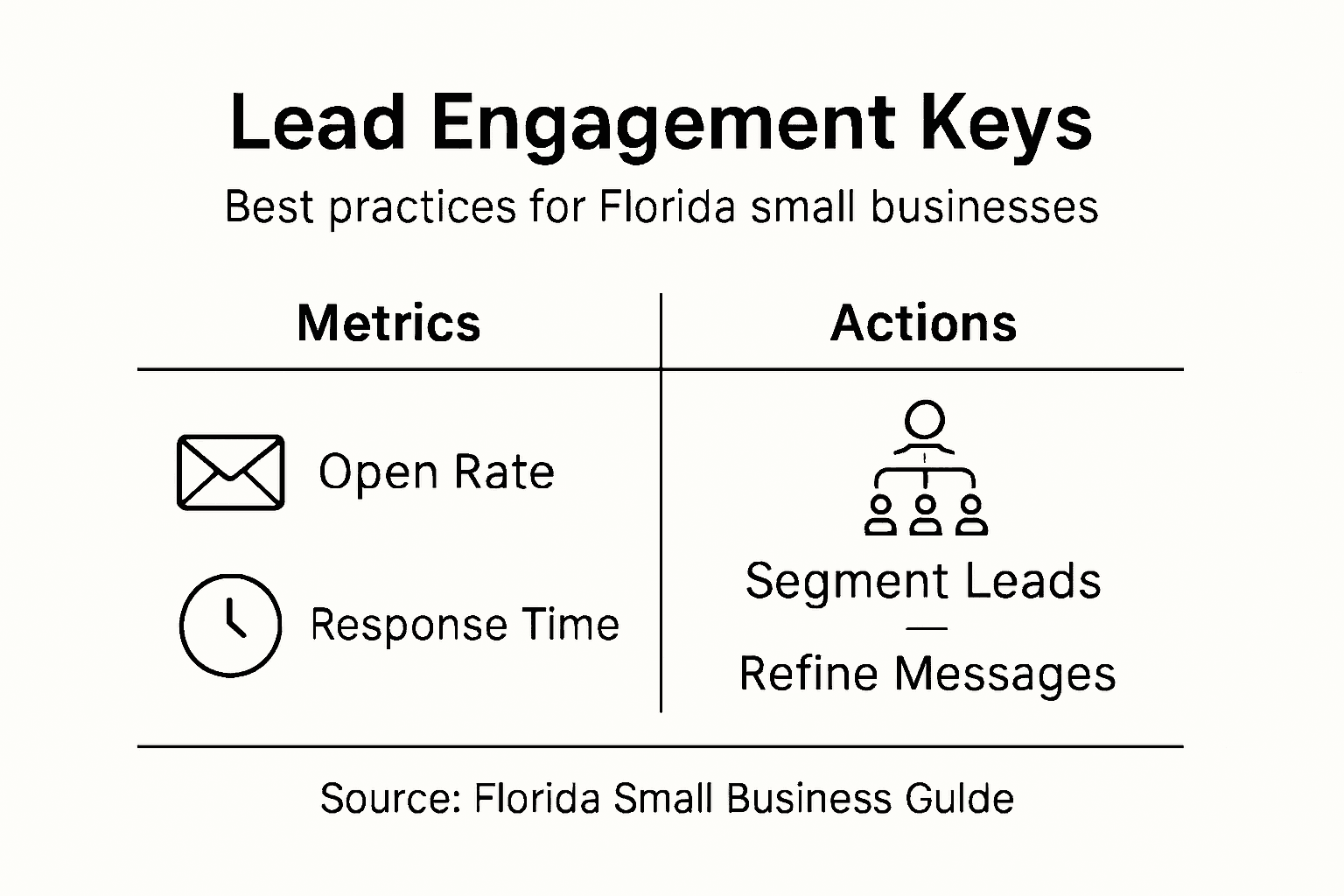
Establish a continuous optimization cycle where you regularly review engagement data and adjust your lead nurturing approach. Create benchmarks for each lead segment, set up automated reporting, and develop responsive workflows that dynamically adapt based on interaction signals. This might involve adjusting email frequency, modifying content tone, or redesigning communication sequences to better align with observed lead preferences and behaviors.
Below is a comparison of lead engagement metrics and their optimization benefits:
| Engagement Metric | What It Measures | Why It Matters |
|---|---|---|
| Email Open Rate | Initial interest in emails | Improves message timing |
| Click-Through Rate | Content relevance | Guides content development |
| Website Interaction | User intent and interest | Enhances site experience |
| Content Downloads | Value of offered materials | Refines resource strategy |
Pro tip: Schedule monthly reviews of your engagement metrics to identify trends and proactively adapt your lead nurturing strategies before performance declines.
Simplify Lead Nurturing for Florida Small Businesses with Nimblo.ai
Nurturing leads effectively requires more than just capturing contacts. The article highlights key challenges Florida small businesses face such as organizing and segmenting leads, automating personalized follow-ups, and engaging customers with localized content. These pain points can slow down your sales process and waste valuable time if handled with multiple disconnected tools. Nimblo.ai offers a unified platform built specifically for Florida SMBs to conquer these hurdles all in one place. Benefit from AI-powered local SEO, automated CRM workflows, and conversion-optimized websites designed to accelerate lead capture and follow-up efforts without complexity or high costs.
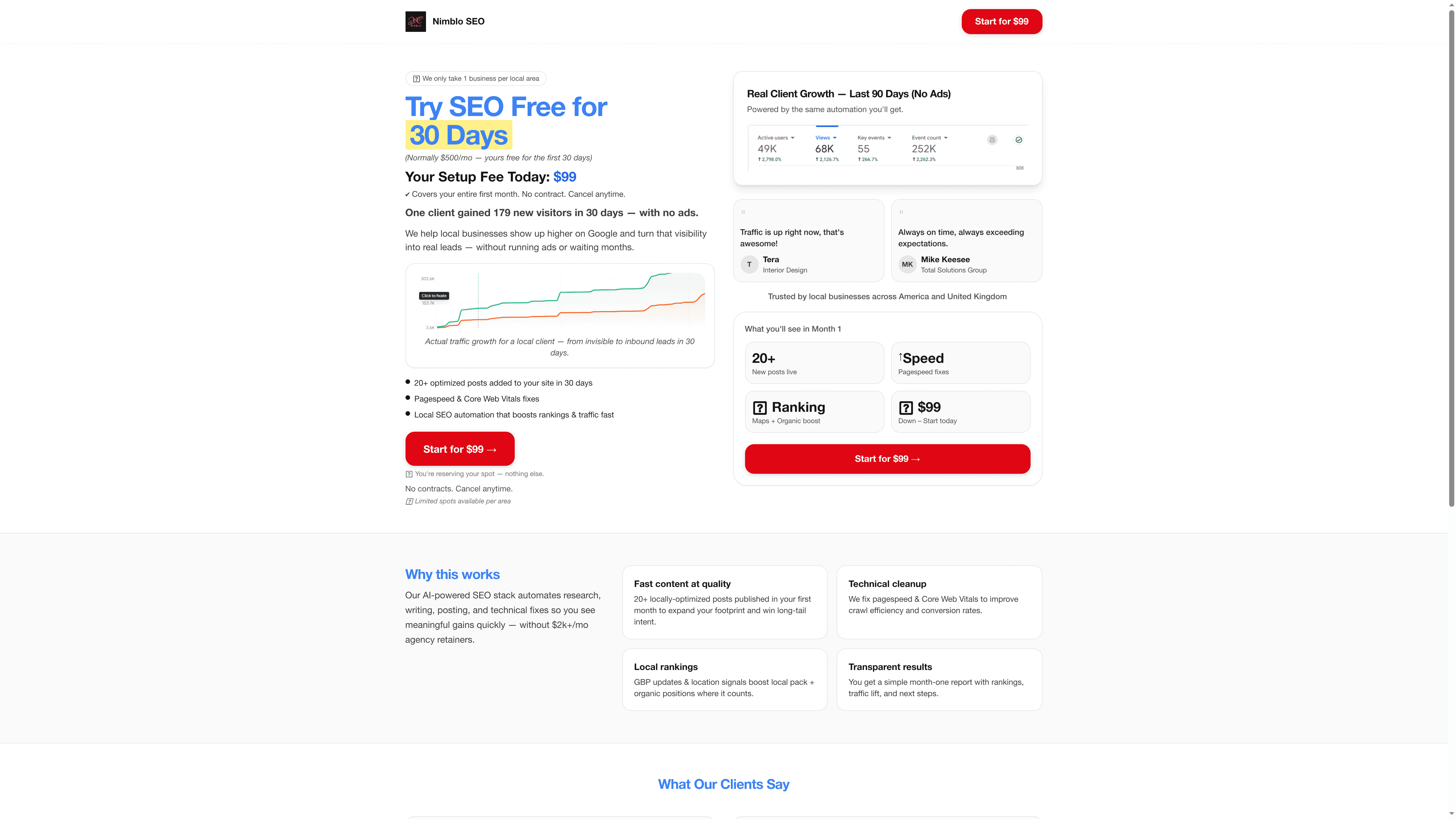
Ready to transform your lead nurturing strategy and see measurable growth? Explore how Nimblo.ai can replace fragmented marketing tools and agencies with everything you need for rapid setup, local expertise, and hands-free automation at an affordable flat rate. Discover the fastest path to organized leads, actionable segmentation, and personalized communication by visiting Nimblo.ai Lead Generation Solutions. Don’t wait — your Florida business growth starts with smarter lead nurturing today.
Frequently Asked Questions
How can I set up an effective lead capture system for my small business in Florida?
To set up an effective lead capture system, implement concise web forms on your website to collect essential information such as name, email, and phone number. Place these forms strategically in high-traffic areas to boost engagement and ensure they are mobile friendly.
What is the best way to segment my incoming leads?
Organize your leads by key characteristics such as industry type and previous interaction history. Create distinct segments to tailor your communication strategies effectively—this might mean separating leads into categories like retail, professional services, and emerging startups.
How can I automate personalized follow-up messages for leads?
Create automation workflows that send tailored emails based on lead behaviors and segment characteristics. Use dynamic fields like the lead’s name and previous interactions to personalize messages, ensuring a conversational tone that addresses their specific needs.
What types of localized content should I create to engage leads?
Develop content that reflects the unique challenges facing Florida small businesses, such as local success stories and industry-specific advice. Incorporate local imagery and references to improve relevance and resonate more deeply with your audience.
How do I track lead engagement effectively?
Implement a comprehensive tracking system to measure key engagement metrics such as email open rates and website interaction. Regularly review this data to identify trends and adjust your lead nurturing strategies, optimizing for better performance over time.