
A slow-loading website can drive away more than half of your visitors before they even see your content. In a world where search engines judge your site as strictly as your audience does, the way your website looks and feels goes far beyond first impressions. By understanding the deep connection between design choices and search rankings, you can turn your website into a strong magnet for both users and search engines.
Table of Contents
- Defining Website Design’s Impact on SEO
- Key Website Design Elements for SEO
- Mobile Responsiveness and Local SEO Success
- Website Speed, Security, and User Experience
- Common Design Mistakes That Hurt SEO
Key Takeaways
| Point | Details |
|---|---|
| Website Design Influences SEO | Effective website design is vital for SEO, impacting search rankings through elements like page speed and mobile responsiveness. |
| User Experience Matters | A clean, intuitive navigation and responsive layout enhance user engagement and signal quality to search engines. |
| Avoid Common Mistakes | Design pitfalls such as excessive graphics or complex structures can negatively affect SEO performance and user retention. |
| Combine Aesthetics and Functionality | Successful designs balance visual appeal with technical optimization to improve overall digital presence and customer acquisition. |
Defining Website Design’s Impact on SEO
Website design isn’t just about creating a visually appealing digital storefront—it’s a critical foundation for search engine optimization (SEO) performance. When we talk about website design’s SEO impact, we’re examining how visual layout, user experience, and technical structure directly influence search engine rankings and user engagement.
Search engines like Google have sophisticated algorithms that evaluate websites holistically. Your design elements—from page load speed and mobile responsiveness to navigation structure and content hierarchy—play a significant role in determining how well your site ranks. A well-designed website signals to search engines that you’re providing a quality user experience. Think of it like a storefront: if customers can’t easily find what they want or navigate smoothly, they’ll leave quickly. Search engines track these user behaviors and use them as ranking signals.
Key Design Elements Affecting SEO Performance
Several critical design components directly influence SEO performance:
- Page Loading Speed: Faster websites rank higher and retain visitors better
- Mobile Responsiveness: Google prioritizes mobile-friendly designs
- Clean, Intuitive Navigation: Helps users (and search engine crawlers) understand site structure
- Content Readability: Clear typography and layout improve user engagement
- Schema Markup Integration: Structured data helps search engines understand page content
Local businesses, especially in competitive markets like Florida, can gain significant advantages by implementing SEO-optimized website design. SEO Tips for Small Businesses in Florida provides deeper insights into regional optimization strategies.
Ultimately, website design is no longer just about aesthetics—it’s a strategic tool for improving online visibility, attracting potential customers, and driving business growth. By understanding and implementing SEO-friendly design principles, small businesses can transform their websites from simple online brochures into powerful marketing engines.

Key Website Design Elements for SEO
Website design serves as the critical foundation for effective search engine optimization, integrating technical performance with user experience. According to research from mecs-press, strategic website development requires meticulous attention to content structure and optimization techniques that go far beyond aesthetic considerations.
Core Technical Design Elements
Search engines evaluate websites through multiple technical lenses. Performance metrics like page speed, mobile responsiveness, and clean code structure significantly influence search rankings. Dreamjournal highlights the intricate relationship between user experience (UX) design and search engine visibility, suggesting that websites must balance technical efficiency with intuitive navigation.
Critical SEO Design Components
Key design elements that directly impact SEO performance include:
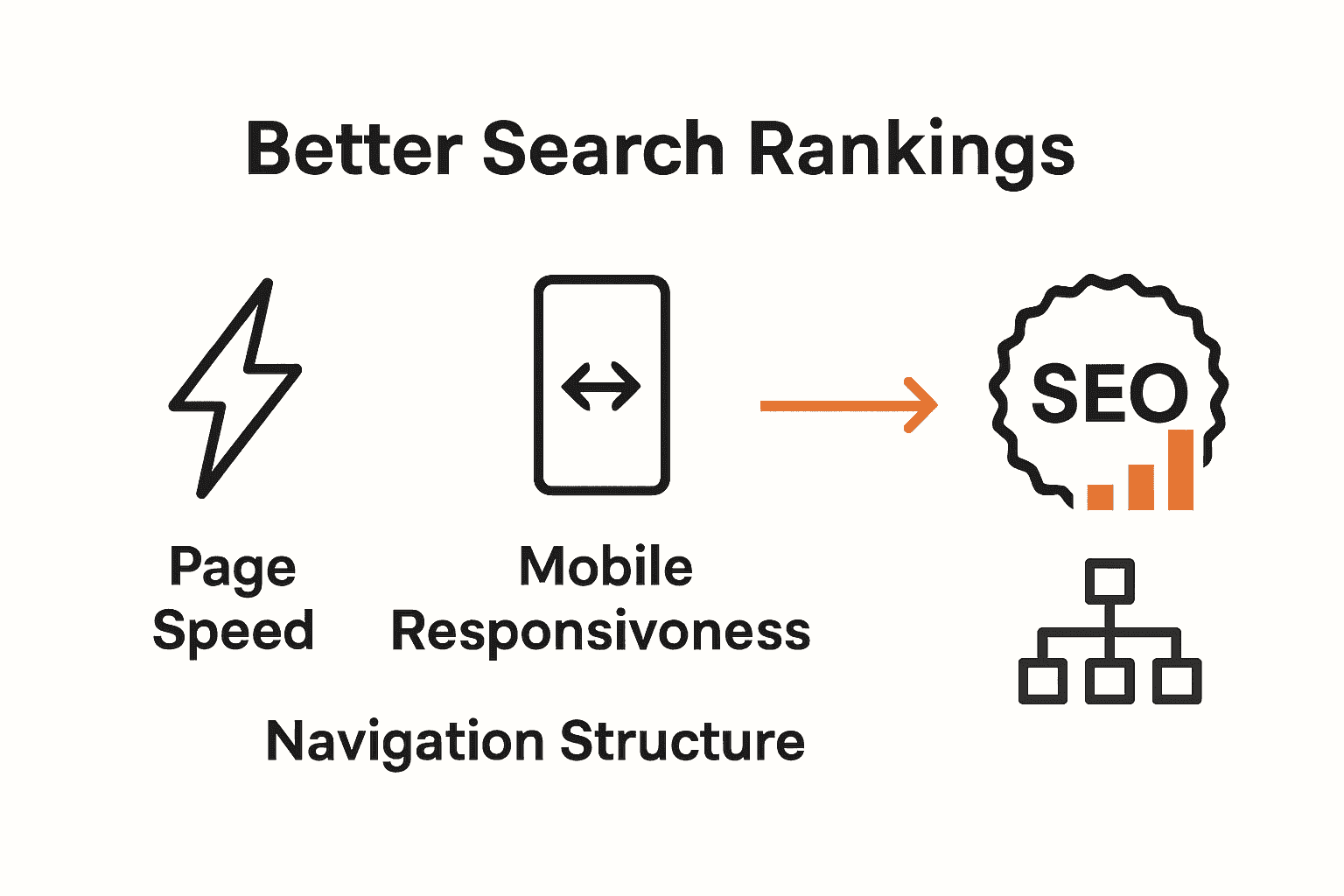
Here’s a comparison of essential website design elements and their impact on SEO:
| Design Element | Importance for SEO | Positive SEO Impact | Common Mistake |
|---|---|---|---|
| Page Load Speed | Critical ranking factor | Higher rankings Better retention |
Heavy graphics |
| Mobile Responsiveness | Required for mobile-first SEO | Improved visibility Enhanced UX |
Non-responsive layouts |
| Navigation Structure | Vital for crawlers and users | Easier indexing Higher engagement |
Overcomplicated menus |
| Clean HTML Structure | Supports easy indexing | Fast crawling Better structure |
Inconsistent formatting |
| Schema Markup | Helps search engines understand pages | Rich snippets Better relevance |
Hidden content |
| SSL Security | Trust and ranking signal | User trust SEO boost |
Missing SSL |
- Responsive Design: Ensures consistent experience across all devices
- Page Load Speed: Directly influences user engagement and search rankings
- Intuitive Navigation: Helps users and search crawlers understand site structure
- Clean HTML Structure: Enables easier indexing by search engines
- Schema Markup Implementation: Provides context for search engine algorithms
Local businesses in competitive markets like Florida can leverage these design principles to significantly improve online visibility. For targeted strategies, explore our 7 Practical Examples of Local SEO Strategies for SMBs to understand how sophisticated website design translates into tangible marketing advantages.
Ultimately, modern website design transcends visual appeal—it’s a strategic instrument for digital marketing success, transforming your online presence from a simple digital brochure into a powerful customer acquisition tool.
Mobile Responsiveness and Local SEO Success
Mobile responsiveness has become the cornerstone of digital marketing strategy for local businesses, transforming how companies connect with potential customers. According to research from Journalspress, mobile optimization is crucial for website usability, directly impacting user engagement and digital marketing success.
Search engines like Google now prioritize mobile-friendly websites, making responsive design a critical factor in local SEO performance. SSBF Net highlights that mobile responsiveness significantly enhances online visibility, especially for small and medium businesses competing in local markets.
Key Mobile SEO Considerations
Critical elements of mobile-responsive design for local SEO include:
- Fast Loading Times: Mobile users expect quick access to information
- Adaptive Design: Seamless experience across different device sizes
- Touch-Friendly Navigation: Easy interaction on smartphones and tablets
- Local Schema Markup: Helping search engines understand local business context
- Localized Content: Tailoring information to specific geographic audiences
Florida small businesses can gain a competitive edge by implementing these mobile optimization strategies. For comprehensive local marketing insights, check out our 7 Practical Examples of Local SEO Strategies for SMBs to understand how mobile responsiveness translates into real-world marketing advantages.
Ultimately, mobile responsiveness is no longer optional—it’s a fundamental requirement for local businesses seeking to improve their digital presence, attract more customers, and compete effectively in today’s mobile-first marketplace.
Website Speed, Security, and User Experience
Website performance is the critical intersection where technical optimization meets user satisfaction. Research from IJFMR demonstrates that strategic SEO techniques can dramatically improve website loading speeds, directly enhancing user engagement and overall digital experience.
Search engines and users alike prioritize websites that offer both lightning-fast performance and robust security. Arxiv underscores the importance of comprehensive usability testing, revealing that website design goes far beyond aesthetic considerations to encompass critical user experience and security parameters.
Critical Performance and Security Elements
Key factors that influence website speed, security, and user experience include:
- Rapid Page Load Times: Under 3 seconds for optimal user retention
- SSL Certificate: Essential for establishing trust and securing user data
- Mobile Optimization: Ensuring consistent performance across devices
- Minimal HTTP Requests: Reducing unnecessary server interactions
- Content Delivery Networks (CDNs): Distributing website content efficiently
Local Florida businesses can leverage these insights to create more compelling online experiences. For targeted strategies that boost digital performance, explore our How SEO Impacts Local Business Growth guide to understand how technical optimization translates into tangible business advantages.
Ultimately, website speed, security, and user experience are interconnected elements that determine your digital success. By prioritizing these factors, businesses can create robust online platforms that not only attract but also retain customers in an increasingly competitive digital landscape.
Common Design Mistakes That Hurt SEO
Website design can be a double-edged sword for search engine optimization, with seemingly innocent choices potentially derailing your digital marketing efforts. Research from Arxiv reveals that website design aesthetics profoundly impact user experience, demonstrating how poor design decisions can dramatically undermine SEO performance.
Search engines have become increasingly sophisticated in evaluating website quality. Arxiv highlights that specific design elements can significantly influence organic click-through rates, making every visual and structural choice critical to your online visibility.
Critical Design Pitfalls to Avoid
Key design mistakes that can severely damage your SEO include:
- Overcomplicated Navigation: Confusing site structures that frustrate users
- Non-Responsive Layouts: Designs that break on mobile devices
- Excessive Heavy Graphics: Slow-loading images that increase page load times
- Inconsistent Content Formatting: Poorly structured text that reduces readability
- Hidden Content: Information not easily accessible to search engine crawlers
Local Florida businesses seeking to optimize their digital presence can gain deeper insights by exploring our 7 Essential SEO Tips for Small Businesses in Florida to understand how strategic design choices can transform online performance.
Ultimately, successful website design is a delicate balance between aesthetic appeal and technical optimization. By avoiding these common pitfalls, businesses can create websites that not only look great but also perform exceptionally well in search engine rankings.
Elevate Your SEO with Smarter Website Design Solutions
Feeling overwhelmed by the complex relationship between website design and SEO effectiveness The article highlights critical challenges like slow page loads, non-responsive layouts, and confusing navigation that frustrate users and lower search rankings These problems can slow down your business growth and hide your local presence from customers searching in Florida or nearby areas
At Nimblo.ai we understand these pain points and offer a comprehensive platform designed specifically for Florida SMBs looking to improve local SEO with ease Our all-in-one solution delivers rapid setup, mobile-friendly, high-speed websites, and AI-powered local SEO tools including schema markup and Google Business Profile management that drive measurable lead growth and boost your digital visibility

Take control of your website design and SEO today with Nimblo.ai Experience how streamlined marketing automation and conversion-optimized web design can save you money and bring more customers straight to your door Act now to transform your digital presence with local expertise and an affordable flat rate—no contracts needed Explore how we help Florida SMBs grow with proven strategies like those in the article by visiting Nimblo.ai and start your journey to better SEO performance.
Frequently Asked Questions
How does website design impact SEO?
Website design impacts SEO by influencing critical factors like page loading speed, mobile responsiveness, and navigation structure, which are essential for both user experience and search engine ranking.
What are the key design elements that affect SEO performance?
Key design elements include page load speed, mobile responsiveness, clean navigation, content readability, and schema markup integration, all of which contribute to better SEO outcomes.
Why is mobile responsiveness important for local SEO?
Mobile responsiveness is crucial for local SEO as search engines favor mobile-friendly websites, ensuring that users have a seamless experience across various devices, which can directly enhance online visibility.
What common design mistakes can hurt SEO?
Common design mistakes that can hurt SEO include overcomplicated navigation, non-responsive layouts, excessive heavy graphics that slow loading times, inconsistent content formatting, and hidden content that is difficult for search engines to index.