
Nearly half of American small business owners say local search drives most of their new customers. For Florida service businesses, standing out in cities like Miami and Tampa requires more than generic online marketing. Smart local SEO strategies and affordable digital tools help you connect with nearby leads, improve your online presence, and streamline day-to-day operations. Find out how targeted optimization and advanced automation can set your Florida business apart in 2025.
Table of Contents
- 1. Focus On Local SEO Optimization For Florida Cities
- 2. Leverage AI-Powered Tools For Keyword Research
- 3. Implement Fast, Mobile-Friendly Website Design
- 4. Boost Visibility With Schema Markup And Rich Snippets
- 5. Manage Your Google Business Profile Effectively
- 6. Automate Follow-Ups To Capture More Leads
- 7. Track Results And Adjust Your Strategy Regularly
Quick Summary
| Takeaway | Explanation |
|---|---|
| 1. Optimize Your Google Business Profile | Ensure your profile is fully filled out with accurate details, images, and service descriptions to enhance local visibility. |
| 2. Use AI Tools for Keyword Research | Leverage AI-powered platforms to uncover high potential keywords and refine content strategies to better match local search intent. |
| 3. Implement Mobile-Friendly Design | Prioritize a responsive website with fast loading times to improve user experience and meet search engine performance standards. |
| 4. Enhance Search Results with Schema Markup | Use schema markup to improve visibility by providing structured data that engages users with rich snippets in search results. |
| 5. Automate Customer Follow-Ups | Develop automated follow-up systems to engage leads effectively, based on their interactions with your business. |
1. Focus on Local SEO Optimization for Florida Cities
Local SEO represents a critical digital strategy for Florida small businesses seeking to dominate their city specific markets. By targeting hyper localized search results, businesses can significantly boost their visibility and attract nearby customers who are ready to engage.
Understanding local SEO means recognizing that search engines like Google prioritize geographic relevance when displaying results. This means businesses in Miami, Orlando, Tampa, or Jacksonville need targeted strategies that speak directly to their local community. Local search ranking strategies involve multiple interconnected optimization techniques designed to signal geographic specificity.
The core of local SEO centers on your Google Business Profile, which acts as your digital storefront. Completely filling out your profile with accurate business information, high quality images, current operating hours, and precise location details signals credibility to search algorithms. Include detailed service descriptions, service areas within Florida, and encourage satisfied customers to leave authentic reviews.
Geographic keywords play a significant role in local optimization. Instead of generic terms, integrate specific city and neighborhood names naturally into your website content. For a roofing contractor in Tampa, phrases like “Tampa roof repair” or “roof replacement in Ybor City” communicate precise local intent.
Consistent business citations across platforms like Google, Yelp, Yellow Pages, and industry specific directories build trust and reinforce your local presence. Ensure your business name, address, and phone number remain identical across all platforms to maximize search engine confidence.
Pro tip: Develop hyperlocal content by creating dedicated service pages for each Florida city or neighborhood you serve, highlighting unique local challenges and solutions.
2. Leverage AI-Powered Tools for Keyword Research
AI-powered keyword research tools represent a transformative approach for Florida small businesses looking to optimize their digital marketing strategies in 2025. These advanced technologies go far beyond traditional keyword selection methods by providing intelligent insights into search behaviors and competitive landscapes.
Modern AI keyword research tools utilize sophisticated machine learning algorithms to analyze massive datasets and uncover valuable search trends. Role of AI in local SEO strategies has become increasingly sophisticated, enabling businesses to understand nuanced search intentions with unprecedented precision. By examining search volume, competition levels, and user intent, these tools help businesses craft more targeted content strategies.
The power of AI keyword research lies in its ability to deliver actionable insights quickly. Instead of manually sifting through countless search terms, businesses can leverage machine learning algorithms that instantly identify high potential keywords specific to their industry and local Florida market. These tools can pinpoint emerging search trends, long tail keywords, and opportunities that traditional research methods might overlook.
For Florida small businesses, this means being able to create content that directly answers customer queries, improving both search rankings and user engagement. AI tools can help segment keywords by intent commercial, informational, navigational helping businesses understand exactly what potential customers are seeking.
Implementing AI keyword research involves selecting robust tools that offer comprehensive analysis. Look for platforms that provide not just keyword suggestions but competitive insights, search intent breakdowns, and localized data relevant to Florida markets. Integration with your existing marketing workflows ensures smooth adoption and immediate strategic improvements.
Pro tip: Rotate between multiple AI keyword research tools quarterly to cross reference insights and capture a more comprehensive view of your target market’s search behaviors.
3. Implement Fast, Mobile-Friendly Website Design
In 2025, mobile website performance will be more critical than ever for Florida small businesses seeking to capture digital market share. A fast, responsive website is no longer a luxury but a fundamental requirement for online success.
Mobile optimization strategies have evolved dramatically, with search engines prioritizing websites that deliver seamless experiences across smartphones, tablets, and desktop computers. Responsive web design ensures your site automatically adjusts layout and content to provide optimal viewing regardless of screen size or device type.
The technical foundation of mobile friendly design involves flexible grid systems and adaptive images that scale intelligently. This means creating websites with fluid layouts that rearrange content dynamically, ensuring readability and navigability on screens ranging from compact mobile devices to large desktop monitors.
Performance metrics matter significantly. Google and other search engines evaluate mobile sites based on loading speed, interaction responsiveness, and visual stability. Small businesses should aim for page load times under three seconds, minimize complex scripts, optimize image sizes, and leverage browser caching to improve overall site performance.
Practical implementation requires selecting responsive website themes, compressing visual assets, enabling browser caching, and utilizing content delivery networks. Florida businesses can leverage tools like Google PageSpeed Insights to diagnose and address mobile performance issues systematically.
Pro tip: Regularly test your website on multiple devices and screen sizes, focusing on real world user experience beyond technical metrics.
4. Boost Visibility with Schema Markup and Rich Snippets
Schema markup represents a powerful yet often overlooked SEO strategy that can dramatically enhance a Florida small business’s online visibility. By providing search engines with structured data, businesses can transform their search result appearances and attract more potential customers.
Understanding how schema markup improves local SEO requires recognizing its role as a sophisticated communication tool between websites and search engines. Schema markup uses specific code languages like JSON-LD to help search platforms comprehend website content with remarkable precision, enabling more informative and engaging search results.
For Florida businesses, schema markup offers multiple strategic advantages. Rich snippets can display critical information directly in search results such as business hours, customer ratings, pricing details, and service offerings. This additional context helps potential customers make faster decisions and increases the likelihood of clicks.
Implementing schema markup involves identifying the most relevant schema types for your specific business. Local businesses should prioritize schemas related to local organizations, services, and contact information. Restaurants might use restaurant schema, while service providers could implement service and local business schemas to highlight unique offerings.
Technical implementation requires either manual coding or utilizing schema markup generators. WordPress plugins and Google’s Structured Data Testing Tool can help businesses verify their markup implementation and ensure search engines correctly interpret the provided information.
Pro tip: Prioritize JSON-LD format for schema markup implementation and regularly test your structured data using Google’s Rich Results Test to confirm proper setup and visibility.
5. Manage Your Google Business Profile Effectively
A Google Business Profile serves as your digital storefront in 2025, acting as a critical gateway for attracting local customers and improving search visibility across Florida markets. This free tool allows businesses to control their online narrative and connect directly with potential clients.
Google Business Profile management strategies have become increasingly sophisticated, requiring ongoing attention and strategic optimization. The profile represents more than a simple listing it functions as an interactive marketing platform that communicates essential business information to both search engines and potential customers.
Verification and accuracy remain paramount for Florida small businesses. Ensure every detail including business name, address, phone number, operating hours, and service areas are precisely documented. Inconsistent or outdated information can severely undermine your local search rankings and customer trust.
Regular updates transform your Google Business Profile from a static listing to a dynamic marketing tool. Consistently add fresh photos showcasing your business, share timely posts about promotions or events, and encourage satisfied customers to leave genuine reviews. These activities signal active engagement to search algorithms and potential clients alike.
Interaction is key. Promptly respond to all customer reviews both positive and negative. Professional, thoughtful responses demonstrate your commitment to customer satisfaction and can significantly influence potential clients evaluating your business. Treat each review as an opportunity to showcase your brand’s personality and customer service approach.
Pro tip: Schedule monthly profile audits to confirm all information remains current and leverage Google’s insights section to understand how customers find and interact with your business listing.
6. Automate Follow-Ups to Capture More Leads
In 2025, effective lead generation demands sophisticated automation strategies that transform passive inquiries into active sales opportunities. Small businesses can dramatically improve conversion rates by implementing intelligent follow-up systems that engage potential customers precisely when they are most receptive.
Marketing automation workflows represent a critical evolution in customer relationship management. These intelligent systems allow businesses to create personalized communication sequences that respond to specific customer behaviors, ensuring no potential lead falls through the cracks.
Automated follow-up strategies work by segmenting leads based on their interaction level and creating tailored communication pathways. For instance, a website visitor who downloads a brochure might receive a different email sequence compared to someone who abandons a shopping cart or fills out a contact form.
Implementing these systems requires selecting the right tools that integrate seamlessly with your existing digital infrastructure. Look for platforms offering multi channel follow-up capabilities including email, SMS, and chatbot interactions. The goal is creating a responsive system that feels personal yet operates with machine precision.
Key elements of an effective automated follow-up strategy include setting up trigger based messages, creating personalized content templates, and establishing clear communication intervals. Businesses should design workflows that provide value at each interaction point, gradually moving prospects through the sales funnel without feeling overly aggressive.
Pro tip: Create multiple follow-up sequences with varying temperatures from warm and informative to more direct sales approaches, allowing your automation to adapt to different lead engagement levels.
7. Track Results and Adjust Your Strategy Regularly
SEO is not a set it and forget it strategy but a dynamic process requiring continuous monitoring and strategic refinement. Florida small businesses must embrace a data driven approach to understand their digital marketing performance and make informed optimization decisions.
Tracking results involves utilizing comprehensive analytics tools that provide deeper insights beyond surface level metrics. Key performance indicators should include organic search traffic, keyword rankings, conversion rates, bounce rates, and user engagement metrics. These data points reveal the effectiveness of your SEO strategies and highlight areas requiring immediate attention.
Most businesses benefit from implementing monthly or quarterly strategy reviews. During these assessments, analyze which content performs best, identify emerging keyword opportunities, and examine user behavior patterns. Look for trends in how potential customers interact with your website and adjust your content and technical SEO approaches accordingly.
Practical tracking requires selecting robust analytics platforms that offer detailed reporting and actionable insights. Google Analytics and Google Search Console provide free comprehensive tools for monitoring website performance. These platforms help businesses understand their audience, track website traffic sources, and identify potential optimization opportunities.
Successful SEO adaptation means staying agile and responsive to changing digital landscapes. Search engine algorithms constantly evolve, making it critical to remain informed about industry trends and be prepared to modify strategies quickly. Regular performance reviews ensure your digital marketing efforts remain effective and aligned with current best practices.
Pro tip: Create a standardized monthly reporting template that captures key metrics, allowing you to quickly visualize performance trends and make data driven strategic adjustments.
Below is a comprehensive table summarizing strategies and enhancements in digital marketing and SEO for small businesses in Florida, as discussed throughout the article.
| Topic | Details | Implementation | Benefits |
|---|---|---|---|
| Local SEO Optimization | Focus on hyperlocal search practices to increase visibility in Florida cities such as Miami, Orlando, Tampa, and Jacksonville. | Optimize Google Business Profile, use geographic keywords, and maintain consistency across platforms. | Improved visibility in localized search results, higher customer engagement, and trust building. |
| AI-Powered Keyword Research | Utilize AI tools to analyze search behaviors and understand user intent for targeted content strategies. | Employ robust AI research tools for immediate keyword discovery and market insight offerings. | Enhanced content relevance and competitive advantage through precise targeting. |
| Mobile-Friendly Website Design | Ensure responsive website performance across multiple device types. | Use flexible grids, adaptive images, and tools like PageSpeed Insights for performance assessments. | Increased customer satisfaction and search engine ranking improvements. |
| Schema Markup Implementation | Leverage structured data to enhance search result appearance and informativeness. | Implement JSON-LD markup and test with tools like Google’s Rich Results Test. | Boosted search result engagement through rich snippets and more transparent presentation. |
| Google Business Profile Management | Keep business listings accurate and interact with customers actively. | Regularly update profile details, encourage reviews, and engage with customer feedback. | Strengthened consumer trust and relevance in Google searches. |
| Follow-Up Automation | Employ marketing automation to manage and convert leads effectively. | Integrate multi-channel follow-ups like email and chatbots using advanced CRM platforms. | Improved lead conversion rates and streamlined customer interaction processes. |
| Performance Tracking and Adjustments | Regularly analyze SEO outcomes and tailor strategies based on data insights. | Use Google Analytics and Search Console for monitoring, and schedule consistent strategy reviews. | Optimized marketing efforts aligning with evolving digital landscapes. |
Unlock Your Florida Business Potential with Nimblo.ai’s All-In-One SEO Solution
Florida small businesses face unique challenges like mastering local SEO across multiple cities, keeping Google Business Profiles up to date, launching fast mobile websites, and automating lead follow-ups—all vital strategies highlighted in the article “7 SEO Best Practices 2025 for Florida Small Businesses.” These critical tasks demand time, expertise, and multiple tools which can quickly overwhelm small teams. If you want to boost your local market presence, capture more leads automatically, and stand out with cutting-edge SEO, it is time to simplify your approach.
Nimblo.ai offers a powerful, unified platform designed specifically for Florida SMBs to address these pain points effectively. With features like AI-powered local SEO, seamless Google Business Profile management, schema markup integration, rapid mobile-friendly website design, and automated follow-up workflows, you gain everything you need in one affordable service. Our clients report measurable lead growth with less hassle and clear cost savings versus juggling multiple agencies and platforms.
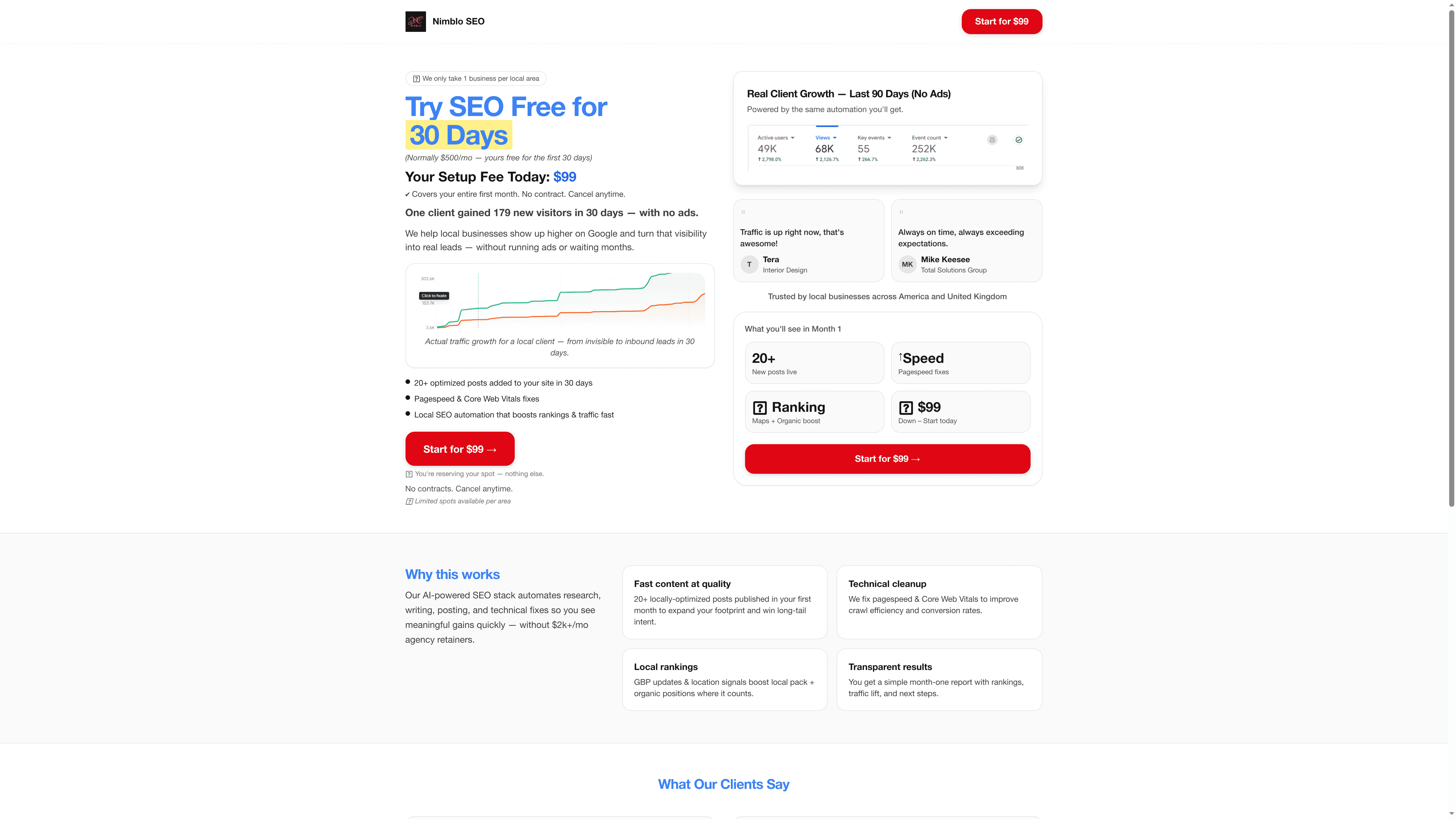
Ready to transform your Florida small business SEO strategy and stop losing leads to competitors? Visit Nimblo.ai today and discover how you can get started quickly with expert local support and no contracts. Take control of your growth by embracing smart automation and expert SEO in a single affordable package.
Frequently Asked Questions
What are the key components of local SEO for Florida small businesses?
To optimize local SEO, ensure you have a complete Google Business Profile with accurate information, high-quality images, and updated operating hours. Focus on local keywords in your website content, and actively seek customer reviews to boost your credibility.
How can AI tools improve keyword research for my business?
AI tools can reveal high-potential keywords specific to your industry by analyzing search trends and user intent. Start by selecting a reliable AI keyword research tool to enhance your content strategy within a few weeks.
What steps should I take to create a mobile-friendly website?
To make your website mobile-friendly, use responsive web design that adapts to different screen sizes and ensures quick loading times. Aim for page load times under three seconds to enhance user experience and engagement.
How does schema markup enhance my business’s visibility?
Implementing schema markup can improve your search result appearances by providing structured data to search engines. Use schema markup to display essential information like business hours and customer ratings, leading to higher click-through rates.
What practices should I follow to manage my Google Business Profile effectively?
Regularly update your Google Business Profile with accurate business information and fresh photos. Respond promptly to customer reviews and evaluate your profile monthly to ensure all details remain current and engaging.
How can I set up automated follow-ups to capture leads?
Automate follow-ups by creating targeted communication sequences based on customer interactions. For best results, segment leads and set up trigger-based messages to enhance engagement and improve conversion rates within a few weeks.