
Your Florida small business website should be your hardest working employee, yet many SMBs watch visitors leave without converting into leads. The difference between a website that generates consistent inquiries and one that sits idle often comes down to following a proven checklist. This guide walks you through preparing, building, optimizing, and measuring your small business website to maximize lead generation and digital marketing results in 2026.
Table of Contents
- Preparing Your Business Website For Success: Key Requirements
- Step-By-Step Website Checklist To Build Or Optimize Your Small Business Site
- Avoiding Common Website Mistakes And Troubleshooting Tips
- Measuring Website Success And Next Steps For Continuous Improvement
- Enhance Your Small Business Website With Nimblo
- What Is The Most Critical Element For A Small Business Website’s Success?
- How Can Florida Small Businesses Protect Their SEO During A Website Redesign?
- What Budget Considerations Should Small Businesses Keep In Mind For Their Website?
- How Often Should Small Business Owners Update Their Website?
Key takeaways
| Point | Details |
|---|---|
| Foundation matters | Proper preparation including budget assessment, goal setting, and audience research determines website success |
| Comprehensive approach | Effective websites balance design, content, technical SEO, and lead generation elements |
| Mobile optimization | Florida consumers increasingly browse on mobile devices, making responsive design essential |
| SEO protection | Implementing 301 redirects and sitemap updates prevents traffic loss during redesigns |
| Continuous improvement | Regular analytics review and content updates maintain competitive website performance |
Preparing your business website for success: key requirements
Before diving into website design or optimization, Florida small business owners need to establish clear foundations. Your website’s success depends on decisions you make before the first page goes live.
Start by assessing your budget realistically. DIY approaches work for basics under $3,000, but businesses targeting 20 or more leads monthly typically need professional support. This honest evaluation prevents mid-project budget surprises and sets appropriate expectations.
Define specific business goals your website must achieve. Are you generating service inquiries, selling products online, building email lists, or establishing local authority? Each goal shapes different design and functionality requirements. A Tampa plumbing company needs instant quote forms, while a Miami consultant might prioritize case study downloads.
Identify your target audience with precision. Florida’s diverse market means a website targeting retirees in Naples requires different messaging than one reaching young professionals in Orlando. Create detailed buyer personas including demographics, pain points, and online behavior patterns. Understanding how your ideal customers search and what information they need guides every content decision.
Prepare essential assets before building begins:
- High quality logo files and brand guidelines
- Professional photos of your team, location, and work
- Service descriptions written in customer language
- Testimonials and case studies from satisfied clients
- Clear contact information including phone, email, and physical address
Pro Tip: Gather at least 10 customer testimonials before launching your website. Authentic reviews from Florida clients build immediate credibility and improve local SEO performance.
Establish your website design best practices for SMBs by reviewing competitor sites and noting what works. Pay attention to navigation clarity, call-to-action placement, and how quickly you can find essential information. Your website should make contacting you the easiest action visitors can take.
| Preparation Element | Why It Matters | Action Step |
|---|---|---|
| Budget clarity | Prevents scope creep | Document total available funds |
| Goal definition | Focuses design decisions | List 3 specific outcomes |
| Audience research | Improves messaging | Create 2 buyer personas |
| Asset collection | Speeds development | Organize files in shared folder |
Step-by-step website checklist to build or optimize your small business site
Executing a successful small business website requires attention to design, content, technical, and marketing elements working together. This comprehensive checklist ensures nothing gets overlooked.
Design fundamentals:
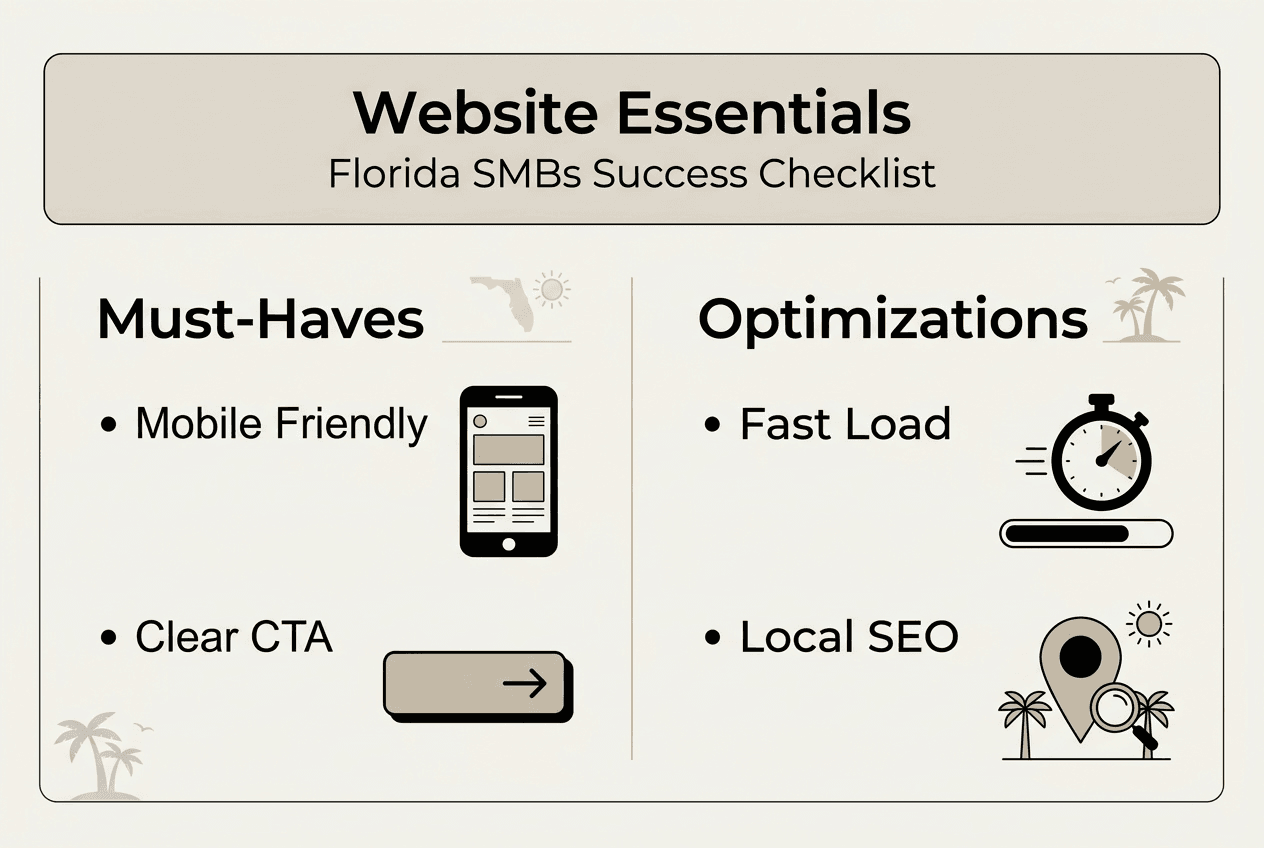
- Implement mobile responsive design that adapts seamlessly to phones and tablets
- Ensure page load times under 3 seconds through image optimization and clean code
- Apply consistent branding with your logo, colors, and fonts throughout
- Create intuitive navigation with clear menu labels and logical page hierarchy
- Design prominent call-to-action buttons in contrasting colors
Content optimization:
- Write compelling homepage copy that immediately communicates your value proposition
- Include Florida location keywords naturally in headings and body text
- Create dedicated service pages answering specific customer questions
- Add an about page building trust through your story and credentials
- Publish a contact page with multiple ways to reach you
SEO essentials:
- Optimize title tags with target keywords and location (50-60 characters)
- Write unique meta descriptions for every page (150-160 characters)
- Structure content with H1, H2, and H3 heading hierarchy
- Add descriptive alt text to all images for accessibility and SEO
- Create and submit an XML sitemap to Google Search Console
- Configure robots.txt to guide search engine crawling
Pro Tip: Florida small businesses should claim and optimize their Google Business Profile simultaneously with website launch. This doubles your local search visibility and drives immediate traffic.
Lead generation setup:
- Install contact forms on every service page, not just a contact page
- Offer valuable lead magnets like checklists or guides in exchange for emails
- Add live chat or chatbot for instant visitor engagement
- Display phone numbers prominently in headers and footers
- Set up conversion tracking in Google Analytics 4
- Implement email marketing automation for new leads
Explore proven examples of lead generation Florida SMBs use successfully to model effective tactics for your industry.
Technical requirements:
- Install SSL certificate for HTTPS security (required for trust and SEO)
- Set up 301 redirects if migrating from an old site
- Configure automatic backups daily or weekly
- Install Google Analytics and Google Search Console
- Test forms and checkout processes across devices
- Verify site speed using Google PageSpeed Insights
| Checklist Category | Priority Items | Tools Needed |
|---|---|---|
| Design | Mobile responsive, fast loading | Browser testing tools |
| Content | Local keywords, clear CTAs | Keyword research tools |
| SEO | Metadata, sitemap, redirects | Google Search Console |
| Lead Generation | Forms, tracking, automation | CRM, analytics platform |
| Technical | SSL, backups, speed optimization | Hosting dashboard, testing tools |
Review best SEO tools for small business comparison to select platforms matching your budget and technical skill level. The right tools simplify ongoing optimization and reporting.
Review comprehensive website essentials for Florida SMBs to ensure you’re not missing critical elements that separate high-performing sites from average ones.
Avoiding common website mistakes and troubleshooting tips
Even well-intentioned Florida small business owners make predictable website mistakes that kill lead generation. Recognizing these pitfalls helps you avoid costly errors.
Navigation and usability mistakes:
- Confusing menu structures requiring multiple clicks to find services
- Missing or buried contact information forcing visitors to hunt
- Unclear value propositions that don’t explain what you do
- Too many choices overwhelming visitors instead of guiding them
Simplify navigation to five main menu items or fewer. Every page should clearly indicate the next action you want visitors to take.
Performance issues:
- Slow loading pages from oversized images or bloated code
- Non-responsive design that breaks on mobile devices
- Broken links and missing pages creating frustration
- Outdated content suggesting the business is inactive
Test your site monthly on actual phones and tablets, not just desktop browsers. What looks perfect on your computer might be unusable on an iPhone.

SEO and visibility problems:
When traffic drops after a redesign, implement 301 redirects for all changed URLs immediately. Update your XML sitemap and resubmit to Google Search Console. Monitor Google Analytics daily during the first two weeks post-launch to catch issues quickly.
Pro Tip: Create a simple spreadsheet mapping old URLs to new ones before any redesign. This prevents the scramble to remember what changed when rankings suddenly drop.
Lead generation failures:
- Forms requesting too much information upfront
- No clear calls-to-action on key pages
- Missing follow-up sequences for new inquiries
- Failure to track which pages generate leads
Test your contact forms weekly by submitting inquiries yourself. Verify emails arrive promptly and responses go out automatically.
When to seek professional help:
DIY works for basic sites but businesses needing 20 or more leads monthly typically require agency expertise. Signs you’ve outgrown DIY include declining traffic despite your efforts, technical issues you can’t diagnose, or simply lacking time to maintain the site properly.
Implement the 7 steps lead generation checklist Florida SMB owners use to systematically improve conversion rates without guesswork.
Measuring website success and next steps for continuous improvement
Launching your website marks the beginning, not the end, of your digital marketing journey. Systematic measurement and improvement separate thriving Florida SMBs from those wondering why their site doesn’t generate leads.
Essential analytics to monitor:
- Total visitors and traffic sources showing where people find you
- Bounce rate indicating if content matches visitor expectations
- Conversion rate tracking how many visitors become leads
- Top performing pages revealing what content resonates
- Mobile versus desktop usage guiding design priorities
Set up Google Analytics 4 and review reports weekly at minimum. Look for patterns like high traffic pages with low conversions, signaling opportunities to improve calls-to-action.
Establish measurable goals and KPIs:
Define specific targets like 100 monthly visitors, 5% conversion rate, or 20 qualified leads. Vague goals like “more traffic” provide no benchmark for success. Track progress monthly and adjust tactics based on results.
| Metric | Tracking Frequency | Action Threshold |
|---|---|---|
| Total traffic | Weekly | 20% month-over-month decline |
| Conversion rate | Weekly | Below 2% for service businesses |
| Page load speed | Monthly | Above 3 seconds |
| Form submissions | Daily | Zero submissions for 3 days |
| Search rankings | Monthly | Drops of 5+ positions for key terms |
Content and SEO maintenance:
Update website content quarterly at minimum to maintain search rankings and demonstrate your business stays current. Add new blog posts, refresh service descriptions, and update testimonials regularly. Search engines reward fresh, relevant content with better visibility.
Experiment with different lead generation strategies Florida SMBs find effective. Test new offers, rewrite calls-to-action, and try different form placements. Small improvements compound over time into significant results.
Pro Tip: Schedule a comprehensive website audit every six months. Review analytics, test all forms and links, update outdated information, and refresh images. This prevents small issues from becoming major problems.
Protect SEO during updates:
When making significant changes, use 301 redirects and update sitemaps to preserve search rankings. Even minor redesigns can disrupt SEO if not handled carefully. Document all URL changes and monitor traffic closely after updates go live.
Marketing automation opportunities:
Learn how to automate lead generation SMBs use to scale without adding staff. Automated email sequences, chatbot responses, and CRM workflows ensure no lead falls through cracks while you focus on serving customers.
Plan periodic redesigns:
Websites need complete overhauls every 3-5 years to stay competitive. Technology evolves, design trends change, and your business grows. Budget for major updates rather than letting your site become obviously outdated.
Enhance your small business website with Nimblo
Implementing this comprehensive website checklist requires time, expertise, and ongoing attention that many Florida small business owners struggle to provide while running their companies. Nimblo streamlines the entire process with an all-in-one platform designed specifically for Florida SMBs.
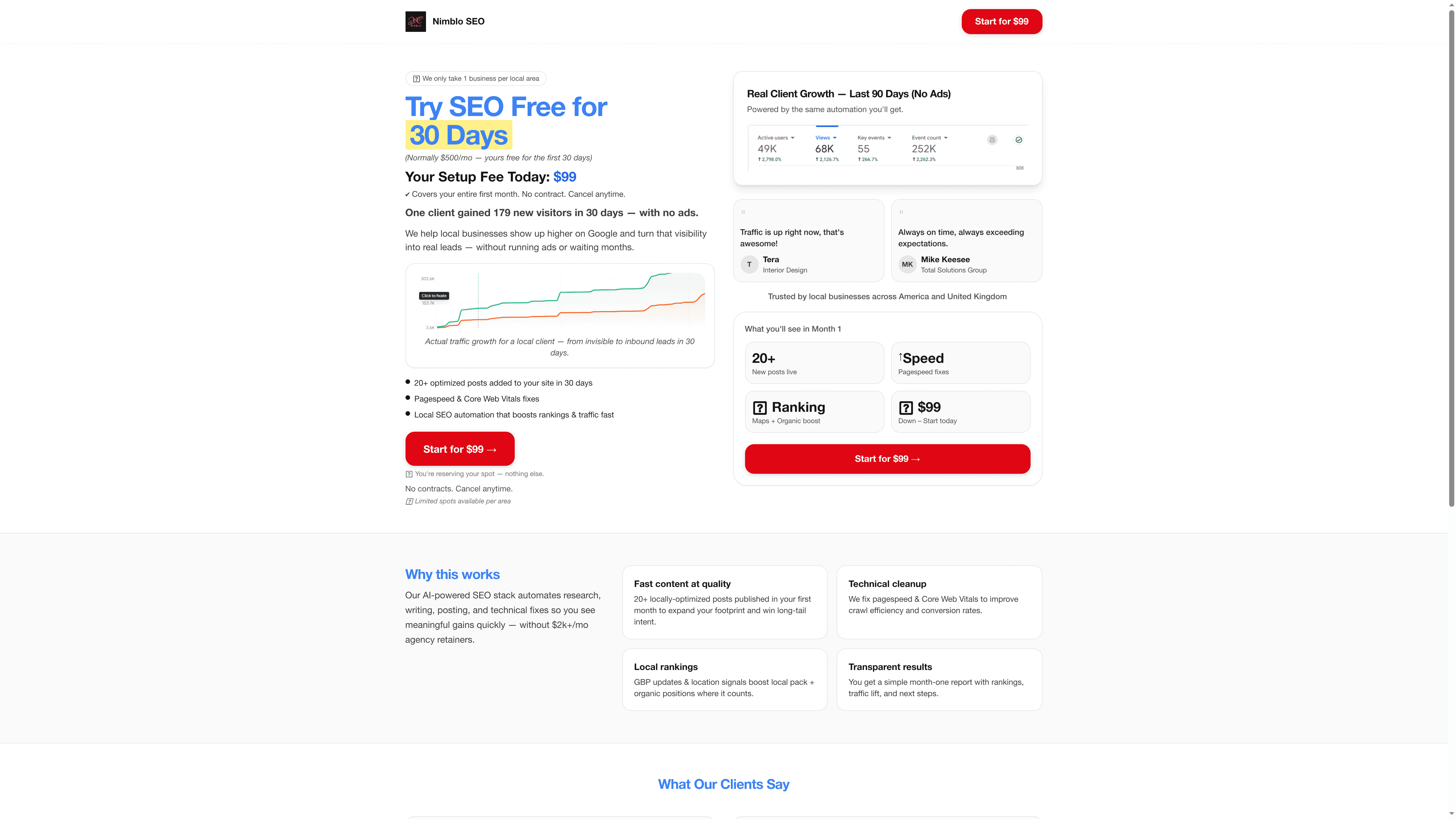
Our platform handles website optimization, local SEO, lead generation automation, and CRM in one affordable solution. You get expert-level results without hiring multiple agencies or learning complex tools. Florida businesses using Nimblo report significant lead increases while cutting digital marketing costs dramatically. Discover how Nimblo small business website solutions can transform your online presence and automate lead generation starting today.
What is the most critical element for a small business website’s success?
Mobile optimization stands as the most critical element for Florida small business websites in 2026. Over 60% of local searches now happen on smartphones, and Google prioritizes mobile-friendly sites in search rankings. A website that loads slowly or displays poorly on phones immediately loses potential customers to competitors.
Clear calls-to-action run a close second in importance. Your website must guide visitors toward contacting you through prominent phone numbers, contact forms, and action buttons on every page. Without obvious next steps, even interested visitors leave without converting into leads.
Local SEO drives visibility for Florida SMBs competing in specific cities and regions. Optimizing for location-based keywords, claiming your Google Business Profile, and earning local reviews help your business appear when nearby customers search for your services. This targeted visibility delivers higher quality leads than generic traffic.
How can Florida small businesses protect their SEO during a website redesign?
Implement 301 redirects for every URL that changes during your redesign. This tells search engines your content moved permanently and transfers ranking authority to new pages. Without redirects, you lose all SEO value built over time.
Update and submit your XML sitemap immediately after launching the redesigned site. This helps Google discover and index your new page structure quickly. Monitor Google Search Console daily for crawl errors and fix them promptly to prevent ranking drops.
What budget considerations should small businesses keep in mind for their website?
DIY website builders work for budgets under $3,000 and basic online presence needs. Platforms like Wix or Squarespace provide templates and tools for non-technical owners to create functional sites. However, customization and advanced features remain limited.
Professional agencies become necessary when targeting 20 or more leads monthly. Complex functionality, custom design, and strategic SEO require expertise DIY platforms can’t provide. Expect to invest $5,000-$15,000 for professional development plus ongoing maintenance costs.
How often should small business owners update their website?
Content updates should happen quarterly at minimum to maintain search rankings and demonstrate business activity. Add new blog posts, refresh service descriptions, update testimonials, and ensure all information remains current. Fresh content signals to search engines that your site deserves continued visibility.
Technical and SEO reviews belong on a biannual schedule. Audit site speed, check for broken links, review analytics for declining pages, and update SEO elements based on keyword performance. Regular technical maintenance prevents small issues from becoming major problems.
Review website update best practices to establish a maintenance routine that keeps your site competitive without overwhelming your schedule. Consistent small improvements outperform sporadic major overhauls.
Explore writing effective website copy techniques that convert Florida visitors into leads through persuasive, customer-focused messaging.