
Over seventy percent of american businesses lose potential customers due to slow websites and clunky mobile experiences. In today’s digital-first world, every click counts for companies hoping to stand out online. Learning how website optimization works can help you improve speed, boost user satisfaction, and enhance search engine rankings, giving your business a much-needed edge in the fast-moving american market.
Table of Contents
- Defining Website Optimization and Its Importance
- Core Elements of Successful Website Optimization
- Types of Website Optimization Strategies
- Essential Tools for SMB Website Optimization
- Common Mistakes and How to Avoid Them
Key Takeaways
| Point | Details |
|---|---|
| Website Optimization is Essential | Focus on improving site speed, user experience, and SEO to enhance online performance and customer conversion. |
| Ongoing Process | Optimization requires continuous monitoring and adaptation to stay competitive in the digital landscape. |
| Key Strategy Components | Emphasize user experience, technical performance, and quality content to ensure effective website optimization. |
| Avoid Common Mistakes | Neglecting mobile responsiveness and page speed can significantly hinder user engagement and site performance. |
Defining Website Optimization and Its Importance
Website optimization represents a strategic approach to improving how websites perform, function, and deliver value to users and businesses. At its core, website optimization focuses on enhancing web performance to create faster, more responsive, and more effective online experiences.
The fundamental goal of website optimization is multifaceted. It involves improving website speed, user experience, search engine visibility, and overall digital performance. By strategically refining elements like page load times, content quality, mobile responsiveness, and technical infrastructure, businesses can create websites that not only attract visitors but also convert them into customers. Modern website optimization goes beyond simple aesthetic improvements and delves into complex technical and strategic enhancements.
Key components of effective website optimization include:
- Page Speed: Reducing load times to keep visitors engaged
- Mobile Responsiveness: Ensuring seamless experiences across devices
- SEO Enhancement: Improving search engine rankings and visibility
- Content Optimization: Creating high-quality, relevant content
- User Experience Design: Designing intuitive navigation and interaction flows
Understanding web analytics plays a crucial role in website optimization. By measuring, collecting, and analyzing web data, businesses can gain insights into user behavior, identify performance bottlenecks, and make data-driven improvements. This process enables continuous refinement of digital strategies, helping websites remain competitive and effective in an increasingly complex online landscape.
Core Elements of Successful Website Optimization
Website optimization requires a strategic, comprehensive approach that goes beyond simple technical adjustments. Successful website optimization demands a holistic strategy that integrates multiple critical elements to create a high-performing digital presence. Small and medium businesses must understand that effective optimization is not a one-time task but an ongoing process of refinement and improvement.

The core elements of successful website optimization include several interconnected components that work together to enhance digital performance. User Experience (UX) stands at the forefront, ensuring that visitors can easily navigate and interact with the website. This involves creating intuitive design, clear navigation paths, and responsive layouts that adapt seamlessly across different devices and screen sizes. Technical performance is equally crucial, involving aspects like page load speed, mobile responsiveness, and clean, efficient code structure.
Key strategic elements of website optimization encompass:
- Content Quality: Developing relevant, engaging, and valuable content
- Technical Performance: Ensuring fast load times and smooth functionality
- Search Engine Optimization: Improving visibility and search rankings
- Security Measures: Protecting user data and maintaining site integrity
- Conversion Optimization: Designing clear pathways for user engagement
Website design and optimization requires continuous monitoring and adaptation. Businesses must regularly analyze performance metrics, user behavior, and technical indicators to make informed improvements. This dynamic approach ensures that websites remain competitive, user-friendly, and aligned with evolving digital standards and user expectations.
Types of Website Optimization Strategies
Website optimization strategies encompass a diverse range of technical and strategic approaches designed to enhance digital performance and user experience. Website audits represent a foundational strategy, providing comprehensive evaluations that identify potential weaknesses and opportunities for improvement across technical, content, and user experience dimensions.
Primary types of website optimization strategies include technical, content, and conversion-focused approaches. Technical Optimization concentrates on improving website infrastructure, including page load speed, mobile responsiveness, secure hosting, and clean code structure. Content optimization involves developing high-quality, relevant content that engages users and satisfies search engine algorithms. Multivariate landing page optimization provides an advanced technique for testing and refining webpage elements to maximize user engagement and conversion rates.
Key optimization strategy categories include:
- Technical SEO: Enhancing website technical performance and search visibility
- Content Optimization: Creating valuable, targeted content
- Conversion Rate Optimization: Improving user pathways and engagement
- Performance Optimization: Reducing load times and improving responsiveness
- User Experience (UX) Optimization: Designing intuitive, user-friendly interfaces
Website optimization for Florida SMBs requires a nuanced approach that considers local market dynamics and specific business objectives. Successful strategies involve continuous monitoring, data-driven refinement, and adaptive techniques that respond to evolving digital landscapes and user expectations.
Essential Tools for SMB Website Optimization
Website optimization for small and medium businesses requires a strategic toolkit that addresses multiple performance dimensions. Technical SEO principles emphasize the critical importance of understanding and implementing tools that enhance website speed, crawlability, and overall digital performance. Modern SMBs need comprehensive solutions that provide actionable insights and streamline optimization processes.
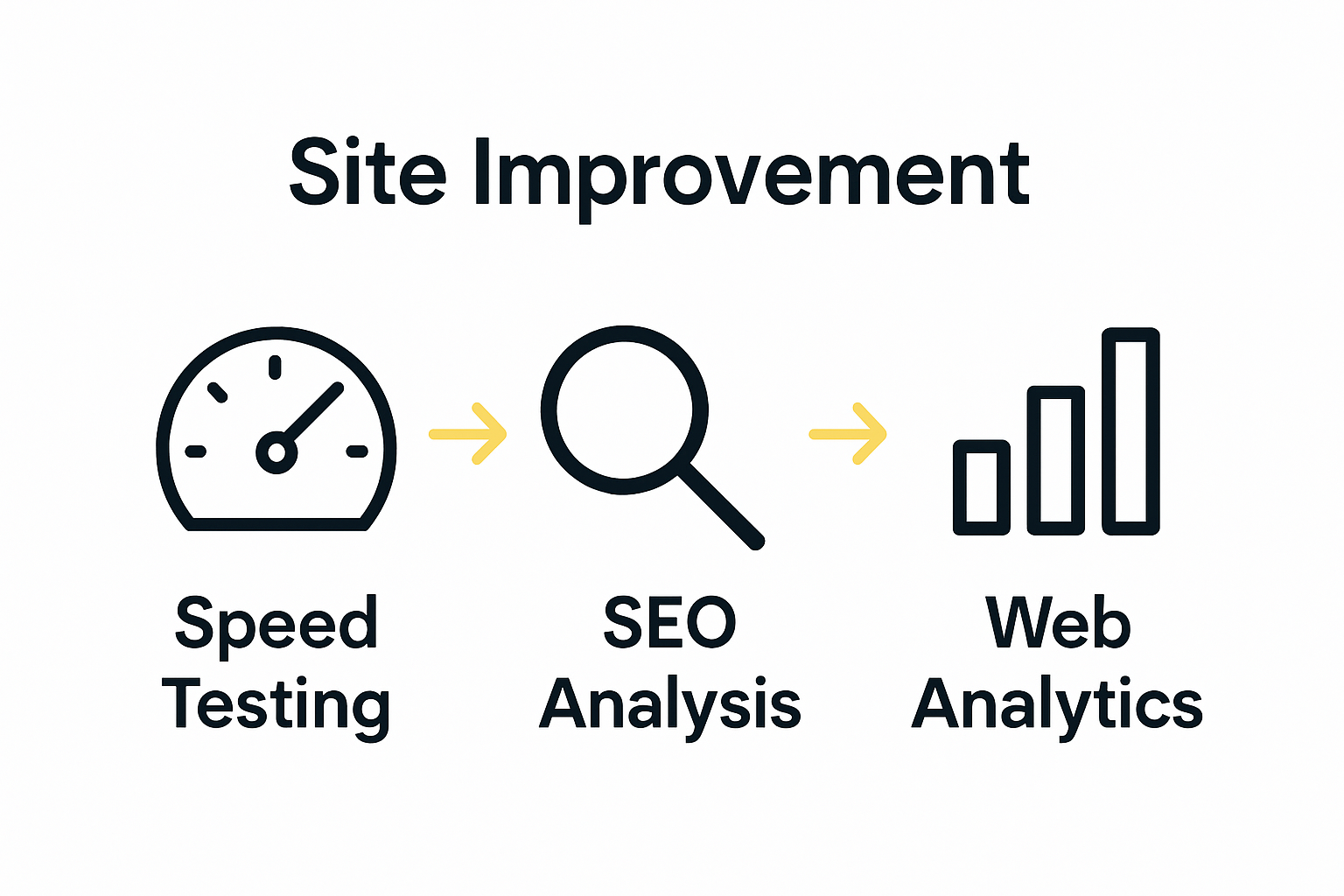
Performance Analysis Tools form the foundation of effective website optimization. These tools help businesses diagnose technical issues, measure website performance, and identify areas for improvement. Key categories include analytics platforms, speed testing utilities, SEO diagnostic tools, and user experience monitoring systems. Small businesses must leverage these technologies to gain competitive insights and make data-driven optimization decisions.
Essential tool categories for SMB website optimization include:
- Analytics Platforms: Track visitor behavior and website performance
- SEO Diagnostic Tools: Identify technical and content optimization opportunities
- Speed Testing Utilities: Measure and improve website load times
- Security Scanning Tools: Protect website from potential vulnerabilities
- Keyword Research Instruments: Discover content and optimization strategies
Best small business SEO tools can transform how SMBs approach digital marketing, providing affordable and accessible solutions that were previously available only to larger enterprises. The key is selecting integrated tools that offer comprehensive insights while remaining budget-friendly and user-friendly for businesses with limited technical resources.
Common Mistakes and How to Avoid Them
Website optimization is a complex process fraught with potential pitfalls that can undermine digital performance. Common website optimization mistakes often stem from a lack of strategic planning and understanding of critical digital infrastructure requirements. Small and medium businesses frequently encounter challenges that can significantly impact their online presence and user engagement.
User Experience Errors represent a primary area of concern for many businesses. These mistakes typically involve creating websites that are difficult to navigate, slow to load, or unresponsive across different devices. Technical issues like poor mobile optimization, excessive loading times, and confusing navigation structures can dramatically reduce visitor retention and conversion rates. Businesses must prioritize creating intuitive, fast, and accessible digital experiences that meet user expectations and technical standards.
Key website optimization mistakes to avoid include:
- Neglecting Mobile Responsiveness: Failing to optimize for mobile devices
- Ignoring Page Speed: Allowing slow load times that frustrate users
- Poor Content Strategy: Creating irrelevant or low-quality content
- Overlooking SEO Fundamentals: Neglecting basic search engine optimization techniques
- Inadequate Security Measures: Failing to protect user data and website integrity
SEO tips for small businesses provide critical guidance for avoiding common digital marketing pitfalls. Successful website optimization requires a holistic approach that combines technical excellence, strategic content creation, and continuous performance monitoring. By understanding and proactively addressing these common mistakes, businesses can develop robust digital platforms that effectively engage and convert potential customers.
Unlock Your Website’s Full Potential With Smart Optimization
If you have struggled with slow load times poor SEO results or a website that does not convert visitors then you are not alone. This article highlights key challenges like mobile responsiveness content quality and technical SEO that can make or break your online success. SMBs in Florida especially need a solution that tackles these pain points without the frustration of juggling multiple expensive tools or agencies.
Nimblo.ai offers an all-in-one platform that simplifies your path to digital growth by combining AI-powered local SEO high-speed website performance and conversion-focused design. Imagine having automated follow-ups marketing automation and Google Business Profile management working side by side to generate leads and boost your local visibility effortlessly.
Take control of your website optimization journey now with Nimblo.ai’s rapid setup and comprehensive service.
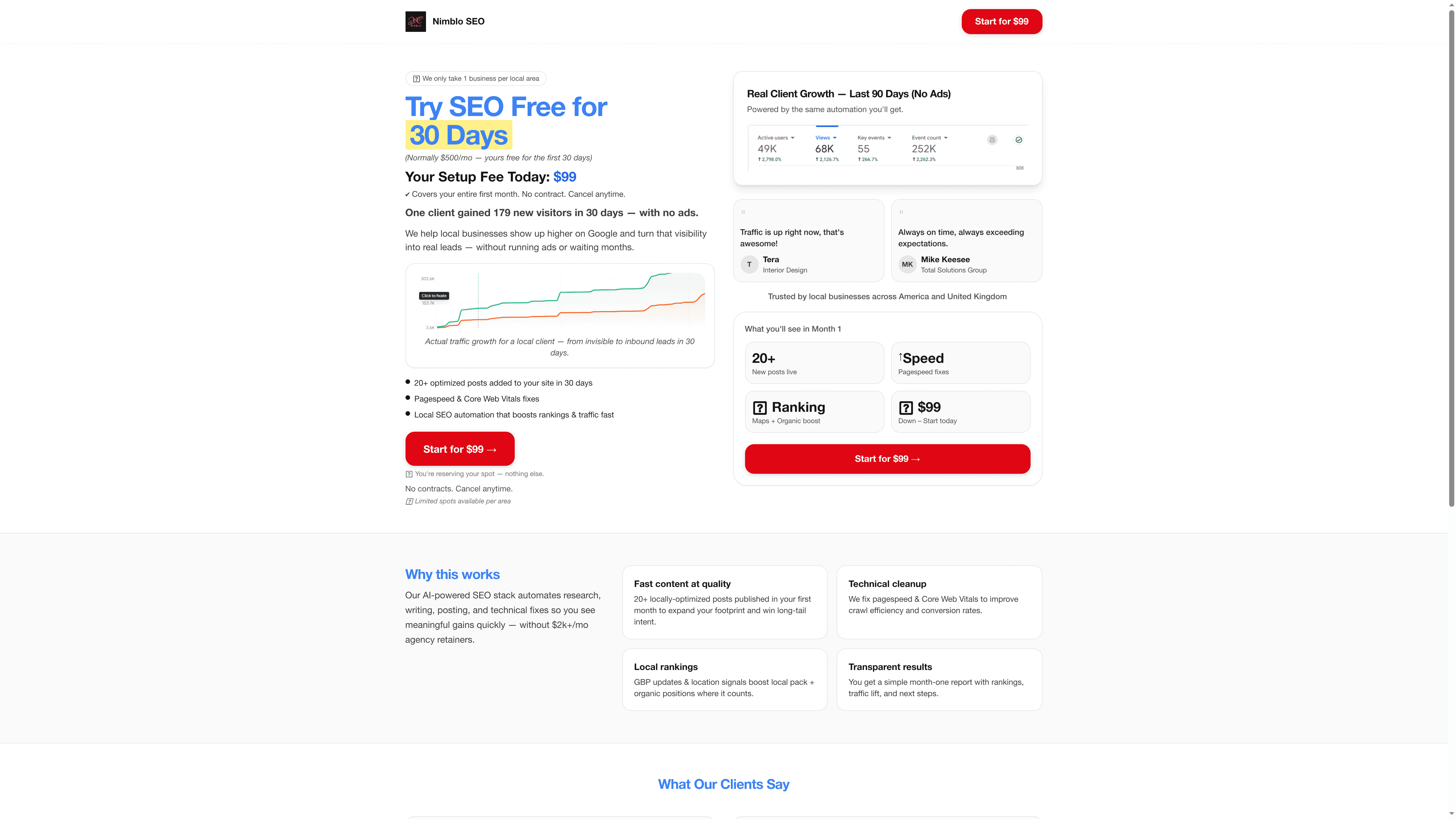
Don’t wait while your competitors capture valuable local customers. Experience cost-effective expert-level SEO and website management tailored for Florida SMBs. Visit Nimblo.ai to get started and see measurable improvements in lead growth and online conversions today.
Frequently Asked Questions
What is website optimization?
Website optimization is a strategic approach to improving a website’s performance, functionality, and value delivery to users and businesses. It focuses on enhancing web performance to create faster, more responsive online experiences.
Why is website speed important for optimization?
Website speed is crucial because it affects user engagement and retention. A faster website leads to lower bounce rates, higher visitor satisfaction, and improved conversion rates.
What are the key components of effective website optimization?
Key components of effective website optimization include page speed, mobile responsiveness, SEO enhancement, content optimization, and user experience design. These elements work together to improve overall digital performance.
How can web analytics aid in website optimization?
Web analytics helps businesses measure, collect, and analyze web data to gain insights into user behavior. This information is critical for identifying performance issues and making data-driven improvements to optimize the website continuously.