
A slow website can cost an american small business up to 7 percent in lost conversions for every extra second it takes to load. For Florida business owners in the service industry, understanding website performance basics is the first step to staying competitive and keeping visitors engaged. This guide breaks down the essential metrics and strategies that help improve speed, boost user experience, and make lead generation easier than ever.
Table of Contents
- Understanding Website Performance Basics
- Types of Website Performance Metrics
- How Performance Impacts SEO and Conversions
- Key Requirements for High-Speed Websites
- Common Pitfalls and Costly Mistakes
- Comparing Performance Optimization Alternatives
Key Takeaways
| Point | Details |
|---|---|
| Website Performance Matters | Fast loading times and responsiveness are crucial for retaining visitors and boosting conversion rates. Regular audits and testing are essential for optimization. |
| Track Key Metrics | Monitor KPIs such as page load time, bounce rate, and HTTP requests to ensure effective site performance. Utilize tools for comprehensive insights and improvements. |
| Impact on SEO and Conversions | Website speed influences both search engine rankings and user actions. Even minor delays can significantly impact conversion rates and revenue. |
| Avoid Common Mistakes | Small businesses must focus on mobile optimization and thorough performance testing to prevent losing potential customers due to slow or poorly designed websites. |
Understanding Website Performance Basics
Website performance represents the speed, responsiveness, and overall user experience of a website. For Florida Small and Medium Businesses (SMBs), understanding these fundamentals is critical to digital success. Web analytics provides essential insights into how users interact with online platforms, revealing opportunities for optimization.
At its core, website performance involves multiple technical and user experience factors. These include page load time, server response speed, content rendering efficiency, and interactive elements’ responsiveness. Websites that load quickly and provide smooth navigation tend to retain visitors more effectively, directly impacting conversion rates and business growth. Slow websites create frustration, with users typically abandoning pages that take more than three seconds to load.
Measuring website performance requires tracking specific metrics. Key performance indicators (KPIs) include page load time, time to first byte, total page size, number of HTTP requests, and user engagement metrics like bounce rate and average session duration. Website performance testing platforms help businesses understand real-world user experiences across different devices and network conditions, providing actionable insights for improvement.
Pro Tip: Conduct monthly website performance audits using free tools like Google PageSpeed Insights to identify and address potential optimization opportunities.
Types of Website Performance Metrics
Website performance metrics are critical diagnostic tools that help Florida small businesses understand their digital platform’s effectiveness. Web analytics provides comprehensive insights into how visitors interact with websites, revealing crucial performance indicators that directly impact business growth.
Key website performance metrics can be categorized into several important groups. User engagement metrics include bounce rate, average session duration, and pages per session, which measure how effectively a website captures and retains visitor attention. Technical performance metrics focus on speed and responsiveness, tracking elements like page load time, time to first byte, and server response speed. These metrics are essential because they directly influence user experience and search engine rankings.
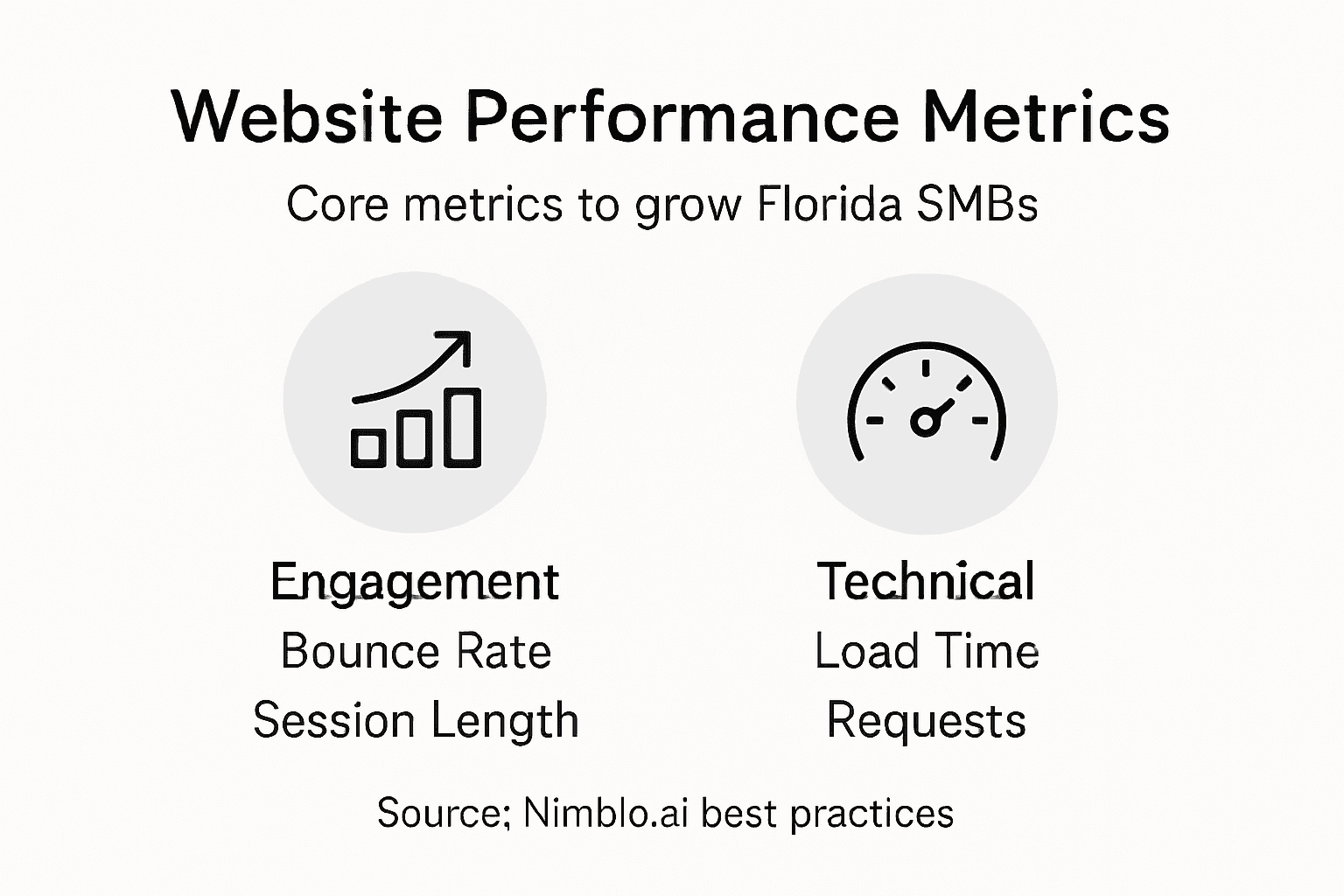
Website security and accessibility metrics represent another critical category of performance measurement. These include HTTPS implementation rates, accessibility compliance scores, and overall digital experience quality indicators. For Florida SMBs, understanding these metrics helps ensure websites are not just fast, but also secure and accessible to all potential customers. Performance metrics ultimately serve as a diagnostic tool, helping businesses identify areas for improvement and track the effectiveness of their digital strategies.
Pro Tip: Implement a monthly performance review process that systematically tracks and compares your key website metrics to identify trends and optimization opportunities.
Here’s a quick comparison of common website performance metrics and their business impact:
| Metric Type | Example Metric | Impact on Business |
|---|---|---|
| User Engagement | Bounce Rate | Shows visitor retention issues |
| Technical Performance | Page Load Time | Influences SEO and conversions |
| Security & Accessibility | HTTPS Use | Builds trust, protects data |
| Overall Experience | Accessibility Score | Expands customer reach |
How Performance Impacts SEO and Conversions
Website performance is a critical factor that directly influences both search engine optimization (SEO) and conversion rates for Florida small businesses. SEO performance metrics like PageRank, backlinks, and organic search traffic are fundamentally tied to how quickly and efficiently a website operates. Search engines prioritize websites that provide a smooth, fast user experience, meaning performance can make or break a business’s online visibility.
The connection between website speed and conversion rates is particularly pronounced. Conversion rate optimization demonstrates that even minimal delays in page loading can dramatically reduce the likelihood of visitors completing desired actions. Research shows that a one-second delay in page load time can decrease conversions by up to 7%, which translates to significant potential revenue loss for small businesses. Faster websites not only rank better in search results but also create a more positive user experience that encourages visitors to engage with your content and take action.
Technical performance factors such as mobile responsiveness, server response time, and content rendering speed play crucial roles in both SEO and conversion optimization. Search engines like Google use these performance metrics as key ranking signals, meaning a slow or poorly optimized website will be pushed down in search results. For Florida SMBs, this means investing in website performance is not just about user experience, but about maintaining competitive visibility in an increasingly digital marketplace.
Pro Tip: Conduct quarterly performance audits using tools like Google PageSpeed Insights to systematically identify and address website speed and optimization opportunities.
Key Requirements for High-Speed Websites
Building a high-speed website for Florida small businesses requires a comprehensive approach that goes beyond simple design considerations. Website development requirements encompass multiple critical elements that ensure optimal performance, security, and user experience. These requirements are not just technical specifications but strategic decisions that directly impact a business’s online success.

The fundamental requirements for high-speed websites include robust technical infrastructure and user-centric design principles. Mobile responsiveness is paramount, with websites needing to load quickly and function seamlessly across smartphones, tablets, and desktop computers. Comprehensive website checklists highlight the importance of secure data transmission through HTTPS, clear navigation structures, and accessibility compliance. These elements work together to create websites that are not just fast, but also trustworthy and inclusive.
Performance optimization involves strategic technical choices. This includes selecting efficient hosting solutions, implementing content delivery networks (CDNs), minimizing HTTP requests, compressing images, leveraging browser caching, and using modern, lightweight coding practices. For Florida SMBs, these technical considerations translate directly into tangible business benefits: faster load times, improved search engine rankings, higher user engagement, and increased conversion potential. Every millisecond of loading time can mean the difference between capturing a potential customer or losing them to a competitor.
Pro Tip: Invest in regular website performance testing using tools like Google PageSpeed Insights to continuously monitor and improve your website’s speed and user experience.
Common Pitfalls and Costly Mistakes
Florida small businesses often encounter significant website performance challenges that can dramatically impact their digital success. Website development mistakes frequently stem from poor planning, inadequate governance, and neglecting early problem detection. These errors can transform what should be a strategic asset into a costly liability, undermining a business’s online credibility and potential for growth.
Common performance mistakes often revolve around technical oversights that seem minor but create substantial operational challenges. Many Florida SMBs underestimate the importance of mobile optimization, accessibility standards, and comprehensive performance testing. Overlooking these critical aspects can result in websites that load slowly, frustrate users, and ultimately drive potential customers away. Uncompressed images, excessive HTTP requests, and poorly implemented caching mechanisms are typical culprits that significantly degrade website performance.
The financial and reputational consequences of these mistakes can be severe. A sluggish website not only reduces search engine rankings but also directly impacts conversion rates. Studies show that even a one-second delay can decrease customer satisfaction by 16% and potential conversion rates by 7%. For Florida small businesses operating in competitive markets, these performance issues represent more than technical challenges they are direct threats to business growth and sustainability. Proactive identification and resolution of these common pitfalls are essential for maintaining a robust, high-performing online presence.
Pro Tip: Conduct monthly comprehensive website audits that systematically assess performance, security, and user experience to catch and resolve potential issues before they impact your business.
Comparing Performance Optimization Alternatives
Performance optimization for Florida small business websites requires a strategic approach that evaluates multiple technological alternatives. Optimization software and frameworks range from free open-source solutions to sophisticated commercial tools, each offering unique advantages for improving website speed and functionality. Understanding these alternatives helps businesses make informed decisions that balance technical effectiveness with budget constraints.
The landscape of performance optimization encompasses various technical strategies. Optimization algorithms differ significantly in their approach, covering discrete, continuous, and nonconvex optimization techniques. For Florida SMBs, this means considering options like content delivery networks (CDNs), advanced caching mechanisms, image compression tools, and server-side optimization frameworks. Each alternative presents trade-offs between implementation complexity, cost, and potential performance gains. Critical factors include scalability, ease of integration, and the specific performance bottlenecks unique to each business website.
When comparing optimization alternatives, businesses must look beyond immediate technical specifications and consider long-term strategic value. Open-source solutions might offer cost savings but require more technical expertise, while commercial platforms provide comprehensive support and easier implementation. The most effective approach often involves a hybrid strategy that combines multiple optimization techniques tailored to the specific needs of a Florida small business. This might include leveraging cloud-based performance tools, implementing progressive web app technologies, and utilizing intelligent caching strategies that adapt to changing user behaviors.
Consider these optimization strategies for Florida SMBs and how they differ:
| Approach | Cost Level | Technical Skill Needed | Performance Benefit |
|---|---|---|---|
| Open Source Tools | Low | Moderate to High | Flexible, high customization |
| Commercial Platforms | Medium to High | Low to Moderate | Fast deployment, support included |
| Hybrid Approach | Variable | Moderate | Balanced, adapts over time |
Pro Tip: Create a performance optimization matrix that scores potential solutions across key metrics like cost, implementation complexity, expected performance improvement, and ongoing maintenance requirements.
Unlock High-Speed Website Performance for Your Florida SMB Today
Florida small businesses face critical challenges like slow page load times, poor mobile responsiveness, and ineffective local SEO that can drive customers away. The article highlights how website performance metrics such as page load time and mobile optimization directly affect your SEO and conversion rates. Achieving fast, secure, and accessible websites is essential to compete in today’s digital marketplace.
Nimblo.ai offers an all-in-one SaaS solution designed specifically for Florida SMBs to overcome these performance pitfalls. With AI-powered local SEO, schema markup, and conversion-optimized web design, Nimblo.ai ensures your website not only loads quickly but also ranks higher in search engines and engages visitors effectively. Stop juggling multiple costly tools or agencies and start gaining measurable lead growth with a single, easy-to-use platform tailored to your local market.
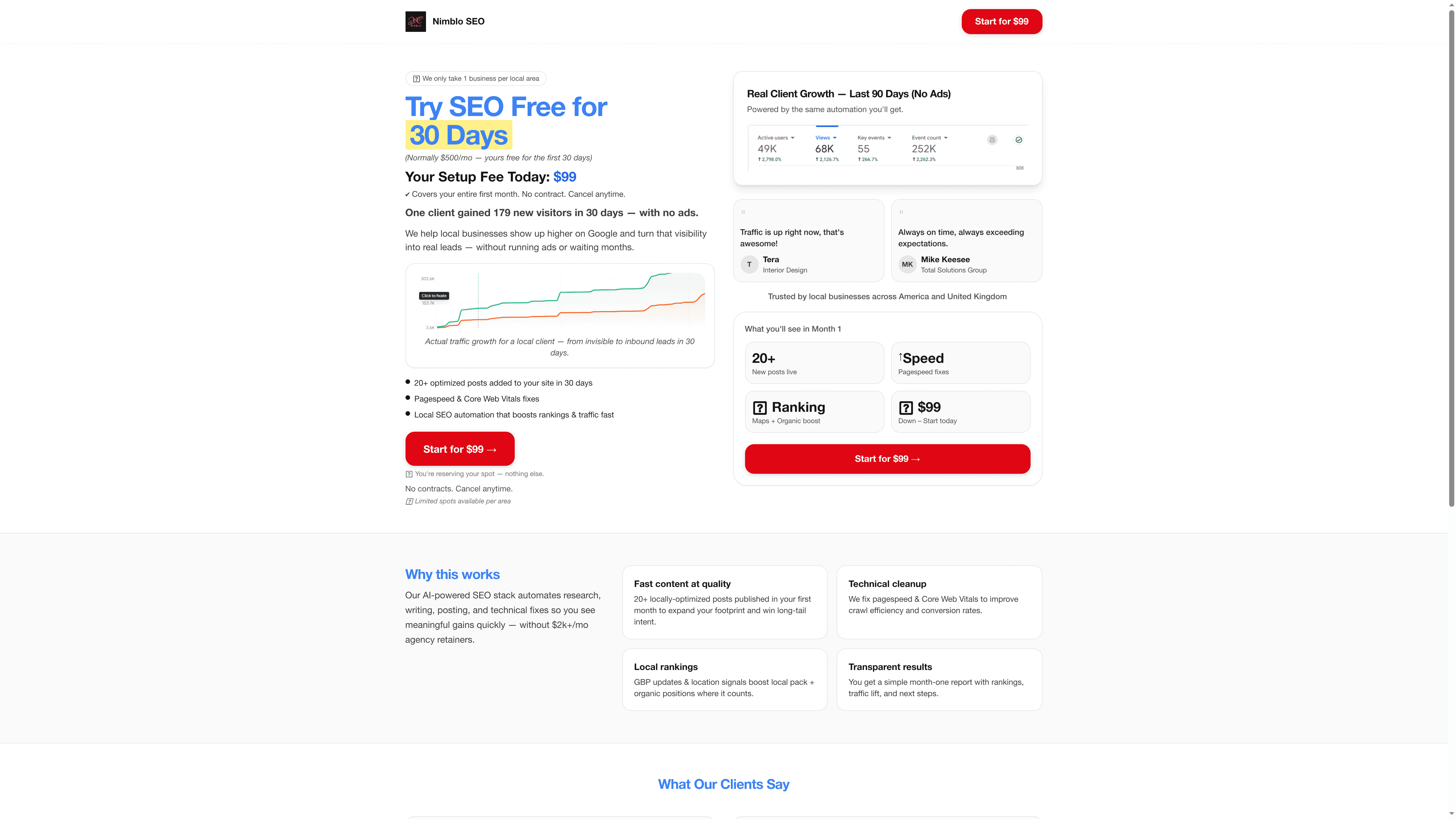
Ready to boost your website speed and grow your business with proven local SEO strategies? Explore how Nimblo.ai consolidates SEO, CRM, automation, and high-speed website performance into one affordable service at Nimblo.ai. Take control of your digital success and start seeing real results now by visiting our platform and learning more here. Don’t let slow performance cost you customers—act today!
Frequently Asked Questions
What are the key metrics to measure website performance?
Key metrics include page load time, time to first byte, total page size, number of HTTP requests, bounce rate, and average session duration. Monitoring these metrics helps identify areas for improvement.
How does website performance impact SEO?
Website performance affects SEO because search engines prioritize fast-loading sites. Improved speed can enhance search rankings, making your website more visible to potential customers.
What are some common pitfalls in website performance that small businesses should avoid?
Common pitfalls include neglecting mobile optimization, overlooking image compression, and failing to implement caching strategies. These mistakes can lead to slow load times and decreased user satisfaction.
How can small businesses optimize their website performance effectively?
Small businesses can optimize performance by using content delivery networks (CDNs), implementing browser caching, minimizing HTTP requests, and regularly testing their website with tools like Google PageSpeed Insights.
Recommended
- 7 Website Speed Optimization Tips for Florida SMBs – Nimblo
- Website Optimization Explained: Boosting Florida SMB Growth – Nimblo
- Master Website Design Best Practices for SMB Success – Nimblo
- Website Management for SMBs – Streamlining Florida Growth – Nimblo
- The Essential Guide to Website Role in Business Growth – Lind Creative
- Case Study: Transforming a Local Business with Effective Website Redesign & SEO
- Web Analytics: Boosting Online Performance for SMEs | Kickass Online