
Over 90 percent of American small businesses report that managing digital marketing and lead generation eats up their valuable time. For Florida service providers, this challenge is even more pressing with constant client demands and fierce regional competition. A smart all-in-one SaaS solution can clear away much of the complexity. Discover how adopting the latest American cloud-based software makes it easier to connect with customers, simplify daily operations, and finally focus on growing your business profitably.
Table of Contents
- Defining B2B SaaS for Small Businesses
- Types of B2B SaaS Solutions Explained
- Core Features and How Platforms Work
- Key Benefits for Florida Service SMBs
- Costs, Common Mistakes, and What to Avoid
Key Takeaways
| Point | Details |
|---|---|
| B2B SaaS Revolutionizes Access | B2B SaaS enables small businesses to utilize cloud-based applications without significant upfront costs, enhancing competitiveness. |
| Diverse Solutions for Specific Needs | Various B2B SaaS categories address different operational areas, such as CRM, Project Management, and Marketing Automation. |
| Strategic Implementation Essential | Careful evaluation of needs, platform capabilities, and onboarding processes is crucial for successful SaaS integration. |
| Cost Management is Critical | Regular audits and understanding total costs, including hidden expenses, help prevent overspending and optimize resources. |
Defining B2B SaaS for Small Businesses
B2B SaaS represents a transformative digital solution where businesses access cloud-based software applications over the internet through subscription models. Unlike traditional software requiring complex local installations, SaaS platforms deliver comprehensive tools directly through web browsers, enabling small businesses to leverage advanced technologies without significant upfront investments.
For Florida small businesses, B2B SaaS offers incredible flexibility by providing scalable software solutions that adapt to changing operational needs. These cloud-based services cover critical business functions like customer relationship management, marketing automation, project tracking, and communication tools. Small businesses can now access enterprise-grade software previously affordable only to large corporations, leveling the competitive playing field.
The core advantages of B2B SaaS for small businesses include automatic updates, reduced IT maintenance costs, seamless integration capabilities, and pay-as-you-go pricing models. Cloud computing services eliminate the need for expensive hardware investments, allowing companies to access sophisticated software through simple internet connections. This approach dramatically reduces technological barriers and enables small businesses to implement cutting-edge tools without complex technical expertise.
Pro tip: When evaluating B2B SaaS solutions, prioritize platforms offering comprehensive features, transparent pricing, and scalable options that can grow alongside your business needs.
Types of B2B SaaS Solutions Explained
B2B SaaS solutions represent a diverse ecosystem of cloud-based software applications designed to address specific business operational needs. These platforms can be categorized into several critical functional areas that help small businesses streamline their processes and enhance productivity. Comprehensive SaaS solutions typically fall into distinct categories tailored to different business requirements.
The primary types of B2B SaaS solutions include Customer Relationship Management (CRM) platforms, which help businesses track and manage customer interactions, sales pipelines, and communication workflows. Project Management tools enable teams to collaborate, track progress, and manage complex workflows efficiently. Enterprise Resource Planning (ERP) systems provide integrated management of core business processes, while Marketing Automation platforms help companies streamline their digital marketing efforts, track campaign performance, and generate leads more effectively.

Additionally, multi-tenant software applications offer specialized solutions across various domains. These include file hosting services, communication platforms, accounting and financial management tools, human resources management systems, and inventory tracking software. For Florida small businesses, these solutions provide flexible, scalable technology that can adapt to changing operational needs without requiring significant upfront technology investments.
Here is a comparison of the main categories of B2B SaaS solutions for small businesses:
| Solution Type | Main Purpose | Typical Use Case | Common Impact |
|---|---|---|---|
| CRM | Manage customer interactions | Track leads and sales | Increases customer retention |
| Project Management | Organize workflows | Team collaboration on projects | Boosts productivity |
| ERP | Integrate core processes | Automate finance and inventory | Improves resource allocation |
| Marketing Automation | Streamline campaigns | Automate email and social media | Expands customer reach |
| HR Management | Manage employee data | Payroll, benefits, recruitment | Reduces HR overhead |
| Accounting/Finance | Track financials | Bookkeeping, invoicing | Enhances cash flow control |
Pro tip: Evaluate SaaS solutions by assessing their integration capabilities, scalability, user interface, and alignment with your specific business processes to ensure maximum efficiency and return on investment.
Core Features and How Platforms Work
B2B SaaS platforms operate on a sophisticated cloud infrastructure that transforms how businesses access and utilize software technologies. Cloud-based software solutions fundamentally change traditional software deployment by eliminating complex local installations and providing seamless, internet-accessible applications through subscription models.
The core features of SaaS platforms include multi-tenant architecture, which allows multiple users to access the same application simultaneously while maintaining individual data privacy and security. Automatic updates ensure that businesses always have access to the latest features and security patches without manual intervention. Scalability enables companies to adjust their software usage based on changing business needs, allowing small businesses to expand or contract their technological resources without significant upfront investments.
Remote accessibility stands as another critical feature of SaaS platforms. Multi-tenant software infrastructure enables users to access their business tools from any device with an internet connection, supporting modern distributed and remote work environments. These platforms typically offer robust security protocols, centralized data management, continuous backup systems, and integrated collaboration tools that help Florida small businesses maintain operational efficiency and competitive agility.
Pro tip: Prioritize SaaS platforms that offer comprehensive integration capabilities, allowing seamless connection with your existing business tools and workflows to maximize operational efficiency.
Key Benefits for Florida Service SMBs
Small and medium-sized businesses in Florida face unique challenges that demand flexible, cost-effective technological solutions. B2B SaaS platforms offer transformative benefits specifically designed to address the nuanced needs of service-based businesses across the Sunshine State. These innovative software solutions enable companies to compete effectively in increasingly digital markets without requiring substantial upfront technology investments.
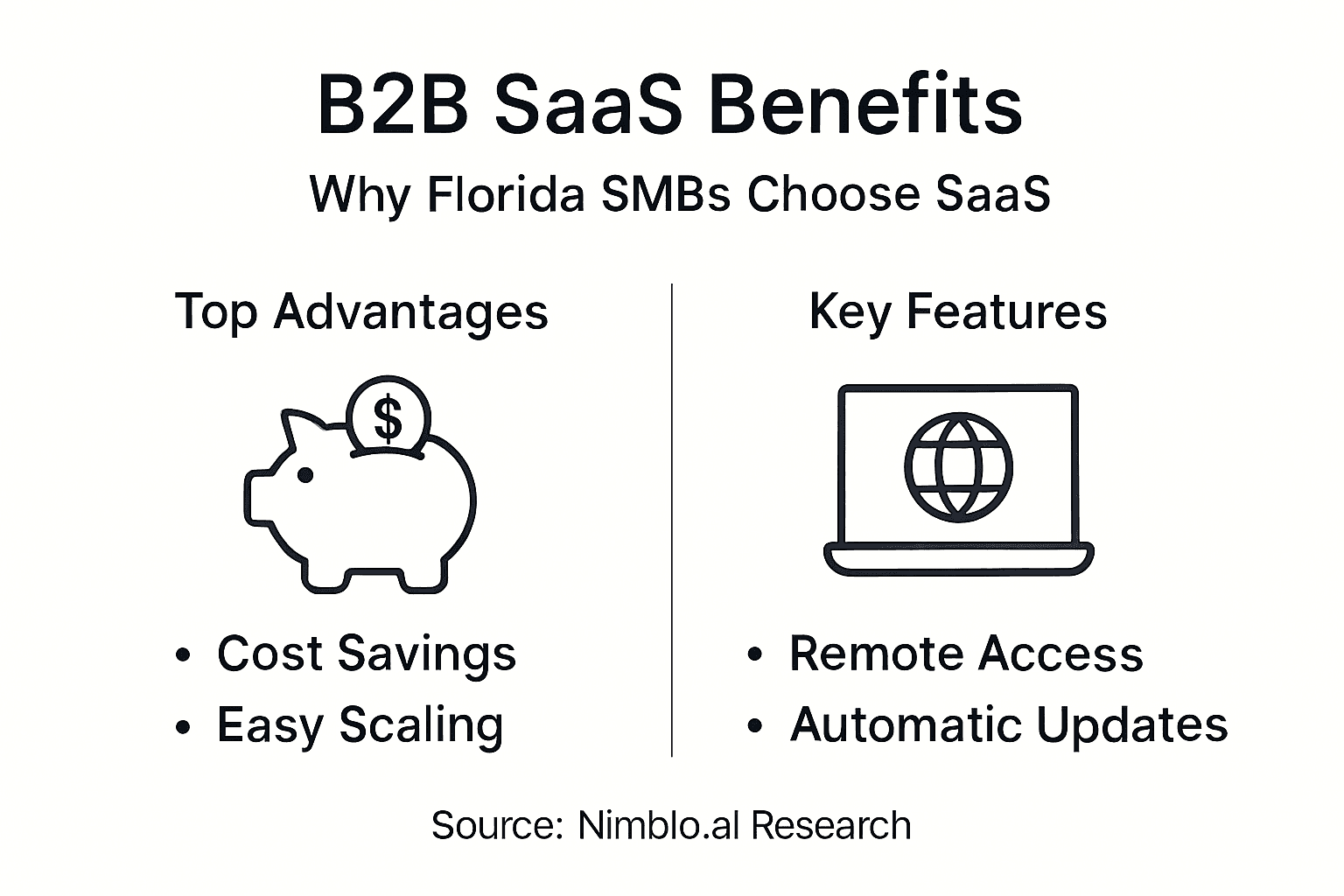
The primary advantages include significant cost reduction, allowing Florida service SMBs to access enterprise-grade tools at a fraction of traditional software implementation costs. By leveraging cloud-based platforms, businesses can rapidly scale their technological capabilities, implement advanced customer relationship management systems, and streamline operational workflows. Remote accessibility and real-time collaboration features enable service businesses to manage teams, track projects, and engage customers from anywhere in Florida, supporting the state’s diverse and dynamic business landscape.
Scalable technology platforms provide Florida service SMBs with critical competitive advantages. These solutions offer integrated marketing tools, automated customer engagement systems, and data analytics capabilities that were previously accessible only to large corporations. Small businesses can now optimize their digital presence, track performance metrics, manage customer interactions, and make data-driven decisions with unprecedented efficiency and precision.
Pro tip: Conduct a comprehensive audit of your current business processes to identify specific technological gaps where SaaS solutions can deliver the most immediate and impactful improvements.
Costs, Common Mistakes, and What to Avoid
Navigating the B2B SaaS landscape requires strategic financial planning and a nuanced understanding of potential pitfalls. B2B SaaS product costs can quickly escalate beyond initial expectations, making it crucial for Florida small businesses to approach technological investments with careful consideration and comprehensive analysis.
Several critical mistakes can derail a small business’s SaaS implementation strategy. Underestimating customer onboarding complexity often leads to frustrated users and higher churn rates. Companies frequently make the error of selecting platforms without thoroughly evaluating their specific operational needs, resulting in expensive subscriptions for tools that provide minimal actual value. Other common missteps include failing to negotiate flexible contract terms, overlooking integration capabilities with existing systems, and not conducting comprehensive user training.
Software licensing management represents another complex dimension that Florida SMBs must carefully navigate. Businesses should avoid over-deployment, which can create unnecessary compliance risks, and under-deployment, which wastes valuable financial resources. Understanding vendor terms, tracking actual usage metrics, and maintaining ongoing communication with finance and legal teams can help mitigate potential financial challenges. Smart businesses will invest time in evaluating total cost of ownership, including hidden expenses like training, potential customization, and long-term scalability.
Below is a summary of common B2B SaaS implementation mistakes and how to avoid them:
| Mistake | Why It Happens | Prevention Strategy |
|---|---|---|
| Underestimating onboarding needs | Insufficient training or support | Invest in user training resources |
| Poor platform selection | Lack of business needs analysis | Map features to specific processes |
| Ignoring integration capabilities | Overlook system compatibility | Review current software environment |
| Overpaying for subscriptions | No usage tracking or negotiation | Regular audits and flexible contracts |
| Mismanaging licenses | Unclear deployment or compliance | Track usage, consult legal/finance |
Pro tip: Conduct a comprehensive cost-benefit analysis that goes beyond monthly subscription prices, examining potential productivity gains, workflow efficiency improvements, and direct impact on revenue generation.
Unlock the Full Potential of B2B SaaS for Your Florida SMB
Many Florida small and medium businesses struggle with juggling multiple costly tools while trying to grow their digital presence and streamline operations. The challenge of integrating customer relationship management, marketing automation, and local SEO into one cohesive system often leads to wasted time and overspending. This is where B2B SaaS platforms that offer scalable, all-in-one solutions become critical to your business success.
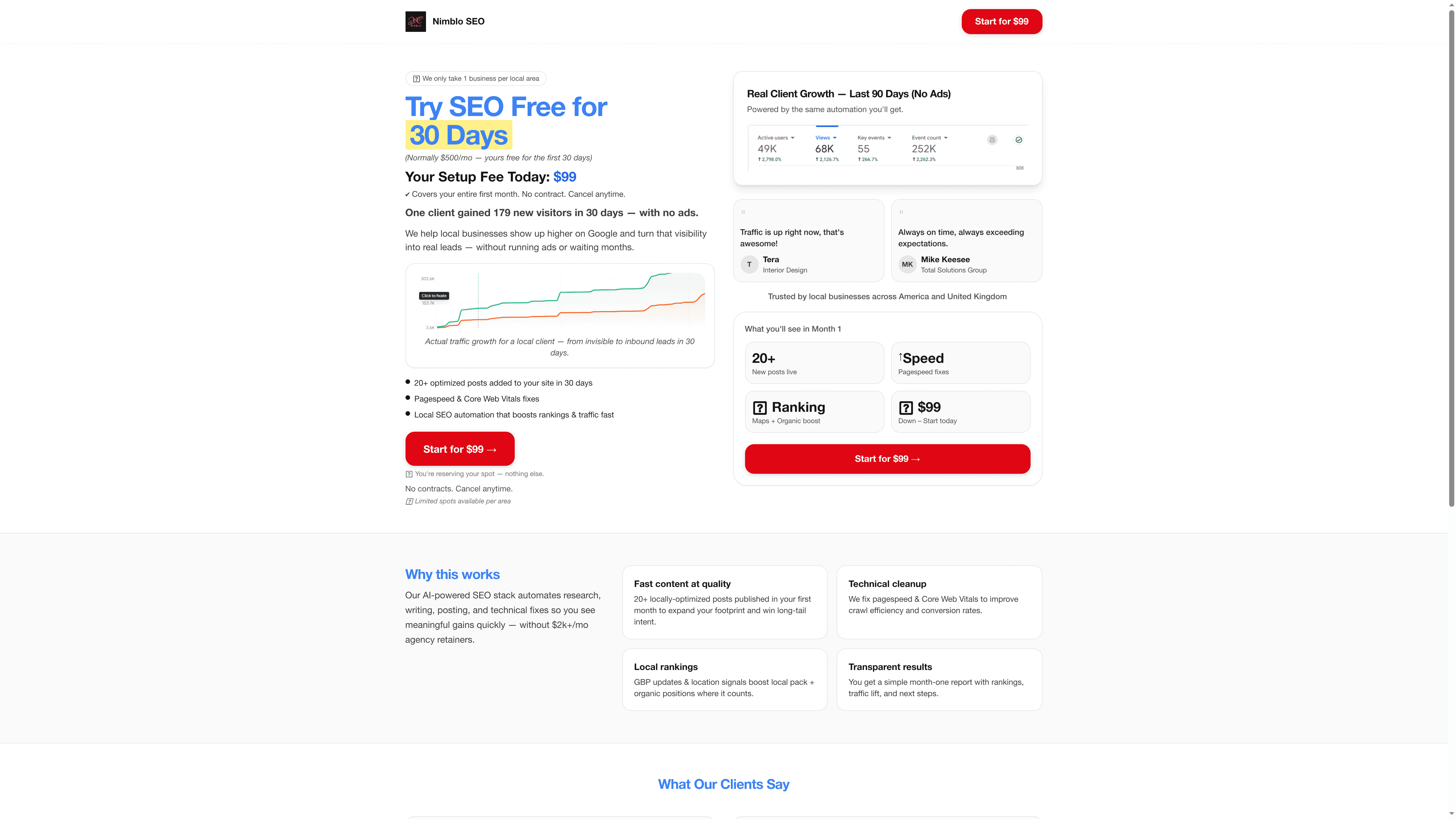
Discover how Nimblo.ai addresses these exact pain points by consolidating your SEO, website, CRM, and automation needs into a single platform tailored for Florida SMBs. With rapid setup, AI-powered local SEO, and automated lead generation, Nimblo empowers you to save costs while boosting your competitive edge. Ready to leave behind the complexity and expense of fragmented tools? Take the first step toward smarter growth by exploring Nimblo’s affordable SaaS platform today. Harness the power of seamless integration and local expertise to transform your business operations now.
Frequently Asked Questions
What is B2B SaaS?
B2B SaaS, or Business-to-Business Software as a Service, refers to cloud-based software applications that businesses can access over the internet through subscription models, eliminating the need for complex local installations.
How does B2B SaaS benefit small businesses?
B2B SaaS provides small businesses with access to enterprise-grade tools at lower costs, offering flexibility, scalability, and automation of various business processes without requiring significant upfront investments.
What types of B2B SaaS solutions are available for small businesses?
Small businesses can leverage various B2B SaaS solutions, including Customer Relationship Management (CRM), Project Management, Enterprise Resource Planning (ERP), Marketing Automation, and Human Resources Management systems to optimize their operations.
What should small businesses consider when choosing a B2B SaaS platform?
Small businesses should prioritize platforms that offer comprehensive features, transparent pricing, strong integration capabilities, and scalability to ensure they meet their evolving business needs.