
Growing a small business in Florida can feel overwhelming when you are juggling budgets and competing with bigger brands. Every owner wants solutions that cut costs without sacrificing quality or efficiency. By understanding white label marketing as a flexible approach that allows companies to rebrand products from established producers, you can expand your offerings, strengthen your digital presence, and improve your local SEO without heavy investment.
Table of Contents
- White Label Marketing Defined And Debunked
- Major Types And Real-World Examples
- How White Label Partnerships Operate
- Benefits For Florida Small Businesses
- Risks, Costs, And Common Pitfalls
- Comparing White Labeling To Alternatives
Key Takeaways
| Point | Details |
|---|---|
| White Label Marketing Defined | White label marketing allows one company to produce a product or service that another rebrands and sells, facilitating rapid market expansion with lower costs. |
| Advantages for Small Businesses | Florida small businesses benefit from reduced development costs and faster market entry by utilizing white label strategies, enhancing competitiveness within their local markets. |
| Partnership Dynamics | Successful white label partnerships hinge on clear communication and legal agreements, ensuring responsibilities and expectations are well defined between manufacturers and resellers. |
| Comparative Strategy Insights | Businesses must assess the trade-offs between white labeling, private labeling, and in-house development to determine the best approach for their growth objectives and market conditions. |
White Label Marketing Defined and Debunked
White label marketing represents a strategic business approach where one company produces a product or service that another company rebrands and sells as their own. This concept originated from the physical practice of using white labels on packaging that could be customized by different marketers.
At its core, white label marketing allows businesses to rapidly expand their product offerings without substantial upfront investment in development, manufacturing, or infrastructure. The key advantages include:
- Faster market entry
- Reduced production costs
- Minimal research and development expenses
- Ability to offer specialized services quickly
- Lower financial risk compared to creating products from scratch
White label products are distinctly different from private label offerings. While private labels are exclusive to a single retailer, white label products can be sold by multiple companies simultaneously. This flexibility makes white labeling particularly attractive for small businesses seeking to diversify their service portfolio.
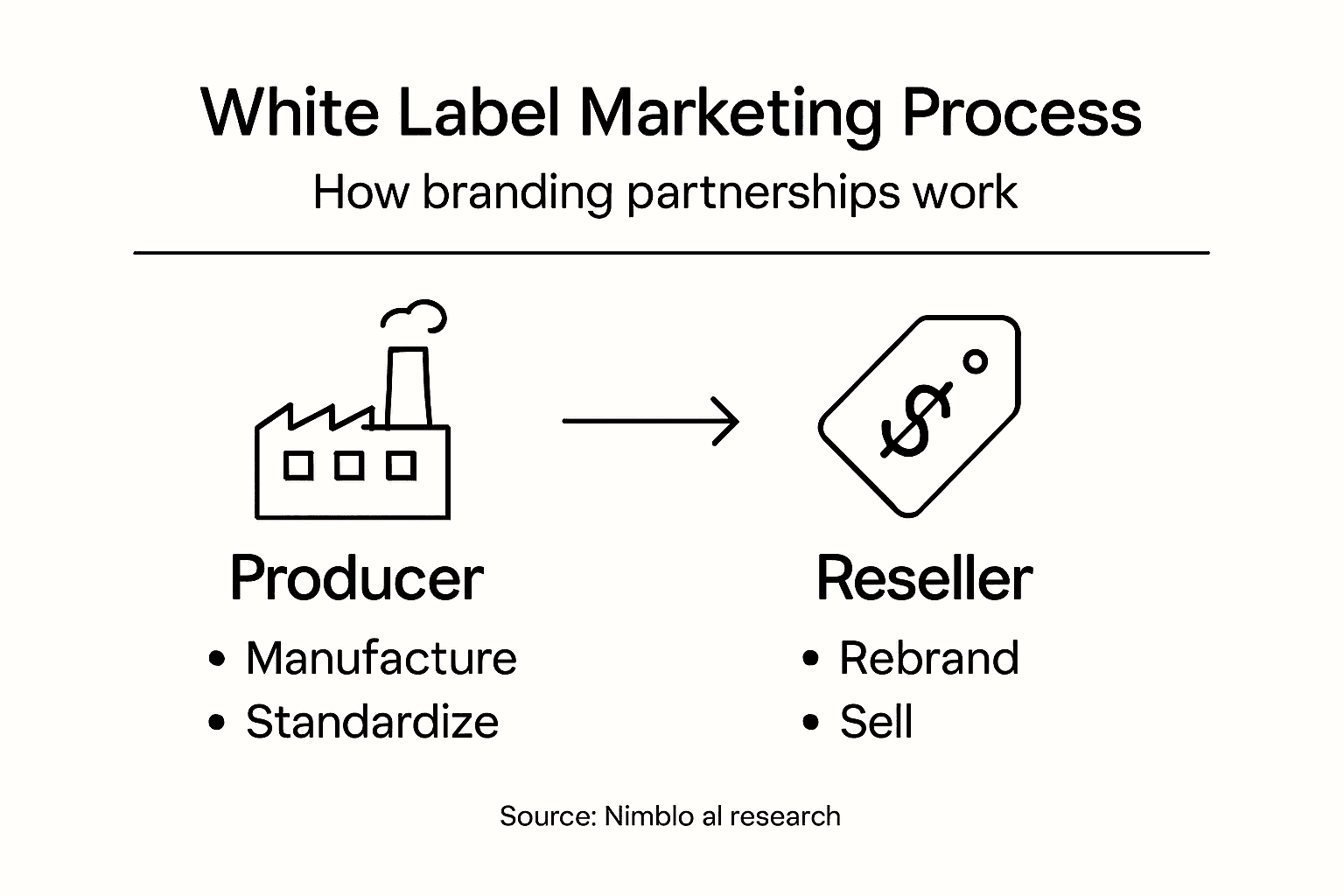
The process typically involves a production company creating a standardized product or service that can be easily branded and marketed by resellers. Software, digital marketing tools, consumer electronics, and banking services are common sectors where white labeling thrives. Resellers can focus on marketing and sales while the original manufacturer handles production and backend operations.
Pro tip: Before adopting a white label strategy, carefully evaluate the reputation and quality of your potential production partner to ensure alignment with your brand standards.
Major Types and Real-World Examples
White label marketing encompasses multiple strategic approaches that enable businesses to expand their product and service offerings efficiently. Various white label product categories provide flexibility for companies across different industries to quickly bring solutions to market without extensive development costs.
The primary types of white label marketing include:
- Product White Labeling: Physical goods manufactured by one company and rebranded by another
- Service White Labeling: Professional services outsourced and rebranded under a different company’s name
- Digital White Labeling: Software, marketing tools, and technological solutions sold under a reseller’s brand
- Software as a Service (SaaS) White Labeling: Pre-built software platforms customized and marketed by different companies
Real-world examples demonstrate the versatility of white labeling across multiple sectors. Retail and technology industries frequently leverage this strategy to offer diverse product lines. Grocery stores often sell their own branded products manufactured by third-party producers, while technology firms white-label software solutions that can be customized and resold by different companies.
Consumer product categories particularly suited to white labeling include:
- Cosmetics and skincare
- Fitness and athletic apparel
- Electronics accessories
- Household goods
- Pet accessories
- Reusable consumer products
These product categories allow businesses to rapidly introduce branded offerings without significant upfront manufacturing investments. Entrepreneurs and small businesses can quickly establish product lines by partnering with established manufacturers who handle production complexities.
Pro tip: Before selecting a white label product category, thoroughly research market demand, potential profit margins, and the reputation of your manufacturing partner.
How White Label Partnerships Operate
White label partnerships represent complex strategic collaborations where businesses seamlessly integrate production and branding capabilities. White label agreements establish critical frameworks that define the operational dynamics between manufacturers and resellers, ensuring clear expectations and legal protections.
The typical white label partnership involves several key stages:
- Partner Selection
- Product/Service Specification
- Branding Customization
- Quality Control
- Distribution and Sales
Legal frameworks play a crucial role in structuring these partnerships. The agreements typically cover critical aspects such as:
- Intellectual property rights
- Branding guidelines
- Pricing structures
- Quality control standards
- Manufacturing responsibilities
- Sales and marketing permissions
White label production processes fundamentally operate through a collaborative model where the producer handles manufacturing complexities while the reseller focuses on market positioning and customer relationships. This division of responsibilities allows businesses to scale rapidly without significant upfront investments in infrastructure or production capabilities.
Successful white label partnerships require transparent communication, aligned business goals, and robust legal documentation. The most effective collaborations emerge when both parties understand their specific roles, maintain high-quality standards, and create mutually beneficial economic arrangements.
This table summarizes the operational roles in a typical white label partnership:
| Role | Manufacturer Responsibility | Reseller Responsibility |
|---|---|---|
| Production | Product creation, quality checks | Branding, market positioning |
| Legal & Compliance | Contract, IP, regulatory oversight | Brand guidelines, marketing permissions |
| Distribution | Shipping and logistics | Sales, customer relationships |
| Support | Technical and service support | Client communications |
Pro tip: Always draft comprehensive legal agreements that explicitly outline each party’s responsibilities, performance expectations, and potential dispute resolution mechanisms.
Benefits for Florida Small Businesses
White label marketing offers Florida small businesses a strategic pathway to rapid growth and competitive positioning. Small business scaling strategies enable local entrepreneurs to expand their service offerings without substantial upfront investments, creating opportunities for market differentiation.
The key advantages for Florida small businesses include:
- Reduced product development costs
- Faster market entry
- Minimal manufacturing infrastructure requirements
- Enhanced brand diversification
- Lower financial risk
- Increased competitive capabilities
Operational benefits are particularly compelling for small businesses across Florida’s diverse economic landscape. Cost reduction strategies allow companies to allocate resources more strategically, focusing on marketing, customer relationships, and local market penetration rather than complex production processes.
By leveraging white label marketing, Florida small businesses can effectively level the playing field against larger competitors. This approach enables smaller enterprises to offer professional-grade products and services without enormous capital expenditures, creating opportunities for innovative local companies in markets ranging from Tampa to Miami, Orlando to Jacksonville.

The flexibility of white label partnerships empowers small businesses to test new market segments, experiment with product lines, and rapidly adapt to changing consumer demands. Local entrepreneurs can quickly pivot their offerings, maintaining agility in Florida’s dynamic business environment.
Pro tip: Conduct thorough due diligence on potential white label partners, ensuring their product quality and reputation align with your brand’s standards and local market expectations.
Risks, Costs, and Common Pitfalls
White label marketing, while promising, presents significant challenges that Florida small businesses must carefully navigate. Platform integration challenges can quickly derail even the most promising white label strategies, requiring strategic planning and thorough due diligence.
Key risks and potential pitfalls include:
- Hidden platform fees and transaction costs
- Complex regulatory compliance requirements
- Potential brand reputation damage
- Limited customization options
- User migration and retention difficulties
- Unexpected technical integration challenges
Financial considerations are particularly critical for small businesses. Security and compliance risks demand substantial investment in robust systems and ongoing monitoring to prevent potential legal and operational complications.
The most common mistakes Florida entrepreneurs make involve underestimating the complexity of white label partnerships. Businesses often fail to conduct comprehensive due diligence, overlooking critical details such as performance metrics, scalability, and long-term support capabilities. These oversights can lead to significant financial losses and strategic missteps that compromise business growth.
Successful white label implementation requires a strategic approach that balances cost-efficiency with quality control. Small businesses must meticulously evaluate potential partners, understanding their technological capabilities, compliance standards, and track record of supporting small business needs.
Pro tip: Create a detailed checklist of technical, legal, and financial requirements before entering any white label partnership, and always include clear exit strategies in your initial agreements.
Comparing White Labeling to Alternatives
Understanding the nuanced differences between white labeling and alternative business strategies is crucial for Florida small businesses seeking optimal growth pathways. Product branding strategies reveal distinct approaches that can significantly impact market positioning and operational efficiency.
Key comparative dimensions include:
- Market entry speed
- Development costs
- Brand customization levels
- Product exclusivity
- Operational complexity
- Financial investment requirements
White labeling fundamentally differs from private labeling in several critical aspects. Customization and control options demonstrate that while white label products offer rapid market deployment, private label alternatives provide deeper brand differentiation and more granular product control.
Compared to developing products from scratch, white labeling presents a middle ground between complete outsourcing and full internal production. Small businesses gain access to pre-manufactured solutions with minimal upfront investment, allowing faster scaling compared to traditional product development models. Private labeling, in contrast, demands more substantial initial investments but offers greater brand-specific customization.
Here’s a quick comparison of white label, private label, and in-house product strategies for small businesses:
| Strategy | Branding Control | Upfront Investment | Market Entry Speed |
|---|---|---|---|
| White Label | Moderate – shared branding | Low to moderate | Fast |
| Private Label | High – exclusive branding | Moderate to high | Moderate |
| In-House Development | Full customization | High | Slow to moderate |
The strategic choice between white labeling, private labeling, and internal product development depends on multiple factors including available capital, desired market positioning, timeline, and specific business objectives. Florida entrepreneurs must carefully evaluate their unique context, considering factors like local market dynamics, target customer preferences, and long-term growth strategies.
Pro tip: Conduct a comprehensive cost-benefit analysis comparing white labeling, private labeling, and in-house development before committing to any single strategy.
Unlock Fast Growth with White Label Marketing and Nimblo.ai
The article explains the benefits of white label marketing for Florida small businesses including faster market entry, reduced costs, and enhanced brand diversification. Yet it also highlights challenges like managing multiple tools, ensuring local SEO, and maintaining automation at scale. If you want to avoid the pitfalls of juggling fragmented marketing platforms while embracing the power of streamlined services, your solution is right here.
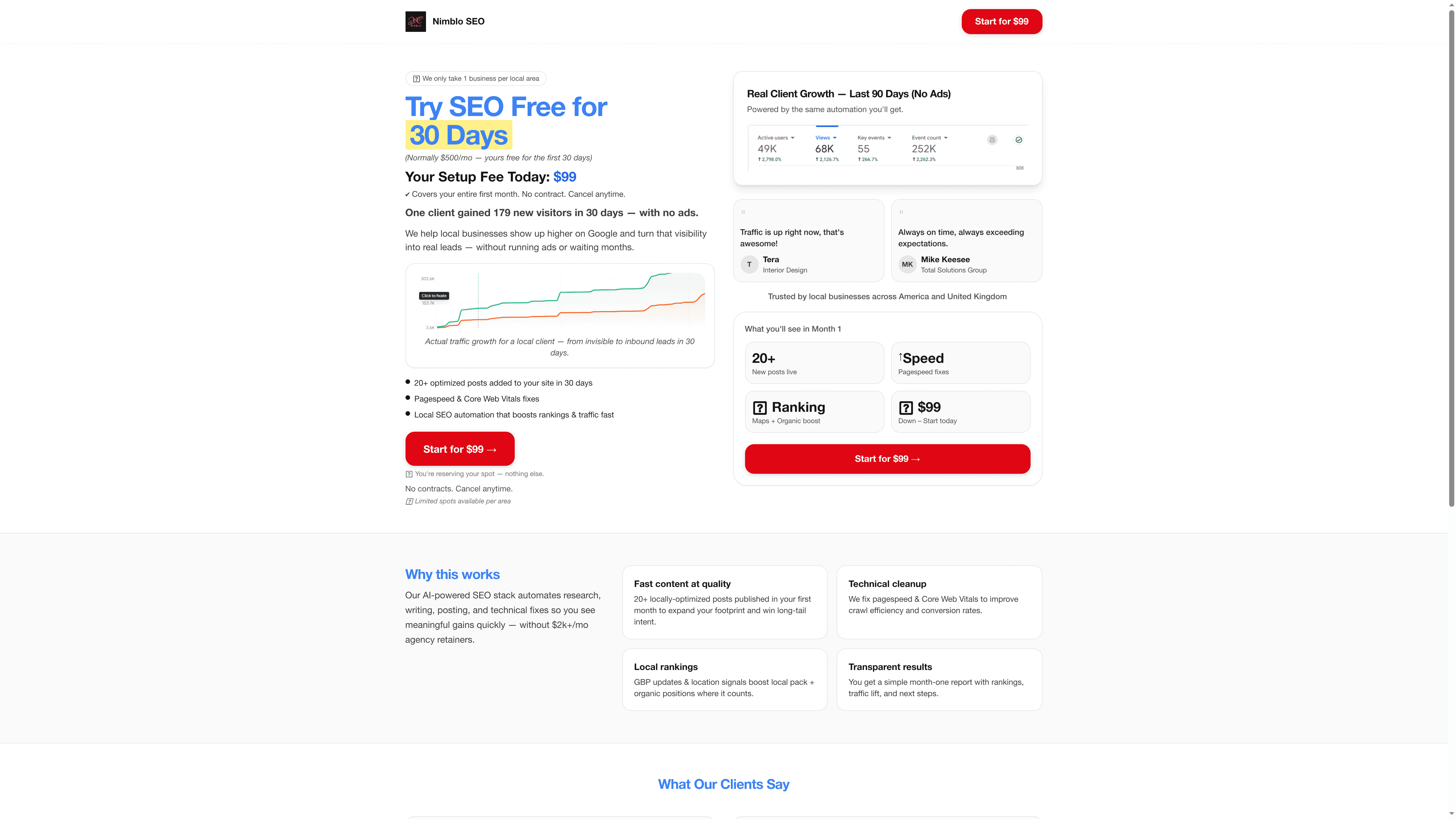
Discover how Nimblo.ai offers an all-in-one SaaS platform that simplifies your marketing stack. Get rapid setup, AI-powered local SEO optimized for Florida markets, automated lead generation, and a high-speed website all in one affordable package. Take control of your digital presence with fewer headaches, no contracts, and measurable results proven by local clients. Start growing your business today with Nimblo.ai All-In-One Marketing Platform and see how easy it is to convert leads and save on costs.
Frequently Asked Questions
What is white label marketing?
White label marketing is a business strategy where one company produces a product or service that another company rebrands and sells as its own, allowing for rapid market entry and reduced costs.
How does white label marketing differ from private label marketing?
White label products can be sold by multiple companies, while private label products are exclusive to a single retailer. This gives white label products more versatility in the market.
What are the benefits of white label marketing for small businesses?
White label marketing allows small businesses to expand their service offerings without significant upfront investments, providing advantages like faster market entry, reduced production costs, and lower financial risks.
What are the potential risks associated with white label marketing?
Potential risks include hidden costs, complex compliance requirements, and possible damage to brand reputation. Businesses must conduct thorough due diligence to mitigate these challenges.