
Managing customer relationships can feel overwhelming for Florida small business owners when each marketing platform pulls you in a different direction. Keeping brand messaging consistent while juggling in-person events, social media, and your website often leads to confusion and missed opportunities. By adopting omnichannel marketing, you can combine your digital and physical efforts into a seamless customer experience that builds loyalty and supports local SEO—without adding unnecessary complexity or costs.
Table of Contents
- Omnichannel Marketing Defined And Core Principles
- Omnichannel Versus Multichannel Marketing Explained
- Key Features And Tools For Seamless Integration
- Benefits For Florida Small Businesses And Local Seo
- Common Challenges And Mistakes To Avoid
- Choosing Affordable Omnichannel Solutions For Smbs
Key Takeaways
| Point | Details |
|---|---|
| Unified Customer Data | Integrate customer data across all channels for a cohesive experience. |
| Consistent Brand Messaging | Ensure that brand messaging is uniform across all touchpoints to enhance recognition. |
| Personalized Customer Experiences | Tailor interactions to individual preferences for improved customer satisfaction. |
| Technology Integration | Invest in scalable, cloud-based platforms for cost-effective omnichannel solutions. |
Omnichannel marketing defined and core principles
Omnichannel marketing represents a strategic approach designed to create a seamless, integrated customer experience across multiple marketing channels. Unlike traditional multichannel strategies, omnichannel marketing focuses on delivering consistent brand messaging and personalized interactions throughout the entire customer journey.
At its core, omnichannel marketing involves several key principles:
- Unified customer data: Integrating customer information across all touchpoints
- Consistent brand messaging: Maintaining a coherent narrative regardless of channel
- Personalized experiences: Tailoring interactions based on individual customer preferences
- Seamless transitions: Enabling smooth movement between digital and physical channels
The fundamental goal of integrated marketing strategies is to provide customers with a fluid, interconnected experience. This means a customer might start researching a product on a mobile app, continue on a desktop website, and complete the purchase in a physical store – with each interaction feeling like a continuous, personalized journey.

Technology plays a critical role in enabling omnichannel marketing. Advanced customer relationship management (CRM) systems, data analytics platforms, and marketing automation tools help businesses track customer interactions, preferences, and behaviors across different channels.
Key technological requirements for successful omnichannel marketing include:
- Real-time data synchronization
- Cross-platform tracking capabilities
- Advanced customer segmentation tools
- Integrated communication platforms
Pro tip: Start by mapping your customer’s current journey and identifying potential friction points across different marketing channels.
Omnichannel versus multichannel marketing explained
While often used interchangeably, multichannel marketing and omnichannel marketing represent distinctly different approaches to customer engagement. Traditional marketing strategies demonstrate key differences in their fundamental operational principles and customer experience design.
Multichannel marketing involves using multiple independent marketing channels, such as:
- Physical retail stores
- Website platforms
- Social media accounts
- Email campaigns
- Mobile applications
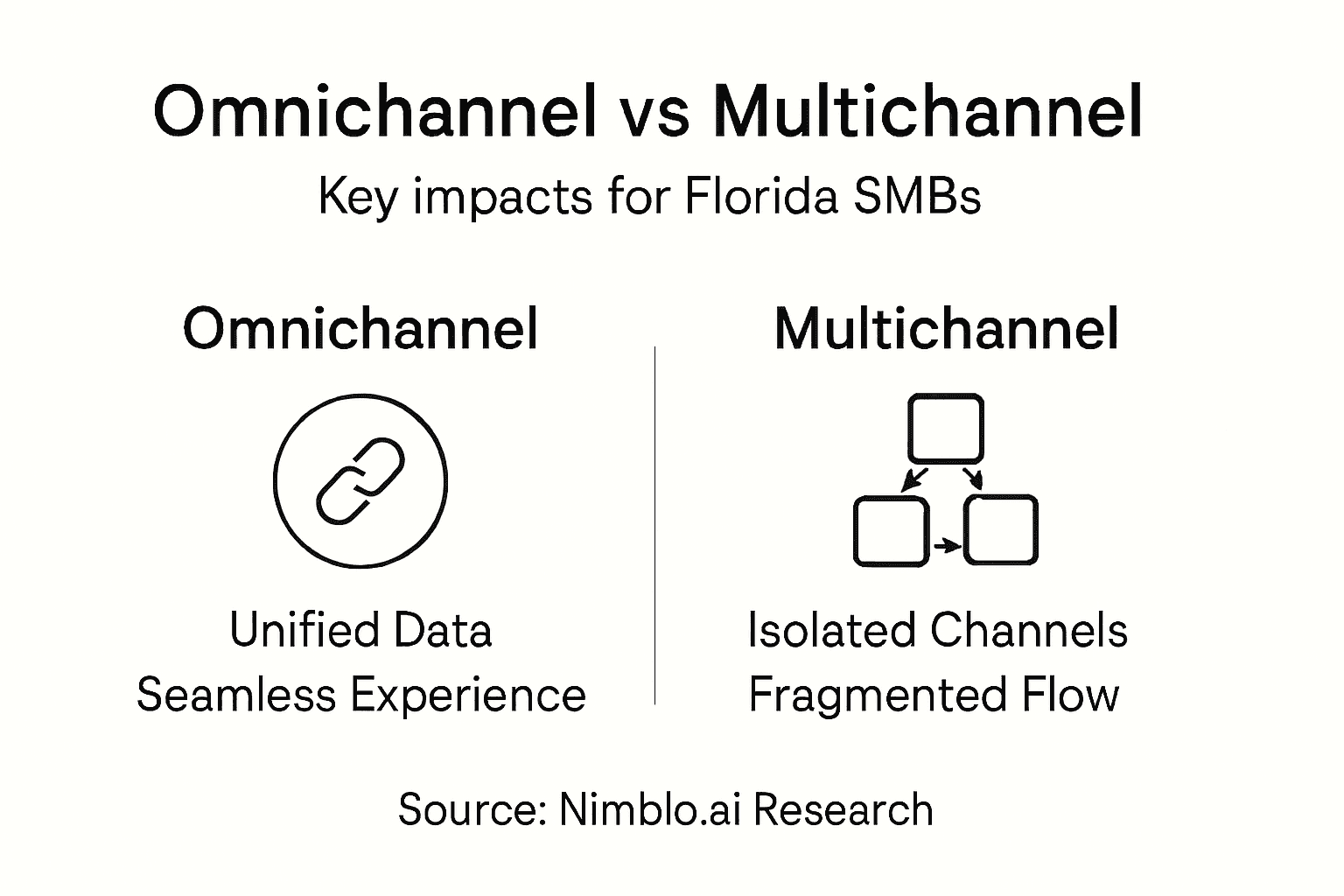
However, these channels typically operate in isolation, creating fragmented and disconnected customer experiences. Each channel functions as a separate entity, with limited data sharing or integrated messaging.
Omnichannel marketing, by contrast, creates a seamless and integrated customer journey. This approach focuses on delivering consistent brand experiences across all touchpoints, ensuring that customer interactions feel unified and personalized. Imagine a customer starting a product search on a mobile app, continuing research on a desktop website, and completing the purchase in a physical store – with each interaction feeling smooth and interconnected.
Key differences between multichannel and omnichannel marketing include:
Here’s a comparison of key differences between multichannel and omnichannel marketing approaches:
| Aspect | Multichannel Marketing | Omnichannel Marketing |
|---|---|---|
| Channel Coordination | Channels operate independently | Channels are fully integrated |
| Data Flow | Limited data sharing | Unified, real-time data sharing |
| Brand Messaging | Messaging varies by platform | Consistent across all touchpoints |
| Customer Experience | Fragmented and disconnected | Seamless and personalized journey |
| Measurement Insights | Siloed analytics | Holistic customer insights |
- Channel integration
- Data synchronization
- Customer experience continuity
- Personalization capabilities
Omnichannel marketing transforms disconnected interactions into a holistic, customer-centric journey.
Pro tip: Conduct a comprehensive audit of your current marketing channels to identify potential integration opportunities and eliminate communication silos.
Key features and tools for seamless integration
Omnichannel marketing requires sophisticated technological infrastructure to create a truly integrated customer experience. Advanced technological innovations enable businesses to synchronize multiple channels and deliver personalized interactions across digital and physical platforms.
Key features for successful omnichannel integration include:
- Real-time inventory synchronization
- Unified customer data management
- Cross-channel communication tracking
- Personalized customer journey mapping
- Integrated analytics and reporting
Technology plays a crucial role in enabling seamless channel integration. Modern omnichannel tools leverage AI-driven analytics, customer relationship management (CRM) systems, and advanced data integration platforms to create a holistic view of customer interactions.
Specific technological capabilities that support omnichannel strategies include:
- Buy-Online-Pickup-In-Store (BOPS) functionality
- Integrated customer profile management
- Automated marketing communication systems
- Predictive customer behavior analytics
Successful omnichannel integration requires breaking down technological and organizational silos to create a unified customer experience.
Pro tip: Invest in a comprehensive technology platform that can centralize data from multiple channels and provide real-time insights into customer behavior.
Benefits for Florida small businesses and local SEO
Omnichannel marketing offers transformative advantages for Florida small businesses seeking to enhance their local market presence. Local market engagement strategies enable businesses to create more targeted, personalized customer experiences that drive growth and competitive differentiation.
Key benefits for Florida SMBs include:
- Reduced customer acquisition costs
- Enhanced local market visibility
- Improved customer data insights
- Stronger community connection
- More efficient marketing spend
Local SEO becomes significantly more powerful when integrated with an omnichannel approach. By synchronizing digital and physical marketing channels, Florida small businesses can create a cohesive brand presence that resonates with local customers and improves search engine rankings.
Specific advantages for Florida small businesses encompass:
The following table summarizes how omnichannel marketing solutions can best benefit Florida small businesses:
| Omnichannel Feature | Advantage for Florida SMBs | Impact on Local Growth |
|---|---|---|
| Real-time data integration | Enables quick response to customer needs | Improves local engagement |
| Location-based personalization | Delivers targeted offers to nearby shoppers | Drives more foot traffic |
| Centralized analytics | Unifies insights from all touchpoints | Optimizes local marketing |
| Scalable technology | Grows as business expands | Supports sustainable success |
- Increased website traffic from local searches
- Better Google Business Profile performance
- More targeted marketing campaigns
- Higher conversion rates from localized content
Omnichannel strategies transform local marketing from fragmented efforts to a unified, data-driven approach.
Pro tip: Prioritize creating consistent, location-specific content across all digital platforms to boost your local SEO performance and attract more Florida-based customers.
Common challenges and mistakes to avoid
Omnichannel marketing presents complex obstacles that can derail even the most well-intentioned strategies. Critical friction points in marketing reveal systemic challenges that Florida small businesses must carefully navigate to ensure successful implementation.
Common challenges for small businesses include:
- Fragmented customer data management
- Inconsistent cross-channel messaging
- Limited technological integration capabilities
- Privacy and data security concerns
- High implementation and technology costs
Technology infrastructure often represents the most significant barrier to effective omnichannel marketing. Many Florida small businesses struggle with outdated systems that cannot seamlessly connect digital and physical marketing channels, resulting in disjointed customer experiences and inefficient data utilization.
Key mistakes to avoid in omnichannel marketing encompass:
- Neglecting data integration strategies
- Underestimating privacy protection requirements
- Failing to create consistent brand messaging
- Overlooking customer journey complexity
Successful omnichannel marketing demands a holistic approach that prioritizes technological integration and customer experience.
Pro tip: Conduct a comprehensive audit of your current marketing technologies and identify potential integration gaps before implementing an omnichannel strategy.
Choosing affordable omnichannel solutions for SMBs
Florida small businesses face unique challenges when selecting cost-effective omnichannel marketing solutions that deliver maximum value without overwhelming their limited budgets. Integrated digital tools for SMBs provide strategic pathways to create seamless customer experiences without significant financial investment.
Key considerations for affordable omnichannel solutions include:
- Scalable cloud-based platforms
- Flexible pricing models
- Comprehensive integration capabilities
- User-friendly interface designs
- Minimal upfront infrastructure costs
Small businesses should prioritize solutions that offer modular features, allowing gradual implementation and expansion as their marketing capabilities grow. This approach enables SMBs to incrementally invest in omnichannel technologies without committing to expensive, complex systems that might exceed their immediate needs.
Critical features to evaluate when selecting budget-friendly omnichannel solutions include:
- Real-time data synchronization
- Multi-channel communication tools
- Customer relationship management integration
- Automated marketing workflow capabilities
Cost-effective omnichannel solutions transform technological limitations into competitive advantages for small businesses.
Pro tip: Start with a basic omnichannel platform that offers core integration features and scalability, then systematically expand your technological capabilities as your business grows.
Unlock Seamless Omnichannel Success for Your Florida SMB Today
The article highlights critical challenges Florida small businesses face when implementing omnichannel marketing such as fragmented customer data, inconsistent messaging, and costly technology hurdles. Nimblo.ai directly addresses these pain points by offering an all-in-one platform that unifies SEO, CRM, marketing automation, and website performance in one affordable, easy-to-use solution. With features like AI-powered local SEO, automated lead generation, and real-time data integration, Nimblo.ai empowers you to create the consistent, personalized customer experiences your omnichannel strategy demands.
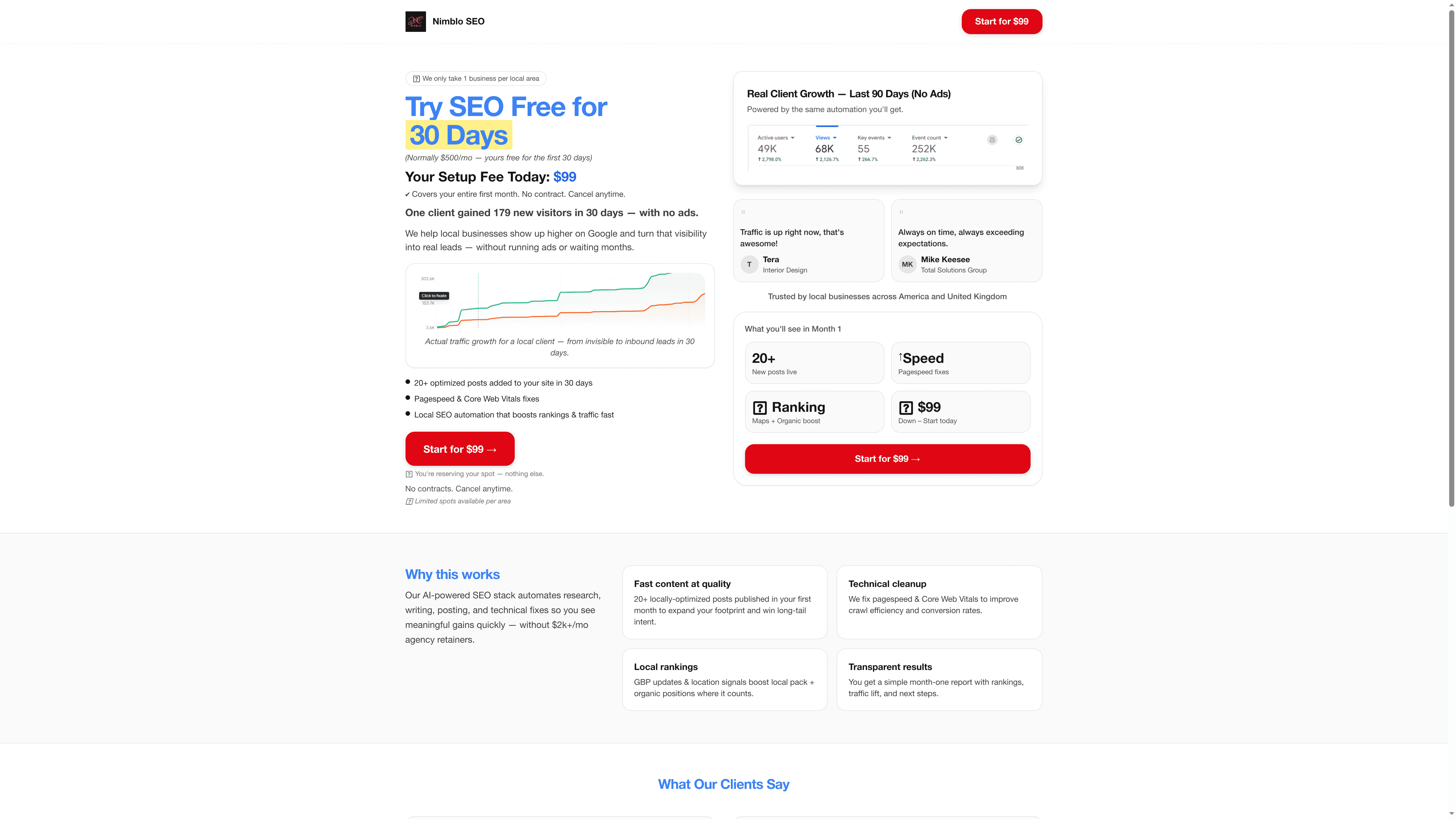
Ready to transform your fragmented marketing efforts into a seamless, growth-driving engine? Visit Nimblo.ai’s streamlined SMB platform today and begin optimizing your local presence with a tool built for Florida businesses. Discover how you can cut costs, boost local SEO rankings, and automate your customer journey with Nimblo.ai. Don’t wait to take control. Start your rapid setup now and experience firsthand how affordable omnichannel marketing solutions unlock lasting small business growth.
Frequently Asked Questions
What is omnichannel marketing?
Omnichannel marketing is a strategic approach that focuses on creating a seamless and integrated customer experience across multiple marketing channels, ensuring consistent brand messaging and personalized interactions throughout the customer journey.
How does omnichannel marketing differ from multichannel marketing?
While both strategies use multiple channels, omnichannel marketing integrates these channels to provide a unified customer experience, whereas multichannel marketing treats each channel independently, often leading to fragmented interactions.
What are the key benefits of implementing an omnichannel strategy for small businesses?
Implementing an omnichannel strategy can lead to reduced customer acquisition costs, enhanced local market visibility, improved customer data insights, a stronger community connection, and more efficient marketing spending.
What challenges do small businesses face when adopting omnichannel marketing?
Small businesses may encounter challenges such as fragmented customer data management, inconsistent messaging across channels, limited technological integration capabilities, concerns about privacy and data security, and high implementation costs.