
Many Florida small business owners assume lead generation automation is reserved for enterprise companies with massive budgets and dedicated IT teams. This misconception costs them thousands of dollars annually in wasted manual effort and missed opportunities. In reality, automation tools have become more accessible and affordable than ever, specifically designed for small and medium businesses. This guide reveals how automating lead generation can dramatically reduce your cost per lead while simultaneously increasing the quality of prospects entering your sales pipeline. You’ll discover the compelling statistics driving automation adoption, practical steps to implement automation without overwhelming your team, and critical pitfalls to avoid that cause many businesses to leave significant ROI on the table.
Table of Contents
- The Rising Importance Of Lead Generation Automation For Florida SMBs
- How Automating Lead Generation Cuts Costs And Boosts Lead Quality
- Avoiding Common Pitfalls: Best Practices For Successful Lead Generation Automation
- Getting Started: Practical Steps For Florida SMBs To Automate Lead Generation
- Discover Tools To Streamline Your Lead Generation Automation
- Frequently Asked Questions
Key takeaways
| Point | Details |
|---|---|
| Cost reduction | Automated lead nurturing generates 50% more sales-ready leads at 33% lower cost than manual methods. |
| Productivity gains | 64% of small businesses now use marketing automation to boost productivity and stay competitive in their markets. |
| Data quality matters | Nearly 75% of businesses report at least 10% of lead data is inaccurate, undermining automation effectiveness. |
| Start small | Begin with simple automations like email follow-ups and social media scheduling before scaling to complex workflows. |
| Strategic implementation | Poor strategy and execution cause businesses to miss over 30% of potential ROI from automation investments. |
The rising importance of lead generation automation for Florida SMBs
The digital marketing landscape has shifted dramatically over the past few years, with automation becoming a necessity rather than a luxury for competitive businesses. Nearly 60% of companies automate tasks that employees previously handled manually, driven by persistent inflation and the need to optimize operational costs. This trend has accelerated particularly among small and medium businesses facing resource constraints while competing against larger, well-funded competitors.
Florida SMBs operate in uniquely competitive local markets where customer expectations for rapid response times and personalized communication continue to rise. Traditional manual lead generation methods simply cannot keep pace with the volume and speed required to capture and nurture modern prospects effectively. The data tells a compelling story: 64% of small businesses use marketing automation to increase productivity and remain competitive, recognizing that automation levels the playing field against larger competitors with bigger teams.
For Florida-based businesses specifically, automation offers the ability to maintain consistent engagement with prospects across multiple touchpoints without hiring additional staff. Whether you operate in Miami, Tampa, Orlando, or Jacksonville, your potential customers expect immediate responses to inquiries, personalized follow-up communications, and relevant content delivered at the right moments in their buying journey. Manual processes create bottlenecks that result in lost opportunities when prospects move to faster-responding competitors.
The adoption of marketing automation for Florida SMBs addresses several critical challenges simultaneously:
- Reduces time spent on repetitive tasks like data entry, email scheduling, and lead assignment
- Ensures no prospect falls through the cracks due to human oversight or capacity limitations
- Enables sophisticated segmentation and personalization at scale without proportional increases in labor costs
- Provides data-driven insights into which marketing activities actually generate qualified leads and revenue
The businesses that embrace automation strategically position themselves to capture a disproportionate share of their local market while competitors continue struggling with inefficient manual processes. This competitive advantage compounds over time as automated systems continuously learn and optimize based on actual performance data.
How automating lead generation cuts costs and boosts lead quality
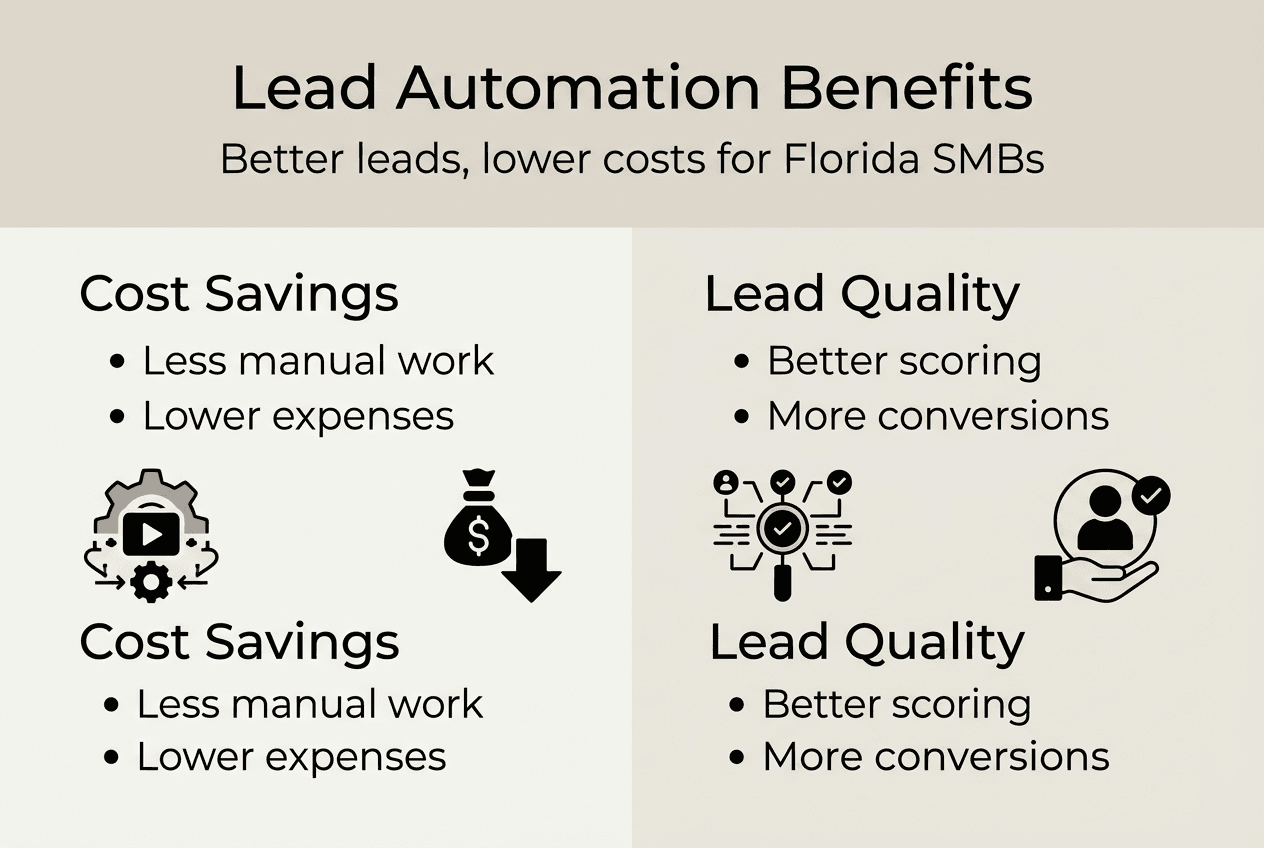
The financial impact of lead generation automation extends far beyond simple time savings. Companies implementing strategic automation see measurable improvements across multiple key performance indicators that directly affect profitability. Lead nurturing automation generates 50% more sales-ready leads at 33% lower cost compared to traditional manual approaches, creating a powerful double benefit of increased volume and improved economics.
The cost reduction comes from eliminating repetitive manual tasks that consume hours of staff time weekly. Instead of sales representatives manually sending follow-up emails, updating CRM records, and qualifying leads through phone calls, automation handles these activities systematically and instantly. This frees your team to focus exclusively on high-value activities like building relationships with qualified prospects and closing deals. Research shows that automated marketing reduces costs by 12.4% while simultaneously increasing revenue by 10.7%, demonstrating clear ROI for businesses of all sizes.

Beyond cost savings, automation dramatically improves lead quality through sophisticated scoring and nurturing workflows. Machine learning algorithms analyze behavioral signals like website visits, content downloads, email engagement, and social media interactions to identify prospects showing genuine buying intent. This data-driven approach proves far more accurate than manual qualification methods that rely on gut feelings or limited information.
| Metric | Manual Lead Generation | Automated Lead Generation |
|---|---|---|
| Cost per lead | $150-$300 | $50-$100 |
| Sales-ready lead rate | 15-20% | 30-40% |
| Response time | 24-48 hours | Instant to 5 minutes |
| Follow-up consistency | 40-60% | 95-100% |
| Lead data accuracy | 70-80% | 90-95% |
The quality improvement stems from automation’s ability to nurture leads systematically over extended periods. Most prospects require multiple touchpoints before becoming sales-ready, yet manual processes often fail to maintain consistent engagement. Automated workflows deliver relevant content based on each prospect’s specific interests and stage in the buying journey, gradually building trust and demonstrating expertise without requiring constant human intervention.
Implementing effective lead generation workflows requires understanding how different automation components work together. Email sequences, behavioral triggers, lead scoring models, and CRM integration must align to create seamless experiences that feel personalized rather than robotic. The most successful Florida SMBs combine automation technology with strategic thinking about their ideal customer journey.
Pro Tip: Meticulously segment your audience using CRM data and website behavior patterns before launching automation campaigns. Generic mass messaging undermines the personalization benefits that make automation effective, while precise segmentation enables you to deliver highly relevant content that resonates with each prospect’s specific needs and challenges.
Advanced lead scoring for SMBs takes automation effectiveness to the next level by prioritizing sales team attention on prospects most likely to convert. Instead of treating all leads equally, scoring models assign point values to various behaviors and characteristics, automatically routing hot prospects to sales representatives while continuing to nurture cooler leads through marketing automation. This optimization ensures your limited sales resources focus where they generate maximum return.
Avoiding common pitfalls: best practices for successful lead generation automation
While automation offers tremendous potential, poor implementation can actually harm your lead generation results rather than improve them. The statistics reveal a sobering reality: many businesses leave more than 30% of potential ROI on the table due to flawed marketing automation strategies and execution. Understanding these pitfalls helps Florida SMBs avoid expensive mistakes that waste time and budget.
The most critical mistake involves implementing automation tools without developing a clear strategic framework first. Many businesses get excited about technology capabilities and rush to activate features without defining specific goals, target audiences, or success metrics. This approach inevitably produces disappointing results because the automation lacks direction and purpose. You must identify which specific business problems you’re solving before selecting and configuring automation tools.
Data quality issues represent another major obstacle to automation success. Nearly 75% of businesses report at least 10% of their lead data contains inaccuracies that undermine marketing effectiveness. Automation amplifies whatever data quality you feed into the system, meaning garbage in produces garbage out at scale. Inaccurate contact information, outdated company details, and incomplete behavioral data cause automated campaigns to miss targets or deliver irrelevant messaging that damages your brand reputation.
“Many businesses leave more than 30 percent of potential ROI on the table due to poor implementation of marketing automation strategies and inadequate attention to data quality and strategic planning.”
Over-reliance on technology without maintaining human oversight creates robotic experiences that alienate prospects rather than engaging them. Automation should handle repetitive tasks and data processing while humans provide strategic direction, creative messaging, and personal touches at critical moments. The businesses achieving the best results combine automated efficiency with human empathy and judgment.
Common automation pitfalls Florida SMBs must avoid:
- Launching complex workflows before testing with small segments and gathering performance data
- Neglecting to update and maintain automation rules as your business evolves and market conditions change
- Failing to integrate automation tools with existing CRM and marketing systems, creating data silos
- Setting up generic email sequences that ignore individual prospect behaviors and preferences
- Automating too many touchpoints without leaving opportunities for genuine human interaction
- Ignoring edge cases and error handling that cause prospects to receive inappropriate or mistimed communications
Pro Tip: Start with simple automation tasks like welcome email sequences and abandoned form follow-ups before attempting sophisticated multi-channel campaigns. Building experience with basic workflows helps you understand your audience’s responses and identify what messaging resonates before investing in complex automation infrastructure.
Successful implementation requires ongoing monitoring and optimization rather than set-it-and-forget-it mentality. Review automation performance metrics weekly during the first month, then monthly thereafter. Pay attention to email open rates, click-through rates, conversion rates, and unsubscribe rates to identify workflows that need adjustment. The best marketing automation guides emphasize iteration and continuous improvement as keys to long-term success.
Collaboration between marketing and sales teams proves essential for automation success. Sales representatives provide invaluable insights into which leads actually close and what objections prospects raise during conversations. This feedback should inform lead scoring models, email messaging, and nurturing workflows to ensure automation supports rather than conflicts with sales processes. Regular communication between departments prevents misalignment that wastes qualified leads.
Getting started: practical steps for Florida SMBs to automate lead generation
Implementing lead generation automation doesn’t require massive upfront investments or technical expertise. The key is starting small and working up to larger automated marketing strategies as you gain experience and confidence. This incremental approach reduces risk while allowing you to learn what works for your specific business and audience before scaling investments.
Begin by identifying the most time-consuming repetitive tasks in your current lead generation process. These represent the best automation opportunities because they deliver immediate time savings while having minimal risk of negative customer impact. Common starting points include email follow-ups after form submissions, social media post scheduling, and basic lead scoring based on website behavior.
Follow this step-by-step framework to launch your automation journey:
- Define specific, measurable goals for your automation efforts, such as reducing response time to under 5 minutes or increasing lead-to-customer conversion rate by 15%.
- Audit your current lead generation process to identify bottlenecks, inconsistencies, and tasks consuming excessive staff time.
- Map your ideal customer journey from initial awareness through purchase decision, noting all touchpoints where automation could enhance the experience.
- Select automation tools that integrate seamlessly with your existing CRM and marketing platforms rather than creating new data silos.
- Create detailed audience segments based on demographics, behaviors, interests, and buying stage to enable personalized automated messaging.
- Develop content assets like email templates, landing pages, and lead magnets that support your automation workflows.
- Build simple workflows first, test thoroughly with small segments, and gather performance data before expanding.
- Train your team on new automation tools and processes to ensure consistent usage and proper data entry.
- Monitor key metrics weekly and adjust workflows based on actual performance rather than assumptions.
- Scale successful automations gradually while continuing to test new approaches and optimize existing campaigns.
The automation process for SMBs works best when you focus on one or two high-impact areas initially rather than trying to automate everything simultaneously. This concentrated approach allows you to perfect workflows and demonstrate clear ROI before expanding to additional use cases.
Critical data points and tools for effective lead generation automation:
- Website visitor behavior including pages viewed, time on site, and content downloaded
- Email engagement metrics such as opens, clicks, and replies to identify interested prospects
- CRM contact data including company size, industry, location, and previous purchase history
- Social media interactions showing which content resonates with your target audience
- Form submission data capturing prospect needs, challenges, and timeline for making decisions
- Marketing automation platform integrated with your CRM to maintain unified customer data
- Lead scoring system that automatically prioritizes prospects based on fit and engagement level
- Analytics dashboard tracking automation performance and ROI across all campaigns
Pro Tip: Combine automation efficiency with hyper-personalization using dynamic content that adapts based on each prospect’s specific characteristics and behaviors. This approach maintains the human touch that builds trust while delivering the scale and consistency only automation provides, significantly increasing conversion rates compared to generic mass messaging.
The most successful Florida SMBs view automation as an ongoing process rather than a one-time project. They continuously test new approaches, analyze results, and refine their strategies based on data. This commitment to optimization compounds over time, creating increasingly effective lead generation systems that drive sustainable business growth. Explore marketing automation tips specifically designed for Florida businesses to accelerate your learning curve and avoid common regional pitfalls.
Discover tools to streamline your lead generation automation
Implementing the strategies outlined in this guide becomes significantly easier when you have the right technology partner supporting your automation journey. Florida SMBs need solutions specifically designed for their unique market dynamics, budget constraints, and growth objectives rather than enterprise platforms built for Fortune 500 companies.
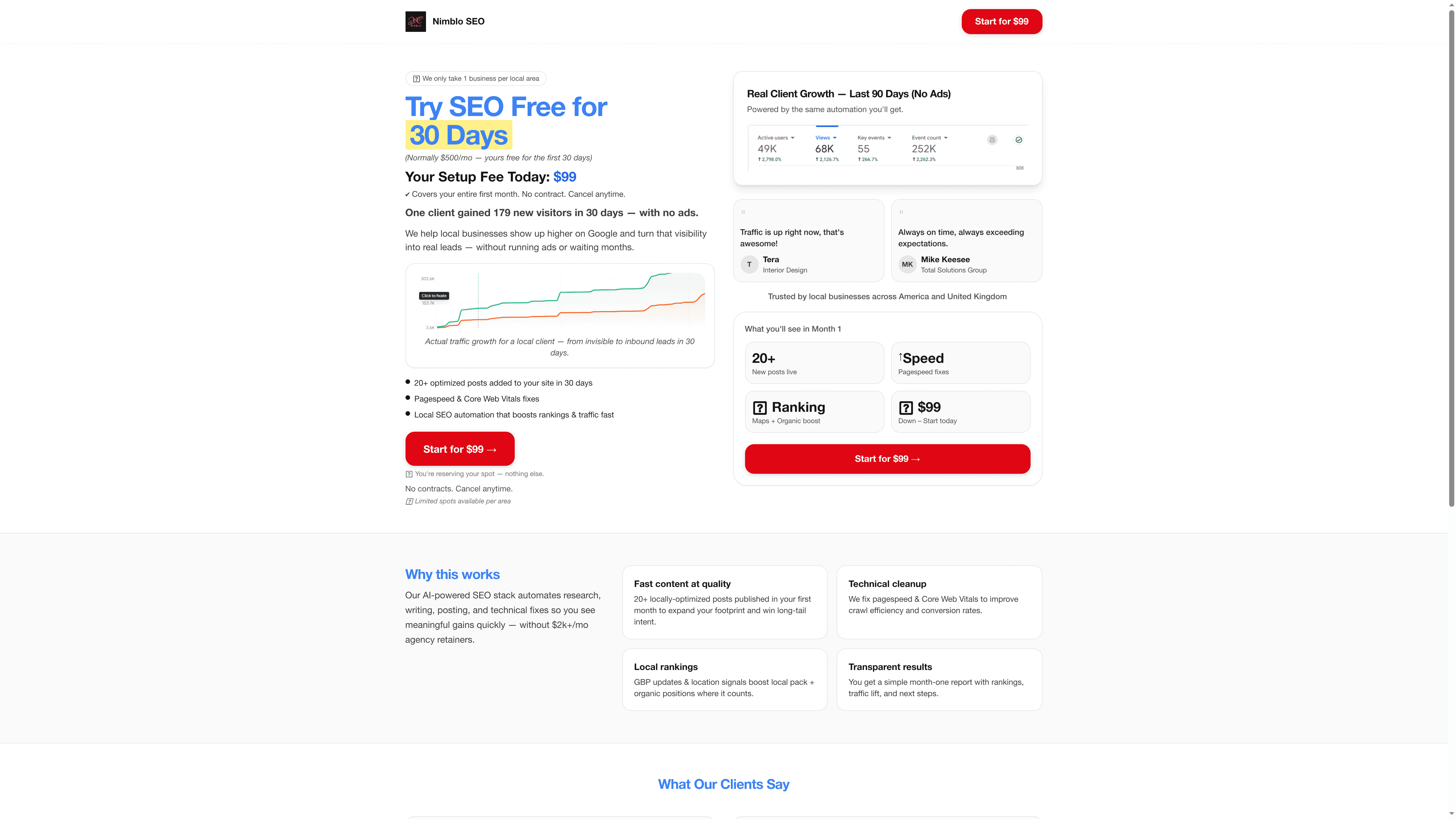
Nimblo’s automation solutions provide Florida small and medium businesses with integrated tools for lead generation, nurturing, and conversion optimization. The platform combines CRM functionality, marketing automation, local SEO optimization, and high-performance website infrastructure in a single affordable package designed specifically for SMBs. This unified approach eliminates the complexity and cost of managing multiple disconnected tools while ensuring your lead data flows seamlessly across all marketing and sales activities. Explore our comprehensive lead generation automation guide for detailed implementation strategies, and review our automation tips for Florida SMBs to discover proven tactics that drive results in your local market.
Frequently asked questions
What is lead generation automation?
Lead generation automation uses software to handle repetitive marketing and sales tasks that traditionally required manual effort, such as sending follow-up emails, scoring leads based on behavior, and routing qualified prospects to sales representatives. The technology captures prospect information, tracks engagement across multiple channels, and delivers personalized content automatically based on predefined rules and triggers. Automation enables small businesses to maintain consistent communication with hundreds or thousands of prospects simultaneously without proportional increases in staff time or costs.
How difficult is it to start automating lead generation for my SMB?
Starting lead generation automation is much simpler than most business owners expect, especially when you begin with basic workflows rather than complex multi-channel campaigns. Start small and work up to larger automated marketing strategies by first automating simple tasks like welcome emails after form submissions or social media post scheduling. Most modern automation platforms offer templates and wizards that guide you through setup without requiring technical expertise. You can implement your first basic automation workflow in a few hours and begin seeing results within days.
Will automating lead generation replace my sales team?
Automation complements and enhances your sales team rather than replacing human representatives. Automation handles repetitive tasks like data entry, initial follow-ups, and lead qualification, freeing your sales staff to focus on high-value activities that require human judgment, empathy, and relationship-building skills. The most effective approach combines automated efficiency for routine tasks with personal attention at critical decision points in the customer journey. Your sales team becomes more productive because they spend time exclusively with qualified prospects who are ready for meaningful conversations rather than chasing unqualified leads.
What are the key data considerations for successful lead generation automation?
Maintaining high data quality is absolutely critical for automation success because systems amplify whatever information you feed into them. Nearly 75% of businesses report at least 10% of their lead data contains inaccuracies that undermine marketing effectiveness, causing wasted budget on campaigns targeting wrong contacts or outdated information. Implement robust data validation at the point of collection, regularly clean your CRM database to remove duplicates and correct errors, and establish clear processes for maintaining data accuracy as prospects move through your funnel. Strong lead scoring systems that accurately identify sales-ready prospects depend entirely on clean, complete data about behaviors, demographics, and engagement history.