
Most American businesses lose out on potential sales because their websites fail to convert visitors into customers. In a digital environment where every click counts, even small tweaks can lead to major revenue gains. With over 90 percent of online shoppers leaving before making a purchase, learning how to optimize your website offers a direct path to more profits and stronger customer engagement.
Table of Contents
- Defining Conversion Optimization for Websites
- Types of Website Conversions Explained
- Core Principles of Conversion Improvement
- Proven Strategies for Boosting Conversions
- Common Pitfalls and Mistakes to Avoid
Key Takeaways
| Point | Details |
|---|---|
| Conversion Optimization | Focus on analyzing user behavior and refining website elements to enhance meaningful interactions and increase conversion rates. |
| Types of Conversions | Understand and track various conversion types, including e-commerce, lead generation, engagement, and micro-conversions, to boost business growth. |
| Core Improvement Principles | Implement user experience optimization, visual design balance, and data-driven iteration to systematically enhance website performance. |
| Avoid Common Pitfalls | Stay vigilant against design errors, content and messaging issues, and technical performance problems that may hinder conversions. |
Defining Conversion Optimization for Websites
Conversion optimization is the strategic process of improving a website to increase the percentage of visitors who complete desired actions. Whether you’re running an online store or a service-based business, understanding website conversion techniques can dramatically impact your bottom line.
At its core, conversion optimization involves analyzing user behavior and systematically enhancing website elements to encourage more meaningful interactions. These interactions might include making purchases, submitting contact forms, signing up for newsletters, or scheduling consultations. By focusing on conversion rate strategies, businesses can transform casual website visitors into active customers.
The process is data-driven and methodical. Professionals use techniques like A/B testing, heat mapping, user journey analysis, and behavioral tracking to understand precisely how visitors interact with a website. Key optimization areas include:
- Page load speed
- Clear and compelling call-to-action buttons
- Intuitive navigation
- Mobile responsiveness
- Streamlined forms
- Persuasive copywriting
- Trust signals like testimonials and security badges
Successful conversion optimization requires continuous testing and refinement. What works today might not work tomorrow, so ongoing analysis and adaptation are crucial for maintaining high conversion rates.
Types of Website Conversions Explained
Website conversions represent specific user actions that businesses aim to encourage on their digital platforms. Website conversion strategies help organizations track and optimize these critical interactions that directly impact business growth and revenue.
Based on research, website conversions can be categorized into several key types:
- E-commerce Conversions
- Product purchases
- Adding items to shopping cart
- Completing checkout process
- Lead Generation Conversions
- Form submissions
- Request for quote
- Booking consultations
- Newsletter sign-ups
- Engagement Conversions
- Social media shares
- Comment submissions
- Video views
- Content downloads
- Micro-Conversions
- Clicking specific buttons
- Visiting key website pages
- Spending minimum time on site
- Scrolling through content
Successful businesses understand that not all conversions carry equal weight. Some conversions, like direct sales, have immediate financial impact, while others like newsletter sign-ups represent potential long-term customer relationships. Tracking and optimizing these diverse conversion types requires sophisticated analysis and continuous refinement of website design and user experience.

Core Principles of Conversion Improvement
Improving website conversion rates requires a strategic and nuanced approach that balances multiple design and analytical elements. Advanced optimization techniques involve understanding how different website components interact to influence user behavior and decision-making.
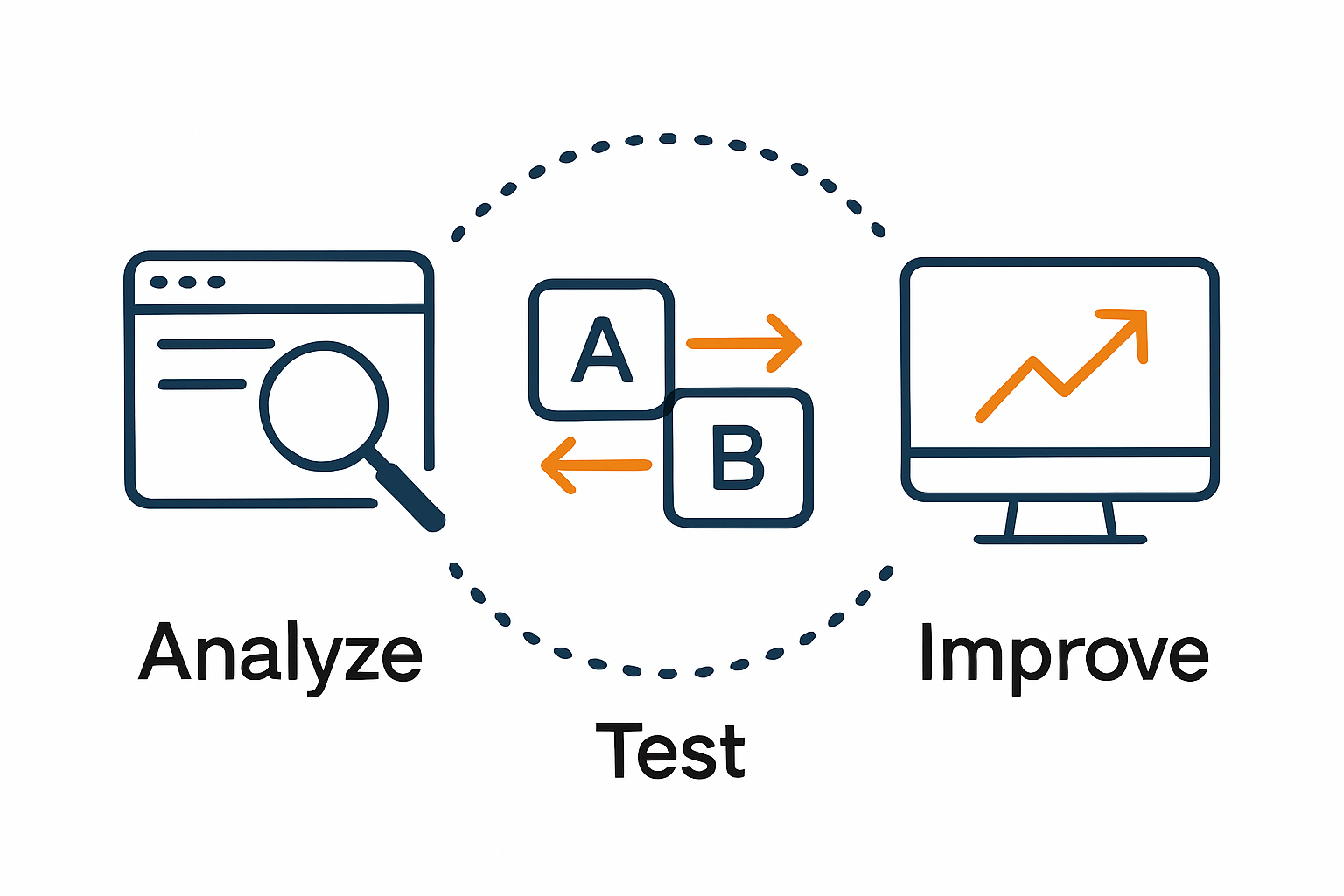
Researchers have developed sophisticated methods for optimizing conversion performance. For instance, scientific studies demonstrate that website design variations can be systematically tested using multi-armed bandit algorithms, which efficiently allocate traffic to identify the most effective design elements. These advanced approaches allow businesses to continuously refine their websites with data-driven insights.
The core principles of conversion improvement encompass several critical strategies:
-
User Experience Optimization
- Intuitive navigation
- Minimal friction in user journey
- Clear and compelling call-to-action buttons
-
Visual Design Balance
- Strategic use of visual elements
- Maintaining clean and professional aesthetics
- Avoiding overwhelming visual complexity
-
Data-Driven Iteration
- Continuous A/B testing
- Performance tracking
- Rapid implementation of insights
-
Psychological Triggers
- Social proof elements
- Trust signals
- Urgency and scarcity techniques
Successful conversion improvement is not about radical redesigns but incremental, carefully measured enhancements. By understanding user behavior, systematically testing design variations, and maintaining a laser focus on user experience, businesses can create websites that naturally guide visitors toward desired actions.
Proven Strategies for Boosting Conversions
Bosting website conversions requires a strategic, data-driven approach that goes beyond simple design tweaks. Conversion optimization techniques demand sophisticated methods that systematically analyze and improve user interactions.
Cutting-edge research has revealed advanced strategies for enhancing conversion rates. Scientific studies demonstrate that multivariate optimization algorithms can dynamically explore different page layouts to identify the most effective combinations for driving user actions. These sophisticated approaches allow businesses to make precise, incremental improvements that compound over time.
Key strategies for boosting conversions include:
- Personalization Techniques
- Tailored user experiences
- Dynamic content adaptation
- Segment-specific messaging
- Psychological Conversion Triggers
- Social proof elements
- Urgency and scarcity indicators
- Trust-building testimonials
- Technical Optimization
- Fast page load speeds
- Mobile responsiveness
- Streamlined navigation
- Minimal form complexity
- Conversion Funnel Refinement
- Clear call-to-action buttons
- Reduced friction points
- Simplified user journeys
- Strategic placement of conversion elements
Successful conversion optimization is an ongoing process of measurement, testing, and refinement. Businesses that continuously analyze user behavior and adapt their strategies will consistently outperform competitors who rely on static website designs.
Common Pitfalls and Mistakes to Avoid
Conversion optimization is a nuanced process where well-intentioned strategies can quickly backfire. Website optimization efforts require careful navigation to prevent common mistakes that can dramatically reduce user engagement and conversion rates.
Research reveals critical insights into potential optimization errors. Scientific studies demonstrate that excessive visual complexity can negatively impact user experience, with visual intensity increasing user resistance faster than conversion rates. Understanding these subtle dynamics helps businesses avoid counterproductive design approaches.
Key conversion optimization pitfalls include:
- Design-Related Mistakes
- Overcrowded page layouts
- Inconsistent visual hierarchies
- Excessive animation or graphics
- Complex navigation structures
- Content and Messaging Errors
- Vague or generic call-to-action buttons
- Overwhelming technical language
- Lack of clear value proposition
- Missing social proof elements
- Technical Performance Issues
- Slow page load times
- Non-responsive mobile designs
- Complicated form processes
- Broken links or user journey interruptions
- Strategic Missteps
- Random A/B testing without hypothesis
- Ignoring user behavior data
- Copying competitor designs blindly
- Infrequent performance analysis
Successful conversion optimization demands continuous learning and adaptation. Businesses must remain vigilant, consistently monitoring user interactions and being prepared to make data-driven adjustments that enhance rather than hinder the user experience.
Unlock Higher Conversions with Smarter Website Solutions
Understanding the challenges of boosting conversion rates is the first step toward real growth. This article highlights common pain points like slow page load speeds, unclear call-to-action buttons, and complicated user journeys that can frustrate visitors and lose valuable leads. If you want to eliminate these obstacles and make your website work harder, focus on proven conversion optimization principles such as user experience enhancements, trust signals, and data-driven testing.
Nimblo.ai offers a powerful platform tailored for Florida small and medium businesses that need an all-in-one solution to tackle these exact issues. With features like AI-powered local SEO, automated lead generation, and conversion-optimized website design, you can deliver fast, engaging experiences that turn visitors into loyal customers. Start simplifying your digital marketing stack today with Nimblo.ai and enjoy rapid setup, local expertise, and an affordable flat rate.
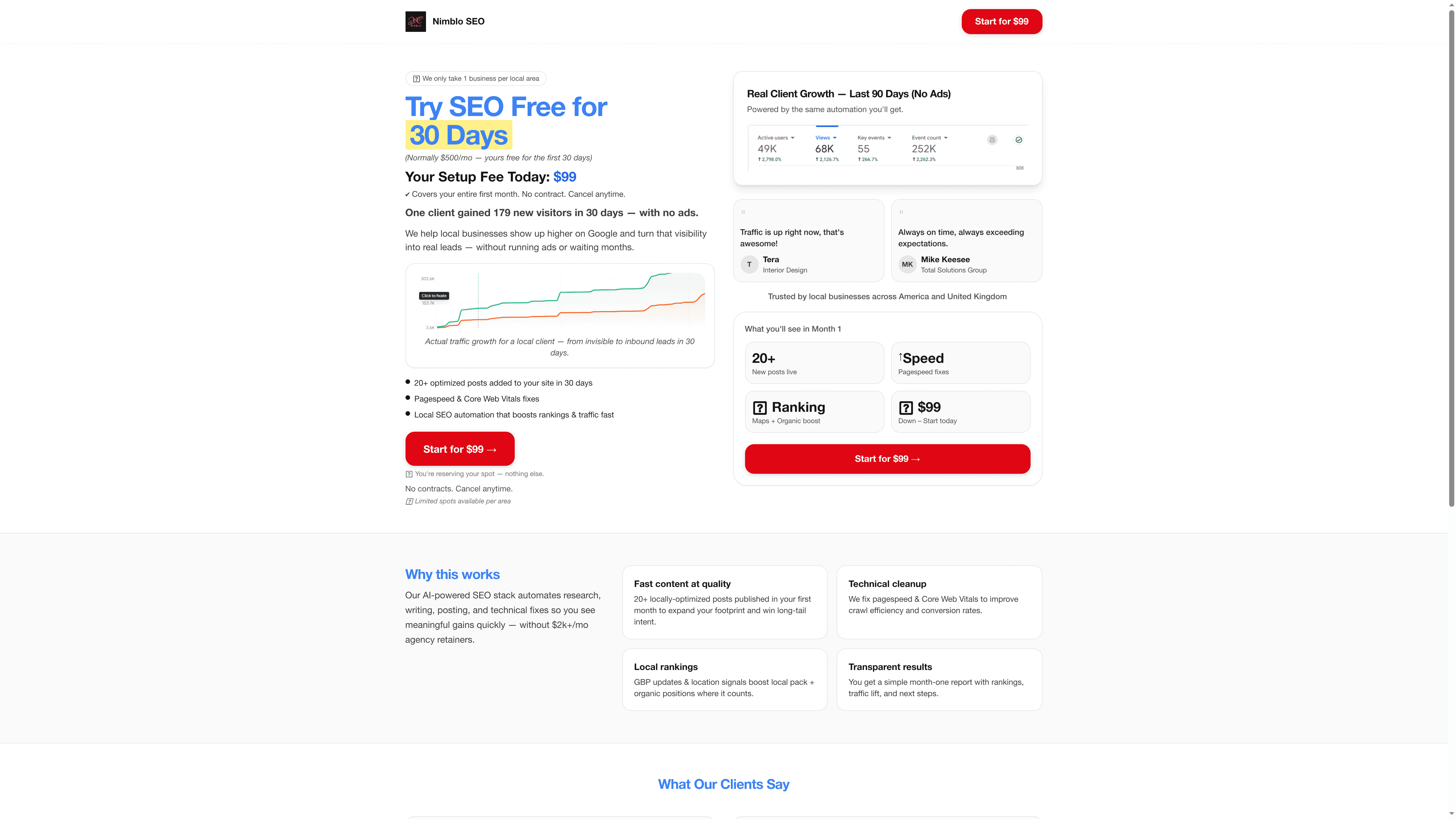
Ready to see measurable growth through smarter website conversion strategies Use Nimblo’s all-in-one platform to optimize your entire online presence Get started now and stop losing leads to outdated designs or slow websites. Visit Nimblo.ai and take control of your conversions today.
Frequently Asked Questions
What is conversion optimization?
Conversion optimization is the process of enhancing a website to increase the percentage of visitors who complete desired actions, such as making purchases or signing up for newsletters.
Why is it important to optimize a website for conversions?
Optimizing a website for conversions is crucial because it directly impacts business growth and revenue by transforming casual visitors into active customers through improved user engagement.
What are some key techniques for improving website conversions?
Key techniques for improving website conversions include A/B testing, optimizing page load speed, using clear call-to-action buttons, ensuring mobile responsiveness, and implementing persuasive copywriting.
How can I measure the success of my conversion optimization efforts?
You can measure the success of your conversion optimization efforts by tracking specific metrics such as conversion rates, user behavior analytics, and performance indicators from A/B testing results.