
Over 90 percent of american consumers use the internet to find local businesses, making digital marketing more vital than ever for Florida companies. With intense competition and diverse service areas across the state, standing out requires more than a website. This guide shows business owners how to connect with local customers, refine their online presence, and drive growth in a rapidly changing market.
Table of Contents
- Step 1: Assess Local Market and Service Areas
- Step 2: Optimize Google Business Profile Listings
- Step 3: Implement On-Site Local SEO Strategies
- Step 4: Automate Lead Generation and Follow-Up
- Step 5: Monitor Results and Adjust Campaigns
Quick Summary
| Key Point | Explanation |
|---|---|
| 1. Assess your local market thoroughly | Understand demographics and economic factors to identify customer locations and needs. Utilize tools like the SBA for insightful data. |
| 2. Optimize your Google Business Profile | Provide complete and accurate information to enhance local search visibility. Engage actively to attract customers. |
| 3. Implement effective local SEO strategies | Use location-specific keywords and create tailored content to improve website visibility in local search results. |
| 4. Automate lead generation processes | Set up automated follow-ups and lead scoring to efficiently nurture leads and improve customer engagement. |
| 5. Regularly monitor and refine your campaigns | Analyze performance metrics continuously to adapt strategies, test improvements, and maximize marketing effectiveness. |
Step 1: Assess Local Market and Service Areas
Successfully positioning your Florida business begins with understanding your precise local market and service territories. This critical step helps you pinpoint exactly where your potential customers are located and how to effectively reach them.
Starting your market assessment requires diving into demographic data and local economic insights. The U.S. Small Business Administration provides powerful market research tools that can help you analyze consumer behavior and economic trends specific to your region. You will want to map out your service areas by considering factors like population density, average income levels, business concentrations, and specific neighborhood characteristics that match your target customer profile.
To refine your strategy, look beyond raw numbers. The Florida Small Business Development Center recommends engaging deeply with local community preferences to understand nuanced market dynamics. This means talking with local business associations, attending community events, and studying consumer behavior patterns unique to different Florida neighborhoods. Pay special attention to seasonal variations common in Florida markets, which can dramatically impact service demand.
One practical tip: Create a physical map of your service area and color code it based on customer potential, demographic breakdown, and historical service performance. This visual representation will help you make strategic decisions about marketing resource allocation and targeted outreach efforts.
Your next step will involve translating these market insights into a precise digital marketing strategy that resonates with your local audience.
Step 2: Optimize Google Business Profile Listings
Optimizing your Google Business Profile is crucial for local visibility and attracting potential customers in your Florida service area. This step will help you create a compelling online presence that stands out in local search results.
Begin by ensuring your business information is completely accurate and comprehensive. The Small Business Administration recommends participating in workshops that teach strategic profile optimization to maximize your local search potential. Fill out every section of your profile with precise details including business name, address, phone number, website, operating hours, and a detailed business description that incorporates relevant local keywords.
Engaging with your profile goes beyond basic information. The University of Florida suggests leveraging features like business posts, responding to customer reviews, and utilizing multimedia options to increase customer interaction. Add high-quality photos of your business, showcase customer testimonials, and regularly update your profile with current information about services, promotions, or community involvement.
Pro tip: Consistency is key. Ensure your business name, address, and phone number are identical across your Google Business Profile, website, and other online directories to boost your local search credibility.
Your next step will involve creating targeted local content that complements your optimized business profile.
Step 3: Implement On-Site Local SEO Strategies
Optimizing your website for local search requires strategic planning and precise execution to help potential customers in your Florida service area find you easily. This step focuses on transforming your website into a powerful local visibility tool.
Start by incorporating location specific keywords naturally throughout your website content. Local SEO strategies for small businesses demand careful placement of city names, neighborhood references, and regional identifiers in your page titles, headers, meta descriptions, and body content. Ensure your business address and service areas are clearly mentioned on your contact page and homepage, using structured data markup to help search engines understand your local relevance.

Create location specific content that demonstrates your expertise in serving Florida communities. This might include service pages for different cities or regions you cover, blog posts about local events or business challenges, and testimonials from local clients. Add schema markup to provide search engines with clear signals about your business location, service areas, and local relevance. Embed a Google Maps widget on your contact page to further reinforce your geographical presence.
Pro tip: Consistency matters. Ensure your name, address, and phone number match exactly across your website, Google Business Profile, and all online directories to maximize local search credibility.
Your next step will involve building a robust local link and citation strategy to further enhance your local search performance.
Step 4: Automate Lead Generation and Follow-Up
Transforming your marketing approach through strategic automation can dramatically improve your ability to capture and nurture potential customers in your Florida service area. This step will help you create a systematic process for generating and managing leads with minimal manual intervention.
Implementing referral programs and automated follow-up strategies can significantly enhance your lead generation efforts. Set up email sequences that automatically trigger based on specific customer interactions such as website visits, form submissions, or initial inquiries. Design welcome sequences that provide valuable information about your services, share customer success stories, and gradually introduce your unique value proposition. Integrate chatbots on your website to capture lead information during off hours and create instant engagement pathways.
Create a comprehensive lead scoring system that helps you prioritize and segment potential customers based on their interactions with your digital touchpoints. Develop triggered email campaigns that send personalized content based on a lead’s specific interests or engagement level. For instance, design different follow-up sequences for service inquiries versus product consultations, ensuring each communication feels tailored and relevant.
Pro tip: Always include clear unsubscribe options and respect communication preferences to maintain a positive relationship with potential customers.
Your next step will involve analyzing your lead generation metrics to continually refine and improve your automated marketing approach.
Step 5: Monitor Results and Adjust Campaigns
Successful digital marketing demands continuous observation and strategic refinement of your online performance. This step focuses on transforming raw data into actionable insights that will help you optimize your marketing efforts and maximize your return on investment.
How SEO Drives Lead Generation for Florida SMBs reveals the importance of tracking key performance indicators across multiple digital channels. Set up comprehensive dashboards that integrate data from your website analytics, Google Business Profile, social media platforms, and email marketing systems. Monitor critical metrics such as website traffic, conversion rates, click through rates, local search rankings, and lead quality. Pay special attention to geographic performance indicators that show how effectively you are reaching potential customers in specific Florida regions and cities.
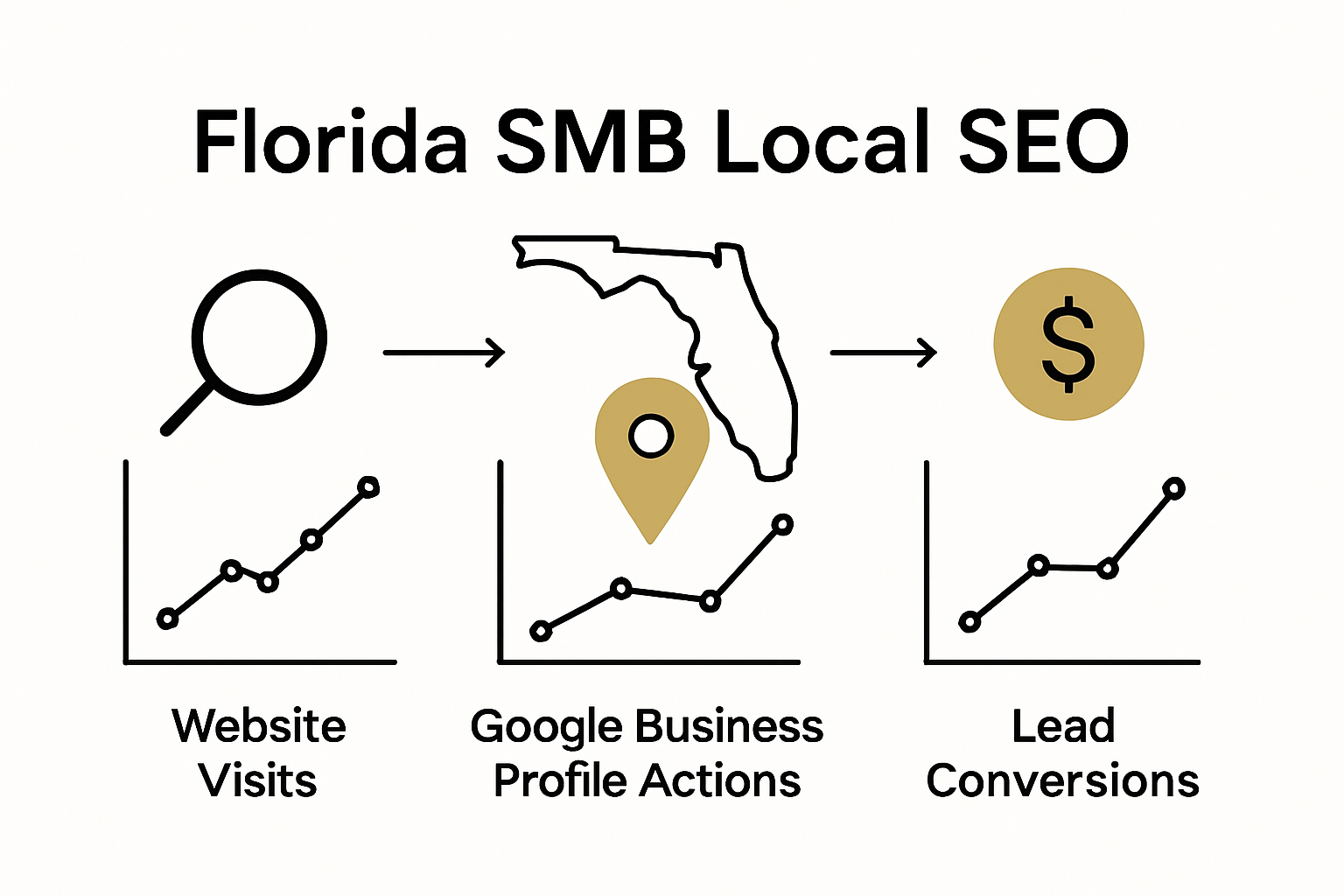
Develop a systematic approach to campaign adjustment by establishing regular review intervals weekly or monthly. Compare your current performance against baseline metrics and industry benchmarks specific to Florida service businesses. Identify top performing content and marketing channels while quickly phasing out strategies that are not delivering expected results. Create a flexible feedback loop that allows you to rapidly test and implement improvements based on emerging data trends.
Pro tip: Always maintain a historical record of your marketing experiments to understand long term performance patterns and avoid repeating ineffective strategies.
Your next step will involve scaling your most successful marketing approaches and continuing to innovate your digital presence.
Unlock Florida SMB Growth with Seamless Local SEO Solutions
Mastering local SEO and lead automation is a major challenge for many Florida small and medium businesses. This guide highlights the critical steps like optimizing your Google Business Profile, incorporating location-specific keywords, and automating lead follow-ups that demand time, expertise, and the right tools. If you feel overwhelmed trying to juggle multiple platforms or worried about inconsistent online listings and missed leads, you are not alone.
Nimblo.ai offers an all-in-one platform designed specifically for Florida SMBs ready to simplify their digital marketing with AI-powered local SEO, structured data markup, and automated lead capture and nurturing. Save costs by replacing expensive tool stacks and agencies while benefiting from rapid setup, expert local market alignment, and consistent online presence across Google and your website. Discover how hundreds of local businesses have grown leads and streamlined operations with Nimblo’s flat-rate, contract-free solution.
Take control of your local visibility today and experience hassle-free SEO that works for Florida businesses.
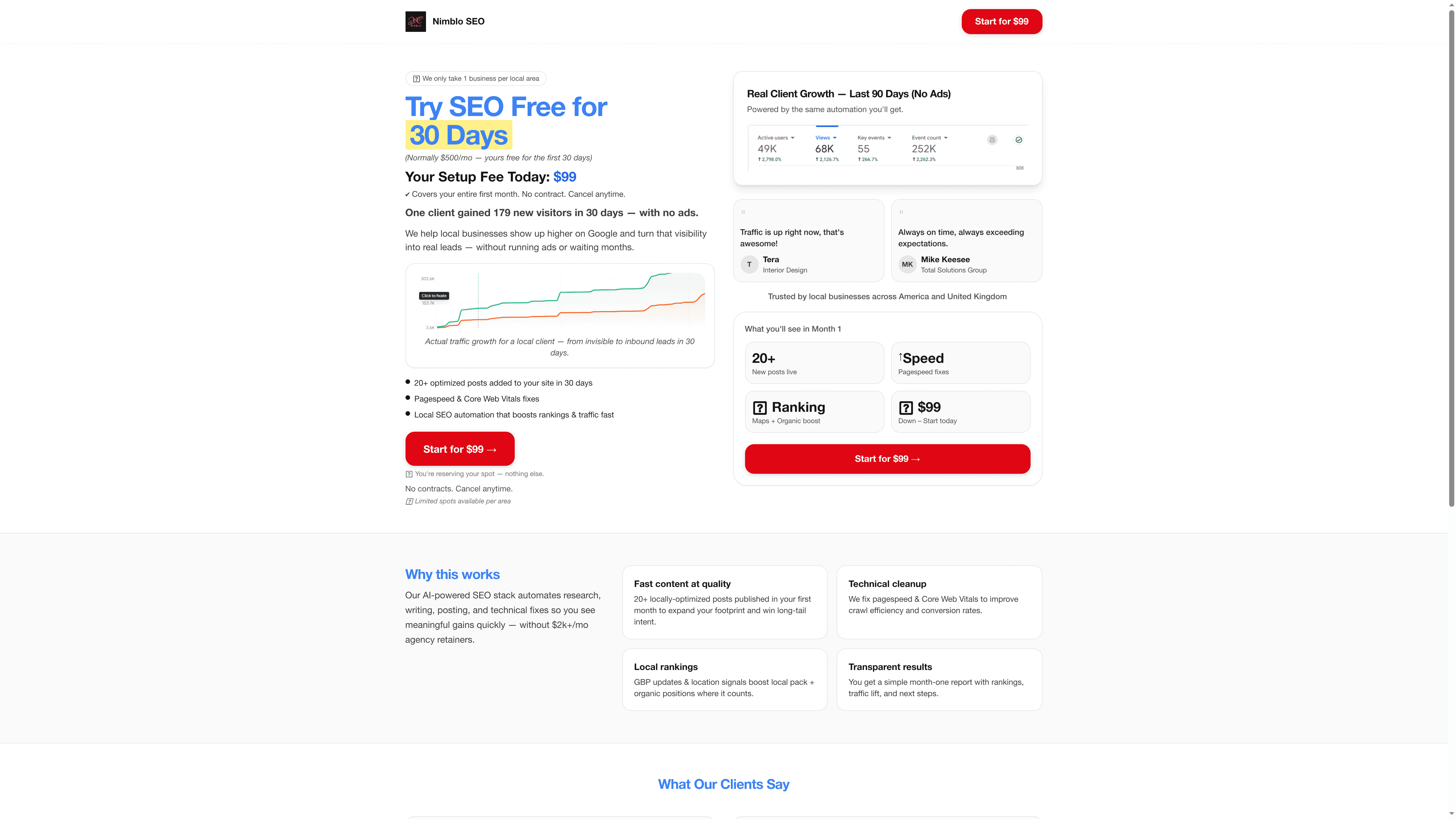
Ready to transform your Florida service area marketing with automated local SEO and lead generation Visit Nimblo.ai’s solution page to get started or explore how our platform integrates Google Business Profile management and SEO automation in one place with Nimblo.ai’s powerful digital marketing platform. Don’t wait to boost your local search rankings and effortlessly grow your customer base.
Frequently Asked Questions
How can I assess my local market for service area SEO?
To assess your local market, start by analyzing demographic data and local economic insights specific to your service area. Focus on factors like population density and consumer behavior to identify where to reach potential customers effectively.
What are the key components of optimizing a Google Business Profile?
Optimizing your Google Business Profile involves ensuring accurate information, including your business name, address, phone number, and a detailed description with local keywords. Add photos, engage with customer reviews, and regularly update your profile to improve visibility locally.
How do I incorporate local keywords into my website for SEO?
Incorporate local keywords by placing city names, neighborhood references, and regional identifiers into your website’s titles, headers, and content. Make sure to mention your business address clearly on your contact page to improve your local search relevance.
What steps should I take to automate lead generation?
To automate lead generation, set up email sequences that trigger based on user interactions, such as website visits. Additionally, integrate chatbots on your website to capture leads and provide instant engagement.
How can I monitor the effectiveness of my SEO campaigns?
Monitor your SEO campaign effectiveness by tracking key metrics such as website traffic, conversion rates, and local search rankings regularly. Establish a review schedule, such as weekly or monthly, to adjust strategies based on performance insights.
What is the importance of local citations in SEO?
Local citations enhance your business’s visibility and credibility in local search results. Consistently listing your business name, address, and phone number across various online directories can improve your local SEO efforts significantly.