
Running a small business in Florida often means juggling endless tasks while trying to keep customers engaged online. Focusing your energy on the right social media strategy can save time and help grow your brand, but only if you know exactly who you want to reach and what you want to achieve. This guide explains how clear business goals, a deep understanding of your target audience, and efficient digital marketing automation can replace scattered tools and make your marketing work harder for you.
Table of Contents
- Step 1: Assess Business Goals And Target Audience
- Step 2: Select Relevant Social Media Channels
- Step 3: Develop Actionable Content Calendar And Strategy
- Step 4: Automate Scheduling And Engagement Workflows
- Step 5: Monitor Results And Optimize Campaigns
Quick Summary
| Key Point | Explanation |
|---|---|
| 1. Define Clear Goals | Establish specific social media objectives that align with your overall business strategy for effective marketing outcomes. |
| 2. Choose Appropriate Platforms | Select social media channels based on where your target audience is most active to maximize engagement and effectiveness. |
| 3. Create a Content Calendar | Develop a structured content calendar that balances diverse content types and maintains a consistent posting schedule. |
| 4. Automate where Possible | Use automation tools to streamline tasks while ensuring your brand maintains authentic engagement with the audience. |
| 5. Monitor and Adjust Regularly | Continuously track performance metrics and optimize strategies based on what resonates with your audience to enhance results. |
Step 1: Assess Business Goals and Target Audience
Successfully navigating social media marketing for your Florida business starts with crystal-clear goal setting and audience understanding. Your social media strategy isn’t just about posting content – it’s about creating a targeted roadmap that directly supports your bottom-line objectives.
To begin, you’ll want to define specific, measurable social media goals that align with your broader business strategy. Small businesses can effectively choose platforms by understanding their target demographic and platform demographics. Consider these key steps:
- Identify your primary business objectives (sales, brand awareness, customer engagement)
- Research your target audience’s preferred social media channels
- Determine age, gender, income, and behavioral characteristics of your ideal customer
- Map out how social media can directly support your business goals
Gathering audience insights requires strategic research. Use advanced social media tools like TikTok Creator Search and Semrush to dive deep into your audience’s preferences, language, and online behaviors. Understanding these nuances helps you craft content that resonates and converts followers into loyal customers.
Your social media strategy should be a precision instrument, not a shotgun approach.
Pro tip: Create customer personas based on real data to make your social media targeting more accurate and effective.

Step 2: Select Relevant Social Media Channels
Now that you understand your business goals and target audience, it’s time to choose the most effective social media platforms to reach your potential customers. Not all platforms are created equal, and spreading yourself too thin across multiple channels can dilute your marketing efforts.
Small businesses should strategically choose platforms that align with their specific marketing objectives and audience demographics. Each social media platform offers unique strengths and attracts different audience segments:
- Facebook: Best for community building and broad demographic reach
- Instagram: Ideal for visual businesses like restaurants, retail, and service industries
- LinkedIn: Perfect for B2B services and professional networking
- TikTok: Great for engaging younger audiences with short-form video content
- YouTube: Excellent for tutorial-based and long-form video content
Focus your resources strategically by identifying where your target customers are most active. Analyze platform demographics, content format compatibility, and potential engagement levels to make informed decisions.
To help Florida businesses select the right social media channel, here’s a quick comparison of platform strengths and target demographics:
| Platform | Main Strength | Primary Audience | Ideal Businesses |
|---|---|---|---|
| Community engagement | Adults 25-55 | Local service, retail | |
| Visual storytelling | Millennials, Gen Z | Restaurants, boutiques | |
| Professional networking | Working professionals | B2B services, consultants | |
| TikTok | Viral short-form video content | Teens, young adults | Trend-driven brands |
| YouTube | In-depth tutorials | All ages, info seekers | Education, repair, fitness |
Not every platform matters for your business – choose quality over quantity.
Pro tip: Start with 2-3 platforms where your target audience is most concentrated, and master those before expanding to additional channels.
Step 3: Develop Actionable Content Calendar and Strategy
With your social media platforms selected, it’s time to craft a strategic content calendar that transforms your marketing efforts from random posts to purposeful communication. A well-designed content strategy isn’t just about filling space – it’s about creating meaningful connections with your audience.
Structuring an effective content calendar requires a thoughtful approach to content creation and distribution. Your strategy should incorporate a diverse mix of content types that keep your audience engaged and align with your business objectives:
- Informative posts that showcase your industry expertise
- Behind-the-scenes content to humanize your brand
- Customer testimonials and success stories
- Educational tutorials related to your services
- Interactive content like polls, questions, and live videos
Develop a consistent posting schedule that balances frequency with quality. Map out content themes for each week or month, ensuring you have a steady stream of engaging material. Consider using scheduling tools to plan posts in advance and maintain a steady content flow.
Consistency is the secret ingredient that transforms casual followers into loyal customers.
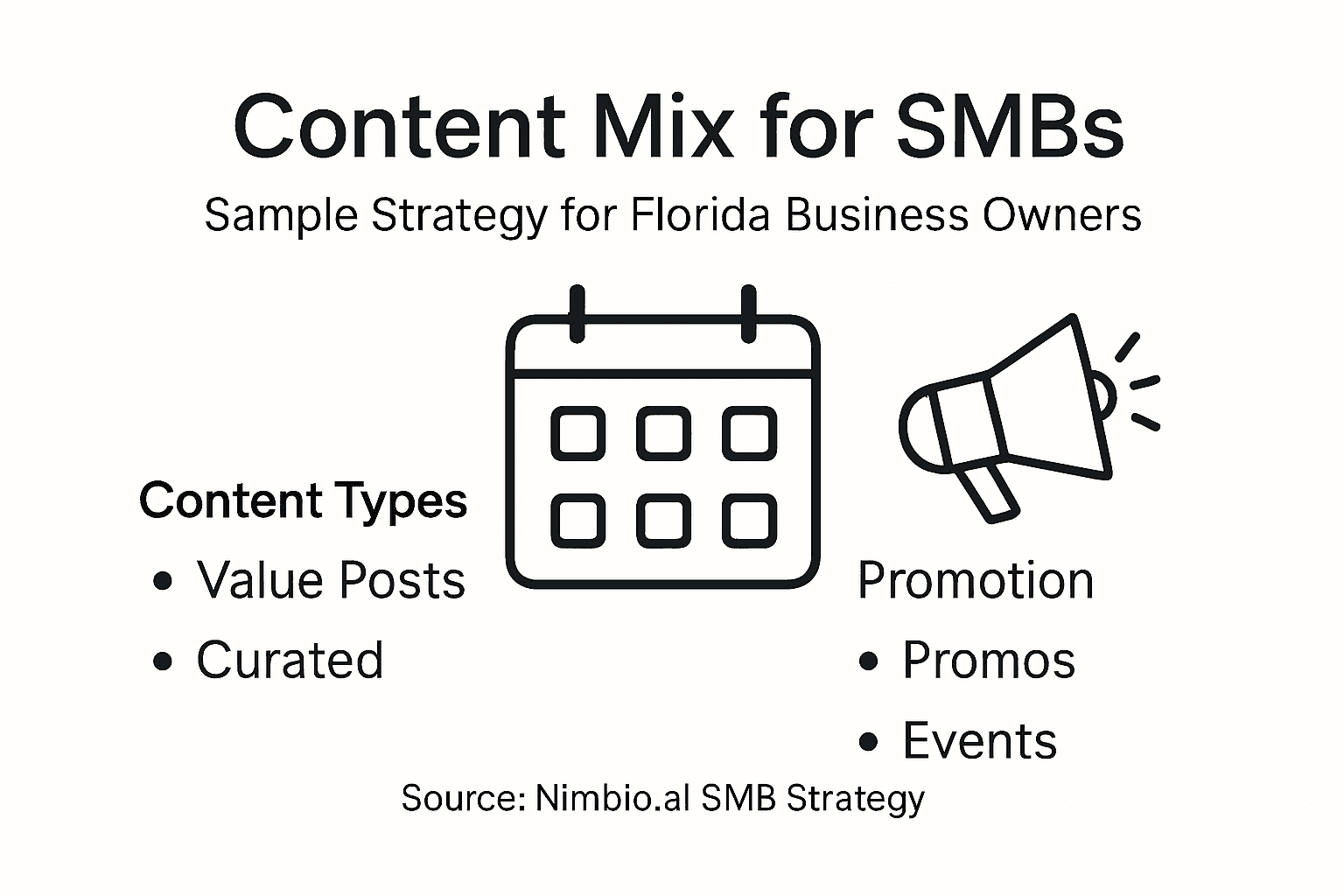
Pro tip: Allocate 70% of your content to value-driven posts, 20% to shared or curated content, and 10% to direct promotional material to maintain audience interest.
Step 4: Automate Scheduling and Engagement Workflows
Automating your social media management transforms your marketing from time-consuming manual tasks to a streamlined, efficient process. By implementing smart workflows, you can maintain consistent audience engagement without being chained to your computer 24/7.
Social media automation tools help small businesses manage multiple channels efficiently while reducing administrative overhead. Consider these key automation strategies:
- Schedule posts in advance across different platforms
- Set up automatic response triggers for common customer inquiries
- Create content batches to maintain consistent posting
- Develop templated responses for frequent interactions
- Monitor brand mentions using automated tracking tools
The most effective automation workflows focus on maintaining authentic connections while reducing manual effort. Use tools that allow personalization and real-time monitoring to ensure your automated systems feel human and responsive.
To streamline your social media management, compare these key automation functions and their business impacts:
| Automation Feature | What It Does | Business Benefit | Recommended Tool Example |
|---|---|---|---|
| Scheduled Posting | Publishes in advance | Saves time, ensures consistency | Hootsuite |
| Automated Responses | Replies to FAQs | Faster customer support | Sprout Social |
| Brand Mention Tracking | Monitors online brand references | Improves reputation management | Semrush |
| Content Batching | Organizes multiple posts at once | Efficient workflow | SocialBee |
Automation should enhance, not replace, genuine human interaction.
Pro tip: Test and adjust your automated workflows weekly, ensuring they reflect your brand’s voice and respond appropriately to changing audience dynamics.
Step 5: Monitor Results and Optimize Campaigns
Successful social media marketing isn’t a set-it-and-forget-it strategy. It requires continuous monitoring, analysis, and strategic adjustments to ensure your efforts are delivering real business value.
Social media performance tracking helps businesses understand what resonates with their audience and refine their marketing approach. Focus on these critical metrics and optimization techniques:
- Engagement rates across different content types
- Conversion tracking for social media campaigns
- Audience growth and demographic shifts
- Click-through rates for individual posts
- Return on investment for social media spending
Develop a systematic review process that allows you to pivot quickly. Analyze your metrics monthly, identifying top-performing content and understanding which strategies drive genuine business results. Pay attention to subtle trends that might indicate changing audience preferences or emerging opportunities.
Data-driven optimization is the key to social media marketing success.
Pro tip: Create a monthly dashboard that compares key performance indicators against your initial goals, allowing for rapid and informed strategic adjustments.
Streamline Your Florida SMB’s Social Media Marketing with Nimblo.ai
Social media management can overwhelm Florida small business owners when juggling multiple platforms, content schedules, and audience engagement. This guide highlights the challenge of maintaining consistent, targeted, and data-driven campaigns while avoiding scattered tools and fragmented workflows. If you struggle to convert social media interactions into real leads or find automation complicated and time-consuming, you are not alone.
Nimblo.ai offers a powerful solution designed specifically for Florida SMBs seeking an all-in-one platform to unify social media strategies with local SEO, CRM, and marketing automation. With features like AI-powered local SEO, Google Business Profile management, and automated follow-ups, you gain an edge in optimizing your digital presence without juggling multiple expensive tools. Discover how easily you can set up and manage actionable content calendars, automate engagement workflows, and monitor results all in one place.
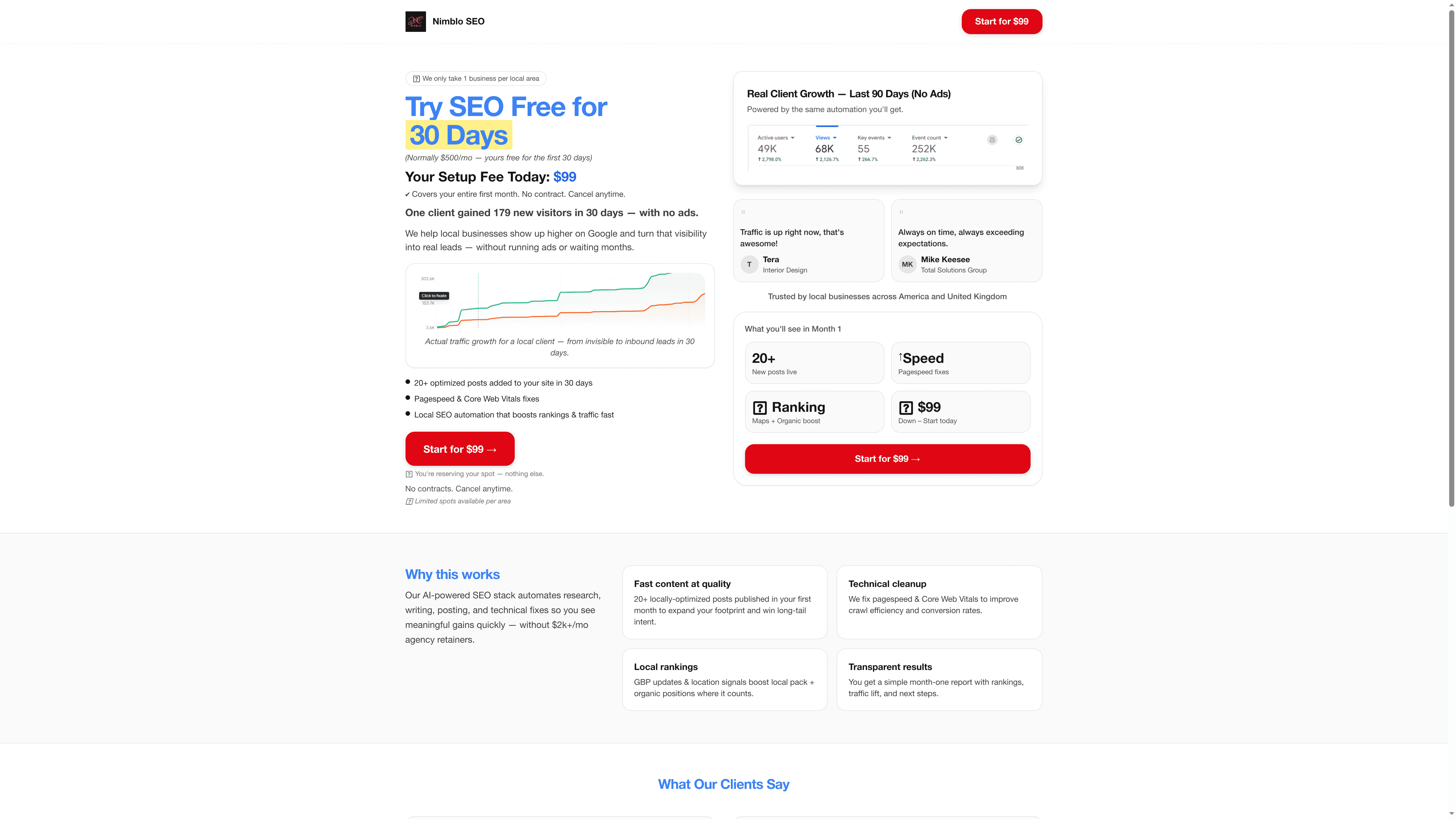
Take control of your social media marketing today. Explore how Nimblo can help you accelerate lead growth, save costs, and master local digital marketing in Florida. Visit Nimblo.ai all-in-one platform now to get started. Don’t miss the chance to transform your social media management with a simple, affordable solution trusted by local businesses.
Frequently Asked Questions
What are the first steps to create a social media strategy for my Florida SMB?
To create a social media strategy, start by assessing your business goals and understanding your target audience. Identify specific goals like increasing brand awareness or customer engagement, and research the social media channels where your target demographic is most active.
How do I choose the right social media platforms for my business?
Select social media platforms that align with your marketing objectives and where your target audience engages most. Focus on 2-3 platforms initially, such as Facebook for community building and Instagram for visual appeal, to maximize your impact.
What type of content should I include in my social media posting schedule?
Include diverse content types such as informative posts, customer testimonials, and interactive content like polls or live videos. Aim for a consistent posting schedule that balances value-driven content and promotional material for effective audience engagement.
How can I automate my social media posting and engagement?
Automate your social media tasks by scheduling posts in advance and setting up automatic response triggers for common inquiries. Use batch content creation to streamline your workflow and ensure consistent audience interaction without constant manual effort.
What metrics should I track to evaluate my social media performance?
Track key metrics such as engagement rates, audience growth, and conversion tracking for your social media campaigns. Conduct a monthly review to analyze these metrics, allowing you to adjust your strategy based on top-performing content and audience preferences.
How often should I optimize my social media strategy based on performance data?
You should optimize your social media strategy at least monthly. Regularly review your performance data to identify trends and adjust your approach to enhance engagement and conversion rates.