
Most American consumers now expect seamless mobile experiences with over 60 percent of all local searches in Florida performed on smartphones. For small business owners in service industries, this shift means that traditional websites can quickly become invisible to potential customers. Mobile optimization is more than just a trend. It is a practical solution for improving local SEO, minimizing marketing costs, and making your brand stand out against competitors across Miami, Orlando, and Tampa.
Table of Contents
- Mobile Optimization Defined And Common Myths
- Types Of Mobile Optimization Methods Explained
- Key Features Of Effective Mobile Optimization
- How Mobile Optimization Impacts Florida Smbs
- Risks And Costs Of Ignoring Mobile Users
Key Takeaways
| Point | Details |
|---|---|
| Mobile Optimization Is Essential | Prioritizing mobile design enhances user experiences and improves digital performance on mobile devices. |
| Common Myths Mislead Businesses | Many believe mobile optimization just means making a website smaller, but it actually requires tailored approaches for device capabilities. |
| Strategic Methods Enhance Performance | Implementing responsive, adaptive, or dynamic serving methods can significantly boost mobile user engagement and satisfaction. |
| Ignoring Mobile Experience Poses Risks | Neglecting mobile optimization can lead to lost customers, reputational damage, and increased security vulnerabilities. |
Mobile Optimization Defined and Common Myths
Mobile optimization is a strategic approach to web design and development that prioritizes creating seamless user experiences specifically for mobile devices. At its core, this method focuses on designing websites and digital interfaces that perform exceptionally well on smartphones and tablets. Unlike traditional web design, mobile optimization goes beyond simply making a website smaller and instead reimagines how content and functionality should adapt to smaller screen sizes and touch interfaces.
The fundamental principle of mobile optimization involves designing websites with mobile devices as the primary consideration, then progressively enhancing the experience for larger screens. This approach challenges the outdated practice of creating desktop-first designs and retroactively fitting them into mobile formats. Key aspects of effective mobile optimization include responsive design, fast loading speeds, touch-friendly navigation, and content prioritization that ensures critical information remains accessible on smaller screens.
Several persistent myths continue to misguide businesses about mobile optimization. One common misconception is that mobile optimization simply means creating a smaller version of a desktop website. In reality, mobile web design requires a comprehensive understanding of device capabilities and user contexts. Another myth suggests that all content must remain identical across devices, whereas successful mobile optimization actually involves strategically adapting content presentation to enhance usability and performance.
Pro tip: Conduct regular mobile usability testing to identify and resolve potential user experience barriers on smaller devices.
Types of Mobile Optimization Methods Explained
Mobile optimization encompasses several strategic methods designed to enhance digital experiences across mobile devices. Mobile application optimization involves multiple techniques focused on improving performance on resource-constrained devices, targeting critical aspects like energy consumption, memory usage, and network efficiency. These methods go far beyond simple aesthetic adjustments, diving deep into technical optimization that ensures smooth, responsive interactions for users.
Among the primary mobile optimization approaches, responsive web design stands out as a foundational technique. This method utilizes flexible layouts and CSS media queries to create websites that automatically adapt to different screen sizes and orientations. Complementing responsive design, adaptive design takes a more sophisticated approach by detecting specific device types and serving tailored HTML and CSS configurations. Another advanced method is dynamic serving, which intelligently adjusts content on the server-side based on the user’s device characteristics, providing a customized experience without changing the website’s URL.
Web developers can leverage specialized frameworks like Accelerated Mobile Pages (AMP) to further optimize mobile performance, which streamline content delivery and dramatically reduce page loading times. These optimization methods are not mutually exclusive but can be strategically combined to create comprehensive mobile experiences that address performance, user experience, and technical efficiency. Key considerations include minimizing code complexity, reducing image and script sizes, implementing efficient caching strategies, and prioritizing content that matters most to mobile users.
Here’s a comparison of common mobile optimization methods and their key advantages:
| Method | Key Characteristics | Notable Business Impact |
|---|---|---|
| Responsive Design | Flexible layouts adjust to any screen | Broad device compatibility, lower costs |
| Adaptive Design | Specific layouts for device categories | Enhanced performance on targeted devices |
| Dynamic Serving | Server detects device, changes content | Personalized mobile user experiences |
| AMP Framework | Streamlined content and fast loading | Better SEO and higher mobile engagement |
Pro tip: Regularly audit your mobile optimization strategy using tools like Google PageSpeed Insights to identify and eliminate performance bottlenecks.
Key Features of Effective Mobile Optimization
Mobile optimization demands a strategic approach that prioritizes performance and user experience, focusing on critical technical and design elements that ensure smooth interactions across diverse mobile devices. Effective optimization goes beyond simple visual adjustments, addressing complex challenges like resource consumption, network variability, and device-specific constraints. The goal is to create digital experiences that are lightweight, responsive, and intuitive, regardless of the user’s screen size or device capabilities.

The core features of robust mobile optimization revolve around content simplicity and performance efficiency. Designers must prioritize essential content, utilizing strategic whitespace and creating clear visual hierarchies that guide users effortlessly. This means streamlining navigation menus, using concise text that can be quickly scanned, and ensuring that critical information is immediately accessible. Accessibility becomes paramount, with optimization techniques focusing on making interfaces legible, touch-friendly, and adaptable to various user needs and device specifications.
Technical performance remains a cornerstone of effective mobile optimization. Key considerations include minimizing code complexity, reducing image and script sizes, implementing intelligent caching strategies, and developing progressively enhanced features that adapt seamlessly across different devices. Security and privacy protections are equally crucial, requiring developers to build robust frameworks that safeguard user data while maintaining fast, smooth interactions. Advanced optimization techniques also involve intelligent resource management, carefully balancing energy consumption, memory usage, and network efficiency to deliver exceptional mobile experiences.
Pro tip: Implement regular performance audits using mobile-specific testing tools to continuously identify and address optimization opportunities.
How Mobile Optimization Impacts Florida SMBs
Digital transformation represents a critical opportunity for Florida small and medium businesses to overcome traditional market limitations, particularly through strategic mobile optimization. For local businesses across cities like Miami, Orlando, and Tampa, a mobile-optimized online presence can mean the difference between blending into the background and standing out in a competitive marketplace. Mobile optimization enables SMBs to expand their reach, enhance customer engagement, and create more scalable digital experiences that compete with larger enterprises.
The economic implications of mobile optimization for Florida SMBs are substantial. Businesses that invest in responsive, user-friendly mobile websites can significantly improve their local search rankings, attract more regional customers, and demonstrate technological sophistication. Mobile-first design becomes especially critical in a state with high smartphone usage and a diverse, tech-savvy population. This approach means creating digital experiences that prioritize mobile user needs first, ensuring that website navigation, content readability, and interactive elements work seamlessly on smaller screens.
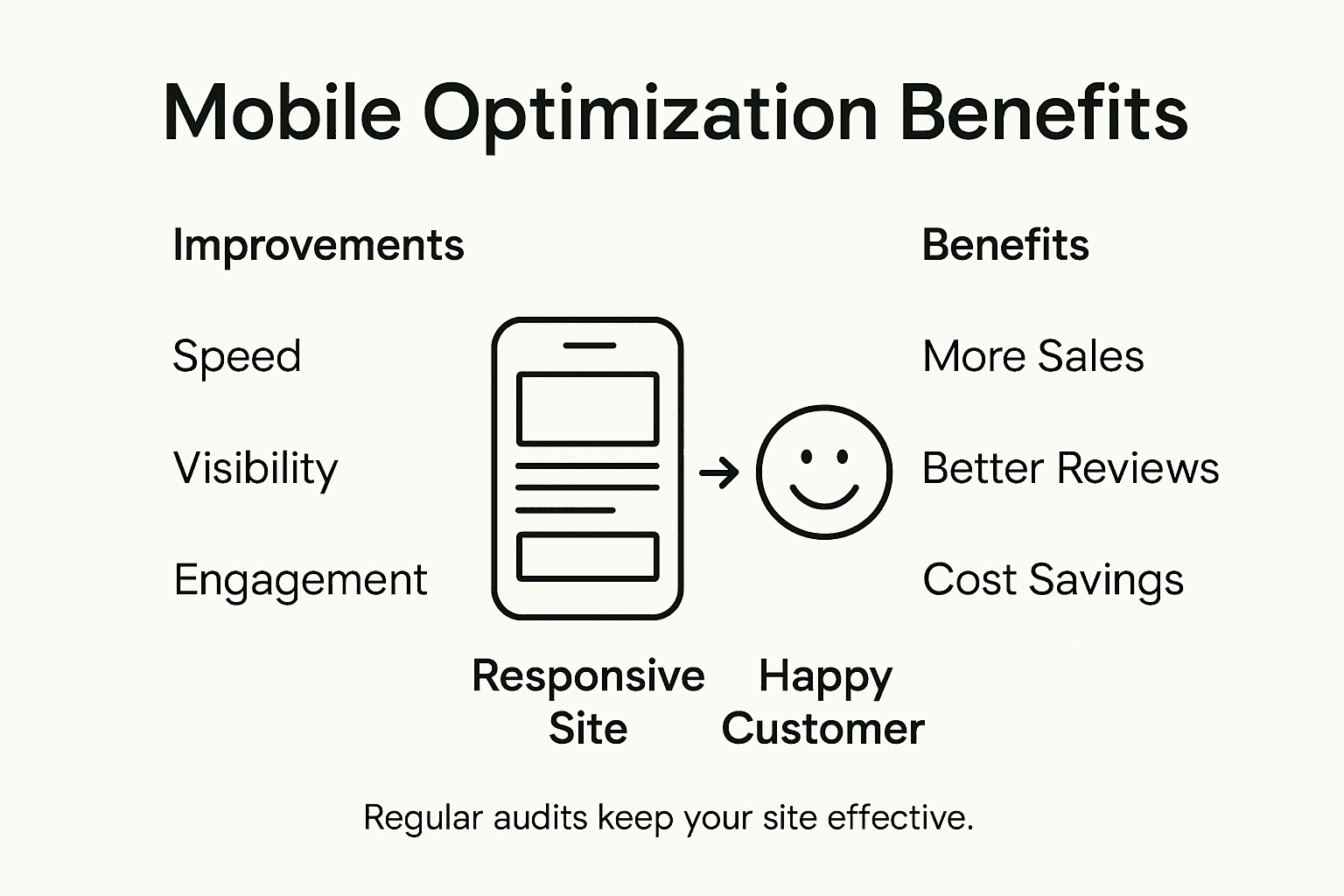
Beyond digital visibility, mobile optimization offers tangible business advantages for Florida SMBs. Faster loading times, intuitive interfaces, and mobile-friendly design can directly impact conversion rates, customer trust, and overall digital marketing effectiveness. Local businesses in service industries like hospitality, real estate, healthcare, and tourism can particularly benefit from optimization strategies that make their digital platforms more accessible and engaging. By reducing friction in online interactions and providing smooth, responsive experiences, SMBs can differentiate themselves in a crowded digital landscape and build stronger connections with their target audiences.
Pro tip: Conduct quarterly mobile user experience audits to identify and address potential optimization barriers that could be limiting your digital performance.
Risks and Costs of Ignoring Mobile Users
Businesses that overlook mobile user experience expose themselves to significant operational and financial risks, extending far beyond simple digital inconvenience. In today’s hyperconnected marketplace, mobile responsiveness is not a luxury but a critical business imperative. Small and medium businesses that fail to adapt to mobile user expectations risk losing market relevance, customer trust, and competitive positioning, with potential revenue losses that can dramatically impact their bottom line.
The cybersecurity landscape presents another profound dimension of risk for businesses neglecting mobile optimization. Unsecured mobile platforms create substantial vulnerabilities that can lead to data breaches, unauthorized access, and potential regulatory penalties. Mobile security risks encompass multiple threat vectors, including insecure data storage, improper authentication mechanisms, and potential communication channel exploits. For Florida businesses, these risks are particularly acute, given the state’s robust digital ecosystem and stringent data protection regulations.
Beyond immediate security concerns, ignoring mobile users can trigger cascading negative consequences for business reputation and customer relationships. Poorly designed mobile experiences frustrate users, reduce engagement, and signal technological incompetence. Customers increasingly judge businesses by their digital experiences, and a non-responsive or difficult-to-navigate mobile platform can instantly erode trust. This is especially critical for service-based industries in Florida, where competition is fierce and customer expectations continue to evolve rapidly with technological advancements.
This table summarizes potential risks for Florida SMBs if mobile optimization is ignored:
| Risk Area | Impact on Florida SMBs | Examples of Consequences |
|---|---|---|
| Lost Local Customers | Customers choose competitors with better UX | Decline in sales and market share |
| Reputation Damage | Perception of outdated or careless business | Reduced trust and fewer referrals |
| Security Vulnerabilities | Increased exposure to data breaches | Financial loss and legal penalties |
| Missed Marketing Opportunities | Lower search rankings, less visibility | Fewer leads and reduced digital presence |
Pro tip: Implement a comprehensive mobile security and user experience audit annually to proactively identify and mitigate potential digital vulnerabilities.
Unlock Seamless Mobile Optimization with Nimblo.ai
Mobile optimization is not just a trend but a necessity to fuel your Florida SMB’s growth. The article highlights how responsive design, fast loading speeds, and mobile-first strategies are vital to avoid losing local customers and damaging your business reputation. If you want to conquer challenges like slow mobile performance and complicated multi-tool setups, Nimblo.ai can help you streamline your digital presence with an all-in-one platform designed specifically for Florida’s competitive local markets.
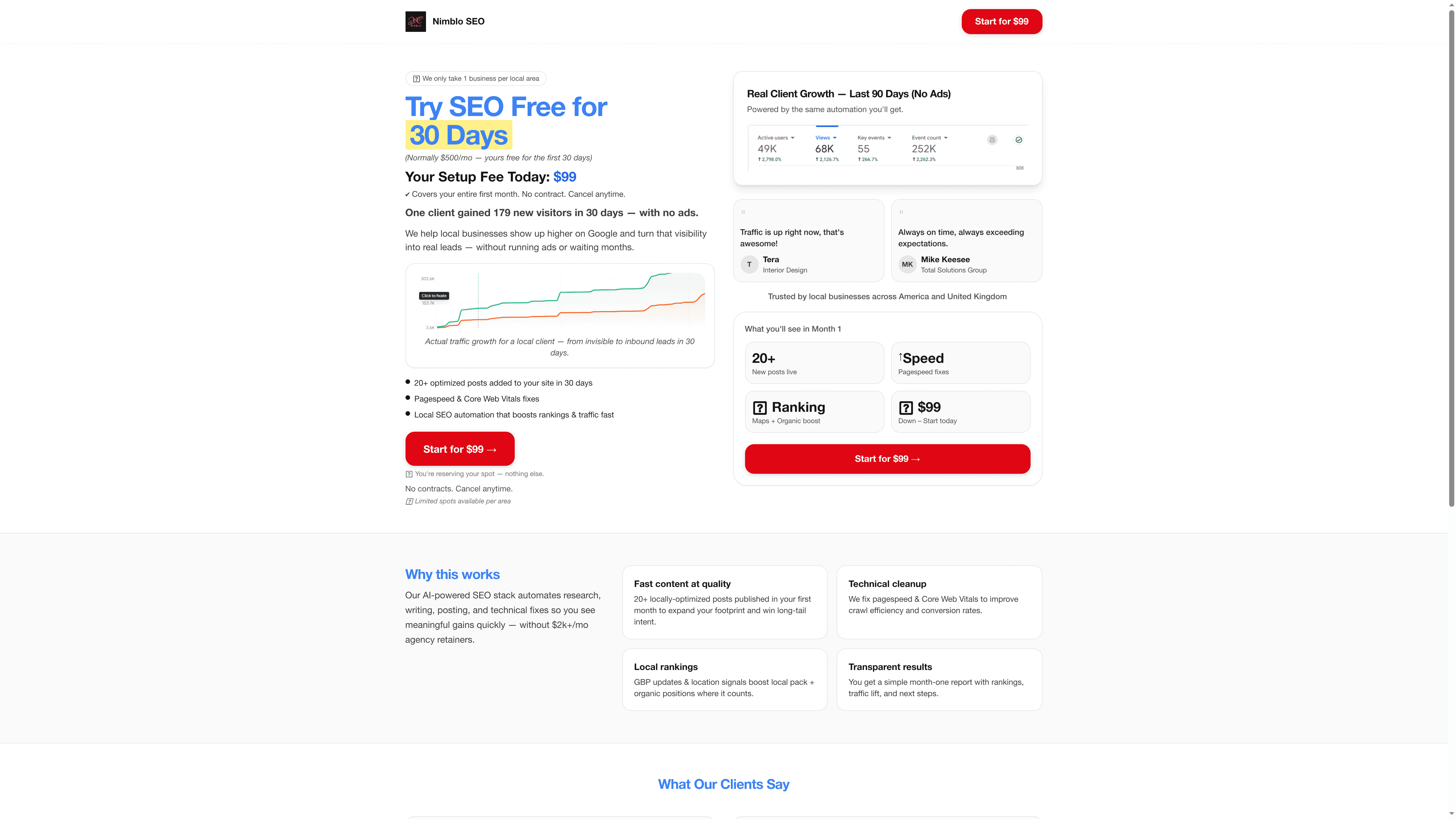
Take control of your mobile user experience today by leveraging Nimblo’s AI-powered local SEO, conversion-optimized web design, and automated lead generation. Save time and money while ensuring your website works flawlessly on every device with high-speed performance that customers expect. Discover how easy it is to deliver smooth, secure, and engaging mobile-first experiences that drive more local traffic and conversions. Start now by visiting Nimblo.ai and see how your Florida business can thrive in the mobile era.
Frequently Asked Questions
What is mobile optimization?
Mobile optimization is a web design and development strategy that ensures websites provide seamless user experiences on mobile devices like smartphones and tablets. It involves designing sites primarily for mobile usage and enhancing them for larger screens.
Why is mobile optimization important for businesses?
Mobile optimization is crucial for businesses because it improves user experience, boosts local search rankings, and enhances customer engagement. A mobile-optimized site can lead to increased conversion rates and stronger connections with target audiences.
What are the key features of effective mobile optimization?
Key features include responsive design, fast loading speeds, touch-friendly navigation, content prioritization, and accessibility. These elements ensure that users have a smooth and engaging experience regardless of their device.
What methods are commonly used for mobile optimization?
Common methods include responsive web design, adaptive design, dynamic serving, and the Accelerated Mobile Pages (AMP) framework. These techniques focus on delivering customized, efficient web experiences across different mobile devices.